Journal of Business History (ZUG)
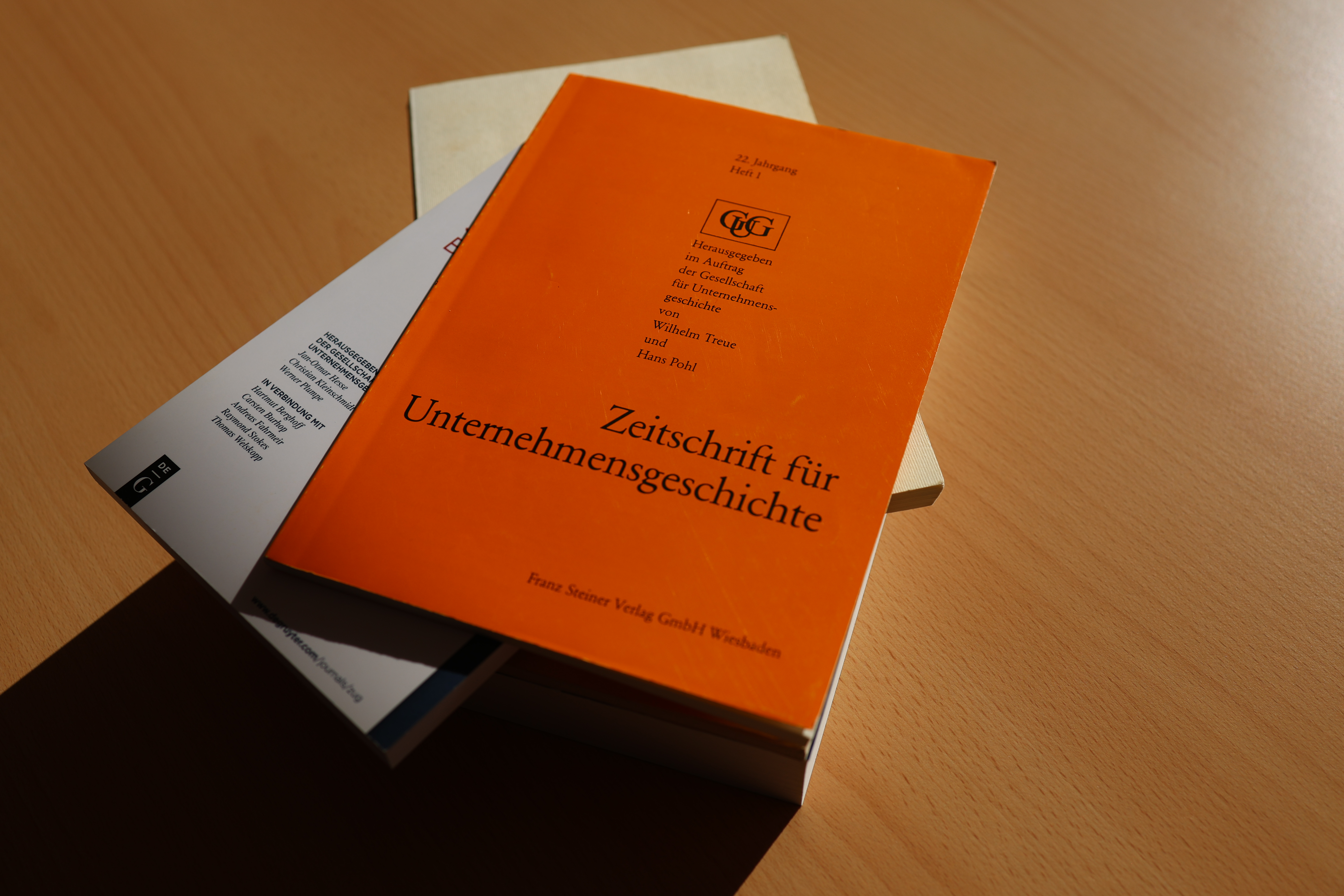
ZUG (known as “Tradition: Journal of Business History and Entrepreneurial Biography” until 1976) has been published by de Gruyter since Issue 1 (2017). It is edited by Prof. Dr. Carsten Burhop, University of Bonn (editor-in-chief) – Prof. Dr. Christian Kleinschmidt, University of Marburg – Prof. Dr. Jan-Otmar Hesse, University of Bayreuth, in collaboration with Prof. Dr. Hartmut Berghoff, University of Göttingen – Prof. Dr. Andreas Fahrmeir, University of Frankfurt am Main – Prof. Christina Lubinski, PhD, Copenhagen Business School – Prof. Mary O'Sullivan, PhD, University of Geneva – Prof. Dr. Werner Plumpe, University of Frankfurt am Main – Prof. Dr. Raymond Stokes, University of Glasgow.
Christian Marx
Zwischen Internationalisierung und Deindustrialisierung. Die deutsche Hausgeräteindustrie seit den 1960er Jahren
Christian Kleinschmidt
Mittler zwischen Unternehmen, Absatz und Konsum. Die Gesellschaft für Konsumforschung als Pionier der deutschen Markt- und Konsumforschung zwischen Weimarer Republik, Nationalsozialismus und Sozialer Marktwirtschaft
Ali Erken
The European pharmaceutical industry in Turkey, 1950 to 1980
Anna Corsten
Chemische Zukünfte: Bayer, Wasserverschmutzung und die Imagination von Umweltverantwortung in den 1950er Jahren
Ute Engelen
Gegen alle Wahrscheinlichkeit. Warum überlebten bestimmte Getreidemühlen?
Online Search
Titles and authors of older issues can be searched online.
The complete volumes 1 to 50 of the ZUG and its predecessor “Tradition” were retro-digitized and made available via the JSTOR database (jstor).
The ZUG has the status of a «refereed journal». All manuscripts that reach the editors are subject to an anonymous peer-review process which decides about admission to the journal. Articles published in this journal are summarized and listed in HISTORICAL ABSTRACTS and AMERICA: HISTORY AND LIFE-
Since 2011, the ZUG is listed in the ranking of the European Science Foundation in the prime category INT1 (esf.org). Also, in 2008 it was included in the Europe-an Reference Index for the Humanities and the Social Sciences (ERIH PLUS).
This not only confirms the ZUG’s high international visibility and its influence on vari-ous fields of research, but also its regular international citation.
The complete back issues of the ZUG are made available for online reading free of charge for our members <<
Submitting an article for publication
Manuscripts containing a maximum of 12000 words can be submitted in English or German.
Starting with volume 2/2017, we manage articles and reviews in the ZUG with the online database ScholarOne of our publisher De Gruyter. We would like to ask you to register there and submit your manuscript through this portal.
The purpose of the database is to guarantee to you and us a smooth review and publishing process and to facilitate easier communication between authors and editors. Please do not hesitate to contact us with any questions on using ScholarOne.
Manuscripts are subject to a double-blind peer review process after an initial inspection by the editors. We therefore ask you to submit articles initially without any indication of the author’s identity. After the final decision, authors are asked to revise their articles for publication observing the instructions of the ZUG stylesheet.
The submission of articles via email to the Schriftleitung is still possible.
Requesting a book for review
Books for review can be requested from the GUG’s office. Deadlines for reviews are 15 December (for the first issue of the following year) or 15 June (for the second is-sue of the current year).
Would you like to write a review? Please send us an email at ... with your review request. Please note that ZUG can only publish reviews of publications that were released no more than two years ago. We would also like to note that, starting with issue 2(2017), we have been managing reviews and contributions to ZUG via the online database Scholar One. We ask that you register there and upload your completed review to the system.
We ask reviewers to follow the guidelines for contributions.
Current List of Review Titles
Museum Aargau (Hg.), Dieter Pfister: Möbelindustrie und -handel seit 1870, Schwabe Verlagsgruppe, Basel 2026, 34,00€.
Simon Amrein, Capital in Banking. The Role of Capital in Banking in the 19th and 20th Century. The United Kingdom, the United States and Switzerland, Cambridge University Press, Cambridge 2025, 225 S.,
£ 85,00.
Matthias Beimler, Betriebliche Stiftungen in Bayern im 19. und 20. Jahrhundert. Ein Beitrag zur bayerischen Stiftungsgeschichte, Volk Verlag, München 2025, 348 S., € 29,00€.
Erik Eschen/Matthias Georgi/Robert Kieselbach, Ein Jahrhundert Vacuumschmelze. Eine Industriegeschichte, DVA Verlag, München 2025, 380 S., € 58,00.
Gregor Feindt, Batas Menschen, Rationalisierung, Social Engineering und Differenzierung in der tschechoslowakischen Unternehmensstadt Zlín, 1918-1948, Vandenhoeck & Ruprecht, Göttingen 2026, 564 S., € 0.
Ruth Freiburghaus/Patrizia Guggenheim/Daniel Teichman, Pionier der Kommunikation. Hermann Guggenheim (1864–1912) und sein Zürcher Postkartenverlag, Chronos Verlag, Zürich 2025, 176 S., € 38,00.
Sabrina Fröhlich, "The Hidden Jewel in Britain´s Military Crown". Die britische Schießpulvermühle Waltham Abbey und ihre Handwerker 1787 bis 1816, Franz Steiner Verlag, Stuttgart 2025, 304 S., € 62,00.
Jana Geršlová, Tschechische Wurzeln österreichischer Marken. Unternehmerische Traditionen, Marken und Identitäten im 20. Jahrhundert, Böhlau Verlag, Wien/Köln 2025, 348 S., € 39,00.
Nils Goldschmidt/Stefan Kolev, 75 Jahre Soziale Marktwirtschaft in 7,5 Kapiteln, Herder, Freiburg im Breisgau 2026, 80 S., € 12,00.
Manfred Grieger, Die Süddeutsche Zucker-AG im Nationalsozialismus. Zuckererzeugung, Nazifizierung, Zwangsarbeit, Kontinuität, Wallstein Verlag, Göttingen 2025, 260 S., € 24,00.
Peter Hayes, Geschäfte im Schatten des Holocaust. Deutsche Großunternehmen im Dritten Reich, C.H. Beck, München 2026, 258 S., € 29,90.
Toshio Yamazaki, A History of German Business: in Global Context from the late 19th Century until the End of the Second World War, Springer Nature, Berlin 2026, € 139,09.
Ronja Kiefer, Ottobock im Nationalsozialismus. Die Orthopädische Industrie Otto Bock zwischen 1933 und 1945, Societäts Verlag, Frankfurt am Main 2026, 128 S., € 20,00.
Michael Koblischka, Die Geschichte der Saarbrücker Klein- und Straßenbahn AG. 1913 bis 1960, Sutton Verlag, Erfurt 2025, 128 S.,
€ 24,99.
Sigrun Lehnert/Anke Steinborn (Hgg.), Die Deutsche Konsumgesellschaft Ost und West der 1950er bis 1980er Jahre: Bedingungen - Ausprägungen - (audio)visuelle Repräsentationen, Nomos, Baden-Baden 2026, 224 S., € 59,00.
Karsten Linne, Öl für den Endsieg: Die Kontinentale Öl AG 1941-1945, Wallstein Verlag, Göttingen 2026, 558 S., € 42,00.
Siegfried Mielke, Hermann Scheffler (1884–1951). Reformer der Gewerkschaftspresse und Widerstandskämpfer gegen das NS-Regime, Metropol Verlag, Berlin 2025, 194 S., € 19,00.
Friedemann Pestel, Global Players. Orchestertourneen und internationaler Musikbetrieb 1880-2000, De Gruyter Oldenbourg, Berlin/Boston 2026, 849S., € 109,95.
Werner Plumpe, Wirtschaftskrisen. Geschichte und Gegenwart, C.H. Beck, München 2025, 128 S., € 12,00.
Werner Plumpe/Ralf Banken, Die wunderbare Welt von Hermann Tietz. Warenhaus und Massenkonsum in Deutschland in der Moderne, Siedler Verlag, München 2026, 749 S., € 58.
Alexia Pooth/Thomas Schaarschmidt, Handwerk Ost: Arbeits- und Lebenswelten zwischen Plan und Markt, Ch. Links Verlag, Berlin 2026, 360 S., € 28,00.
Manfred Rasch, Europas Stahlindustrie im ersten Weltkrieg, Aschendorff Verlag, Münster vsl. Dezember 2026, 160 S., € 24,80.
Mario Riederer, Mitbestimmung unter wirtschaftlichem Primat. Die Mitbestimmung im BMW- Stammwerk München 1945-1987, De Gruyter, Berlin 2025 405 S., € 79,95.
Christian Risse, Aufstieg und Blüte der deutschen Kokereibau-Industrie: Die Unternehmen des Kokereibaus im Spannungsfeld zwischen Kooperation und Konkurrenz, Kovac, Hamburg 2026 464 S., € 139,80.
Peter Ritschard, Das Ende einer Legende. Die Maschinenfabrik Oerlikon 1945–1967, Hier und Jetzt Verlag, Zürich 2025, 232 S., € 39,00.
Ralf Roth, Im Morgentauen der Digitalisierung. Die IG Metall und die Zweite Industrialisierung (1950–1970), Campus Verlag, Frankfurt a.M. 2025, 446 S., € 39,00.
Stephanie Tilly/Andrea H. Schneider-Braunberger/Johannes Bähr, Calenberger Kreditverein – 200 Jahre. Zwei Jahrhunderte erfolgreiche Finanzierungen, Societäts Verlag, Frankfurt a.M. 2025, 172 S., € 30,00.
Florian Staffel, Zwischen Konkurrenz und Kooperation. Die "Japanische Herausforderung" und die deutsche Unterhaltungselektronikindustrie 1950-1987, De Gruyter Oldenbourg, Berlin/Boston 2025, 365 S., € 79,95.
Jure Stojan, Bank Runs and Financial Disclosure. The Dynamics of Political Populism, Financial Stability, and Transparency in the Habsburg Empire, Palgrave Macmilan UK, Basingstoke vsl. Herbst 2026, € 128,39.
Julia Weber/Sebastian Bank/Staatliche Kunstsammlung Dresden (Hrsg.), Die Blauen Schwerter. Meissen in der DDR, Ch. Links Verlag, Berlin 2025, 250 S., € 28,00.
Stefanie van de Kerkhof/Florian Triebel, Der industrialisierte Krieg. Studien zu Unternehmen, Wirtschaft und Forschung im Ersten Weltkrieg, Brill/Schöningh, Paderborn 2026, 300 S., € 89,00.
Sandra Zawrel, Zwischen Mühle und Druckerei. Der Amsterdamer Papierhandel 1750–1810, Campus Verlag, Frankfurt a.M. 2025, 691 S., € 59,00.
Dieter Ziegler, Unter Männern. Frauen im Betrieb der Berliner Großbankzentralen 1900-1949, De Gruyter Oldenbourg, Berlin 2026, 504 S., € 79,95.
Business History Online
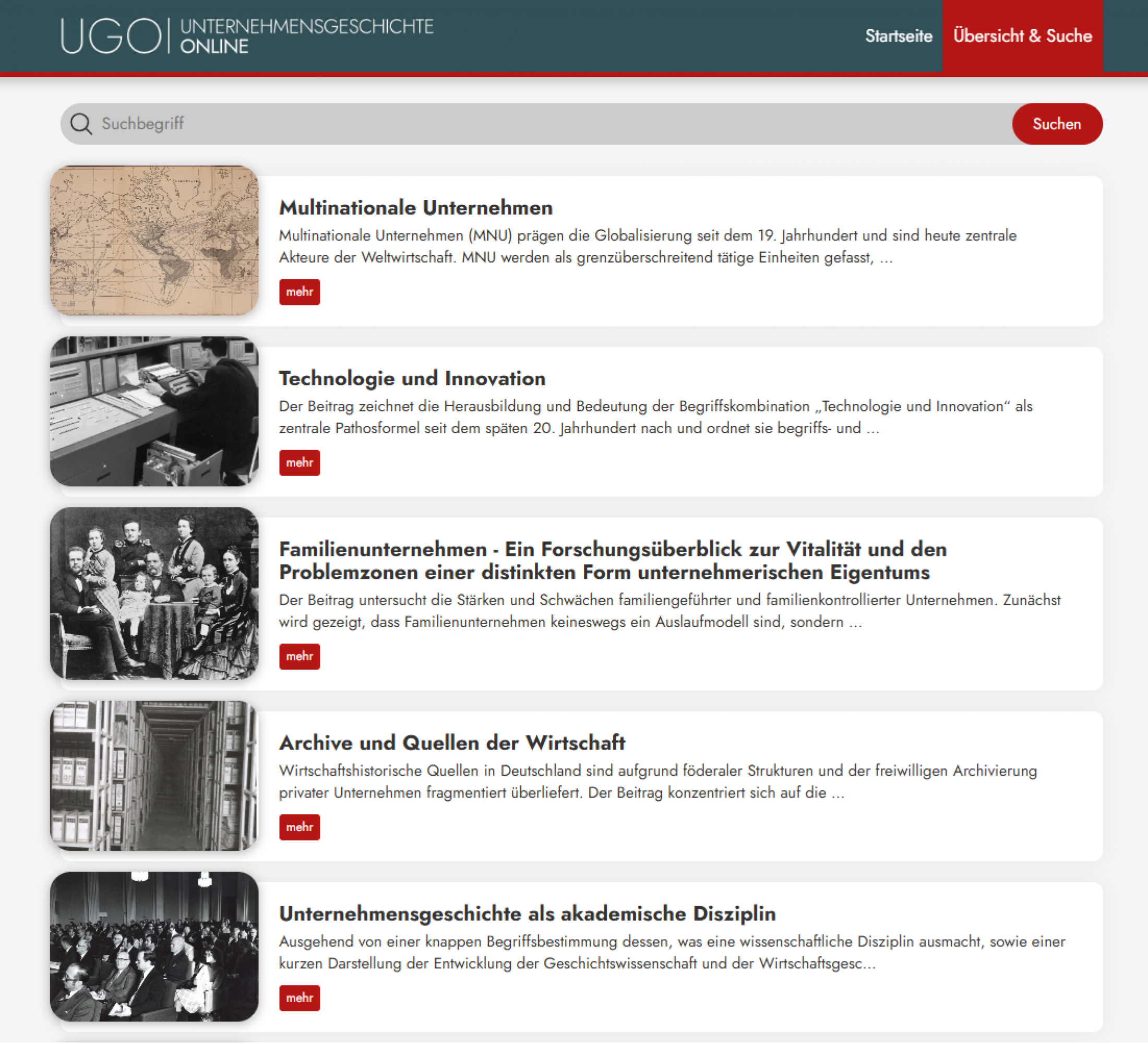
“Business History Online” is a digital handbook on economic history topics that will be launched to mark the 50th anniversary of the GUG. Renowned authors present key concepts and themes in business history, provide research overviews, and recommend further reading. This dynamic reference work is intended to provide the general public, historians, researchers in related disciplines, and students with an overview of the thematic spectrum of business history research, methodological issues, the development of the field as an academic discipline, and its integration into business schools. The handbook includes, among other things, articles on family businesses, technology and innovation, multinational corporations, companies under National Socialism, and sources and archives. In addition, overview articles on individual industries, such as the automotive or chemical industries, are planned.
UGO is designed as a continuously growing reference work that will be successively expanded with further relevant contributions. It is continuously overseen by an editorial board that reviews the scholarly standards of the texts and will ensure their continued relevance in the future.
Network of Corporate Museums
The NCM Network Corporate Museums, founded in 2003 by Dr. Franz Hebestreit, has been using the GUG platform since 2011 to further professionalize its operations.
The network organizes a two-day symposium once a year, where both cross-methodological topics and ongoing and new projects for establishing corporate museums are discussed. A group of colleagues from abroad is regularly invited to learn about international developments and challenges related to corporate museums.
Since November 2017, the network has been led by Oliver Häuser. Interested parties may contact him or the GUG Secretariat. Admission to the NCM (Network Corporate Museums) is decided by the network’s leadership.
Past Meetings
- 2023: The network’s 21st annual conference took place in November 2023 at Faber-Castell in Stein and at the DB Museum in Nuremberg.
- 2022: The network’s 20th annual conference was held online in November 2022.
- 2021: The network’s 19th annual conference took place online in November 2021 due to the ongoing pandemic.
- 2020: The network’s 18th annual conference was planned to take place at the Aquademie of Hansgrohe SE in Schiltach. Due to the COVID-19 pandemic, it was postponed to 2021. Instead, a web conference was held in November 2020.
- 2019: The network’s 17th annual conference took place in November 2019 at Ottobock SE & Co. KGaA in Duderstadt.
- 2018: The network’s 16th annual conference took place in November 2018 at the Fürstenberg Castle Museum of the Fürstenberg Porcelain Manufactory in southern Lower Saxony.
- 2017: The network’s 15th annual conference took place in November 2017 at ZF Friedrichshafen AG in Friedrichshafen.
- 2016: The network’s 14th annual conference took place in November 2016 at BASF SE in Ludwigshafen am Rhein.
- 2015: The network’s 13th annual conference took place in November 2015 at the “ZEISS Museum of Optics” in Oberkochen.
- 2014: The network’s 12th annual conference took place in November 2014 at the “SiemensMed Museum” in Erlangen.
- 2013: The network’s 11th annual conference took place in November 2013 at the “adidas Archive” in Herzogenaurach.
- 2012: The network’s 10th annual conference took place in November 2012 at the “Aquarius Water Museum” in Mühlheim a.d.R.
- 2011: The network’s 9th annual conference took place in November 2011 at the “Kärcher Museum” in Winnenden.
- 2010: The network’s 8th annual conference took place in November 2010 at the “Heinz Nixdorf Museumsforum” in Paderborn.
- 2009: The network’s 7th annual conference took place in November 2009 at the “Bavarian Brewery Museum” in Kulmbach.
- 2008: The network’s 6th annual conference took place in November 2008 at the “Miele Museum” in Gütersloh.
- 2007: The network’s 5th annual conference took place in November 2007 at the “DB Museum” in Nuremberg.
- 2006: The network’s 4th annual conference took place in November 2006 at the “Dr. Oetker World” in Bielefeld.
- 2005: The network’s 3rd annual conference took place in November 2005 at the “Museum of Communication” in Frankfurt am Main.
- 2004: The network’s 2nd annual conference took place in June 2004 at the “Umspannwerk Recklinghausen – Museum of Electricity and Life” in Recklinghausen.
- 2003: The network’s 1st annual conference took place in November 2003 at the “Siemens Forum Munich.”
Corporate Museums Online (UMO)
The UMO Portal (www.unternehmensmuseen.de) is an online directory of corporate museums in German-speaking countries. It provides contact information, opening hours, and details on current exhibitions and events at the museums.
Use of the portal is free of charge for visitors.
With the online museum guide, which the Society for Business History (GUG) operates in collaboration with the Corporate Museum Network, the museums of companies, associations, and organizations—along with their treasures, opening hours, special exhibitions, and more—are now available on the internet.
Equipped with smartphone-optimized programming and location-based search, it’s easy for users to find out about the nearest museums and their special exhibitions.
Legacy of German Industrial History
UMO is available free of charge to all of the approximately 300 corporate museums. The goal is to encourage as many corporate museums as possible to participate, making the diverse legacy of German industrial history easily accessible to everyone.
You can download the flyer here:
Flyer Unternehmensmuseen Online
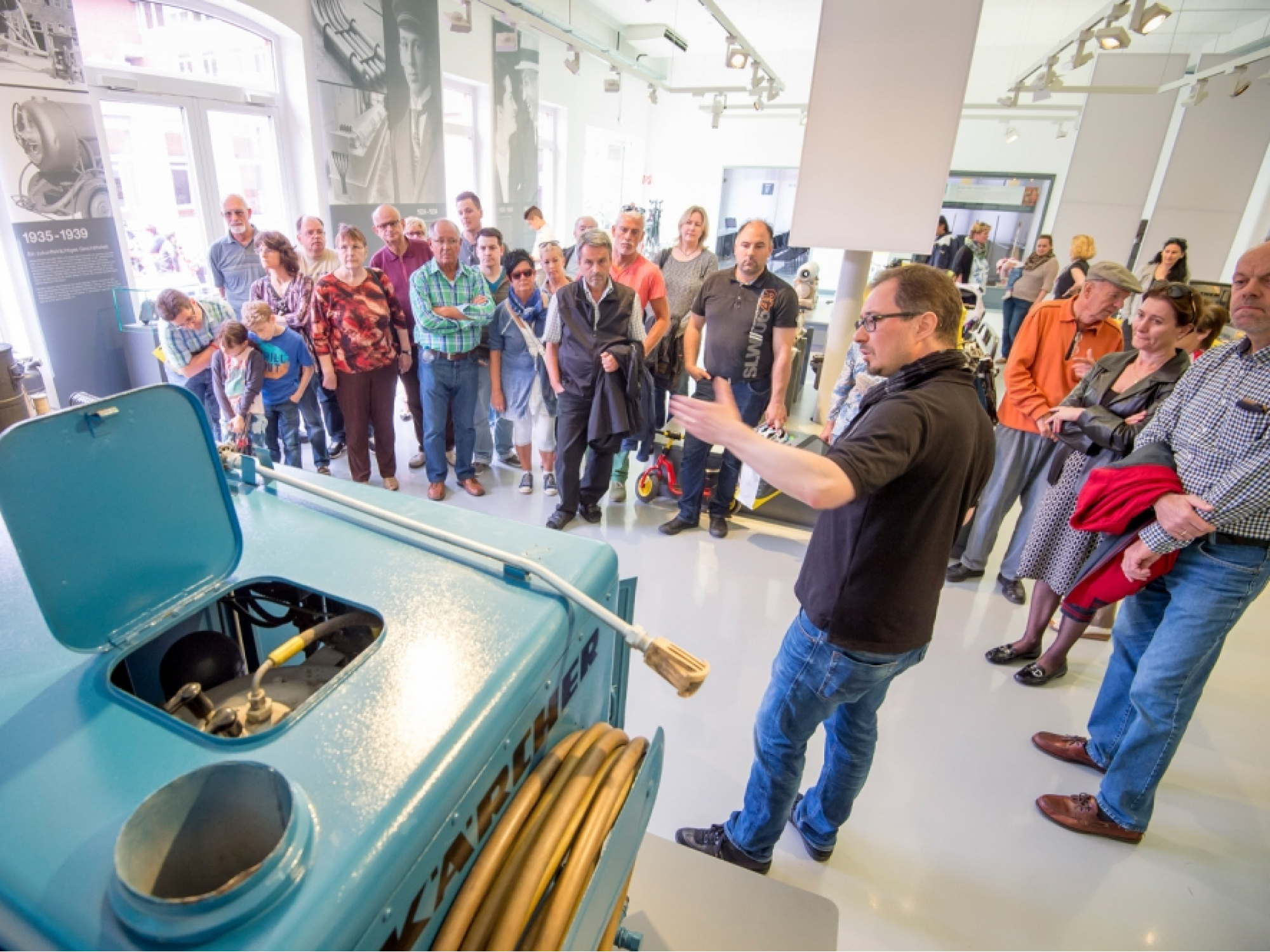
Kärcher Museum

Museum Ravensburger

Dornier Museum

Koziol Glücksfabrik
Economic Archives Portal (WAP)

The WAP Economic Archives Portal is an online directory of economic archives in German-speaking countries. It is available at www.wirtschaftsarchivportal.de and www.wirtschaftsarchivportal.org.
The WAP aims to provide an overview of the diverse forms and professionalism of business archives in German-speaking countries, to stimulate economic history research, and to highlight the cultural significance of these institutions to the public.
WAP is a joint project of the Society for Business History (Gesellschaft für Unternehmensgeschichte e.V.) and the Association of German Business Archivists (Vereinigung deutscher Wirtschaftsarchivare e.V.).
What are the benefits of the portal?
WAP is the up-to-date directory of business archives in the German-speaking world. It offers business archives—and in particular the archives of small and medium-sized enterprises—an attractive and free opportunity to present their own historical collections on the internet.
Users, in turn, gain a quick and easy overview of important archive information (such as opening hours, terms of use, and contact persons). A search function allows users to explore individual collection overviews. Each search result includes a direct email contact option as well as a link to the participating archives.
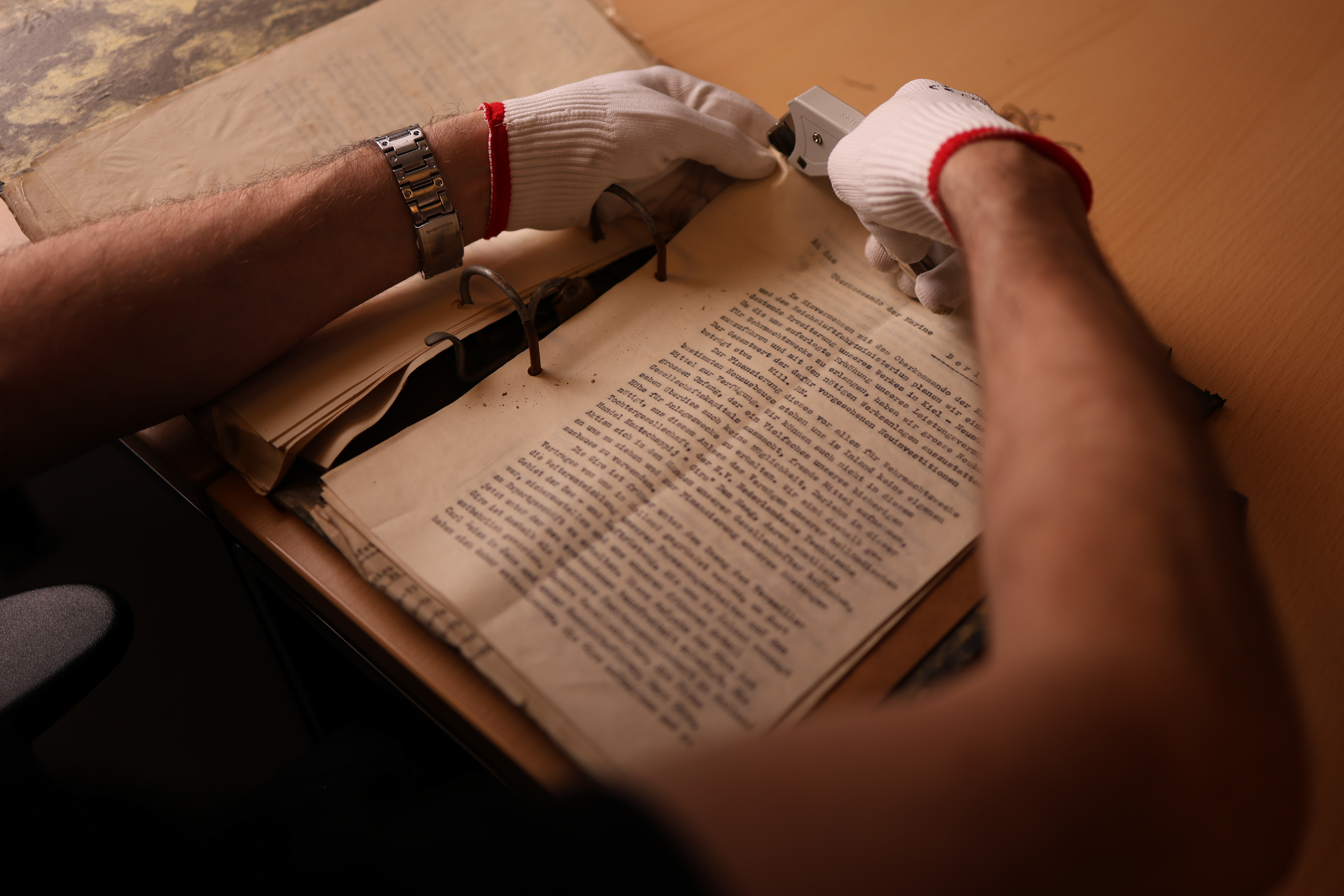
Registered business archives can also offer specific research-relevant topics (or subject areas). This is intended to make the existing broad range of topics in business archives even more transparent for academic research (such as B.A., M.A., or doctoral dissertations), with the goal of intensifying cooperation between universities and archives and facilitating student access to the archives.
Overall, the WAP aims to convey an impression of the diverse forms, as well as the professionalism, of business archives in the German-speaking world, to stimulate economic history research, and to draw the public’s attention to the cultural significance of these institutions.
However, we will only achieve these goals if as many business archives as possible work together to bring the portal to life. Please take a moment to complete the straightforward initial registration
in the WAP as a corporate archive. The WAP editorial team will ask participating archives once a year to review and, if necessary, update their archive data, thereby ensuring the portal is automatically kept up to date. For questions, please contact:
Dr. Andrea H. Schneider-Braunberger
...
Oliver Häuser
...
Further information:
Sonderdruck Zeitschrift fuer Archivwesen
ZUG Book Series
The book series is edited by the Gesellschaft für Unternehmensgeschichte. In it, the dissertations, habilitations or other monographs that were awarded the Preis für Unternehmensgeschichte : prize for business history are published as well as independent critical business history studies and occasionally conference volumes.
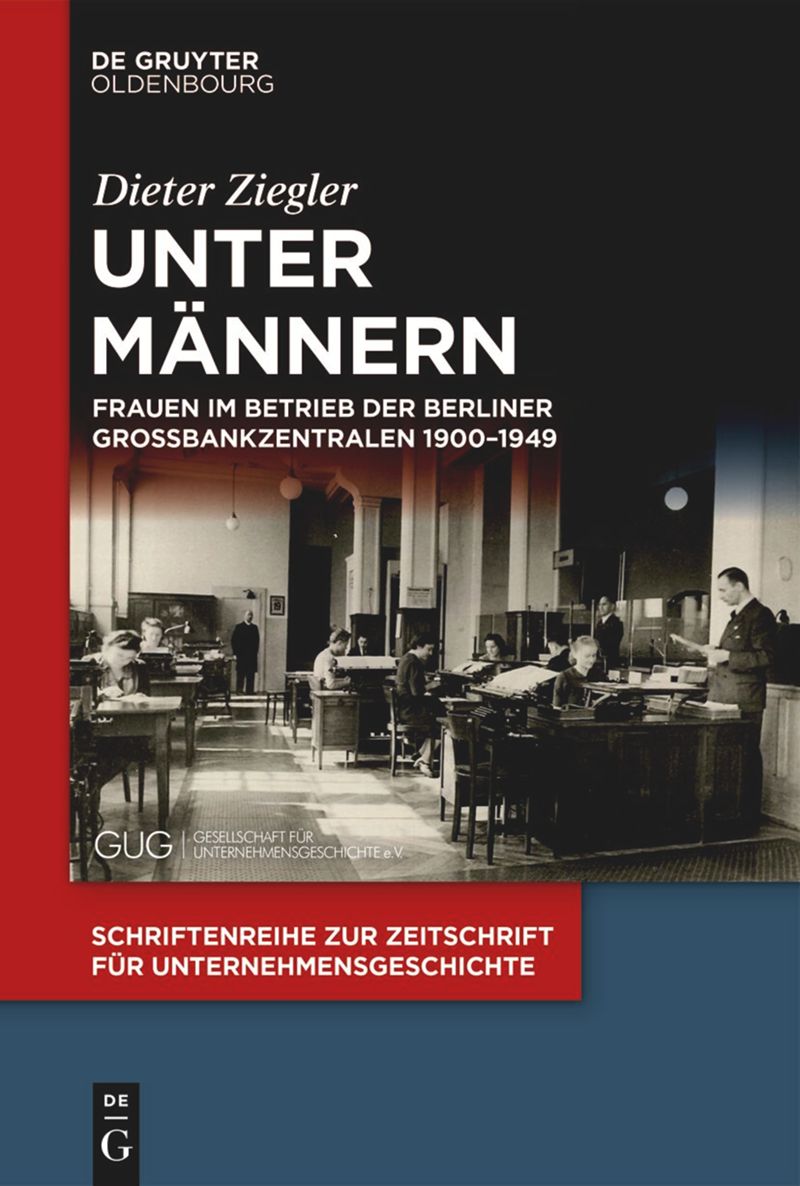
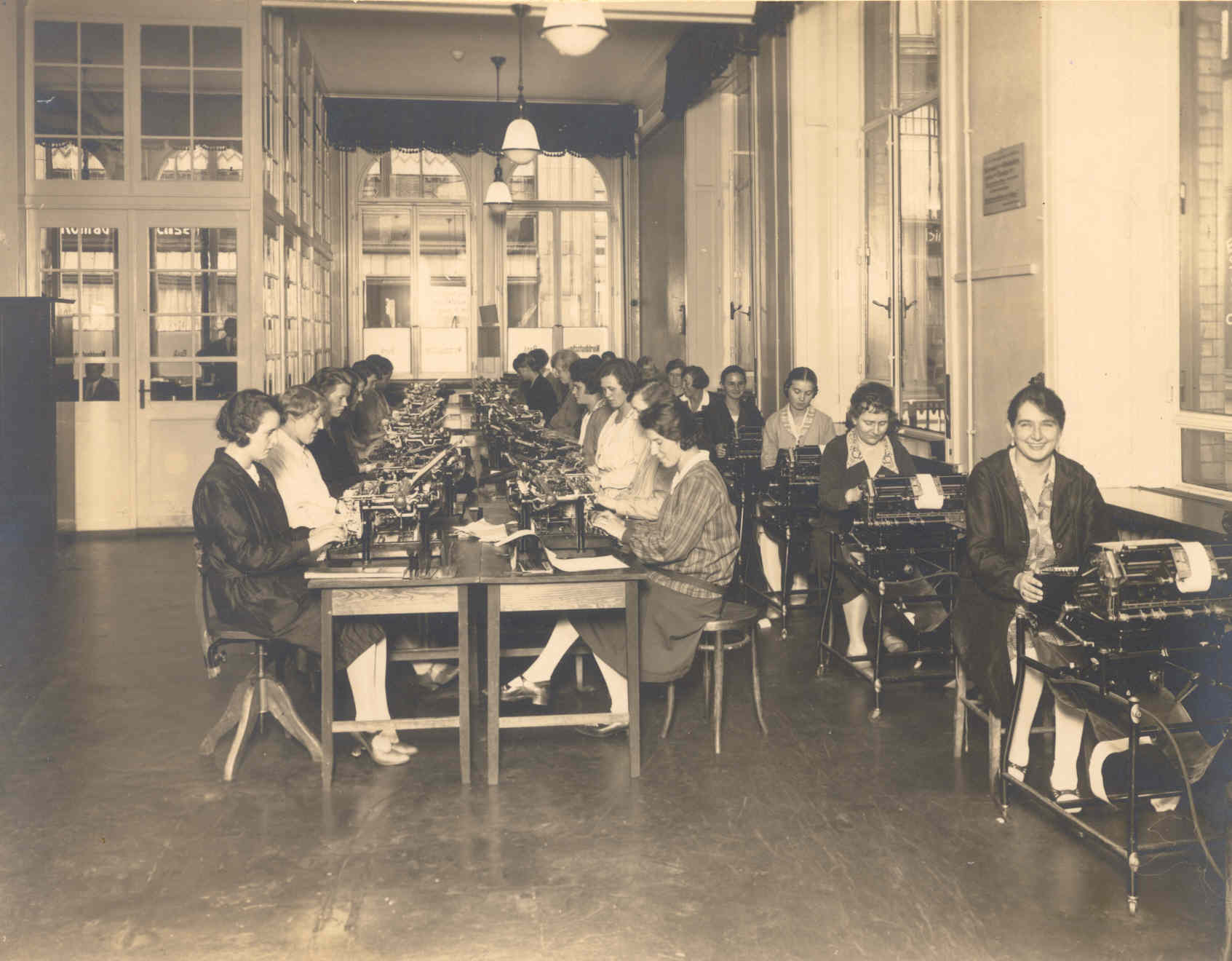
Women on the board of a major bank, women in leadership positions? That was unthinkable in the first half of the 20th century. Women were not even allowed to advance to a position where they could give orders to men. There is evidence of women working in the offices of Berlin’s major banks dating back to 1899. Their employment was opposed by male-dominated labor unions of all stripes until they realized that a gender-based division of labor had become established in the offices, with women being relegated to “purely mechanical” and poorly paid jobs as telephone operators and stenographers. Many young women turned to marriage and had to give up their jobs—whether they wanted to or not. However, many women also remained unmarried—some by choice, but many others involuntarily due to the wartime shortage of men. This book examines the realities of life for young women before they married and for older women who either lived with their parents and cared for them in their old age or who had to live alone in a furnished room. It also examines the fate of Jewish women among the female employees after the Nazis came to power.
Further information can be found on the website of De Gruyter Publishing

How do companies respond to new competitors from Asia in the wake of globalization? What role do narratives, expectations, and perceptions play in this context?
This study examines these questions using the long-established German consumer electronics companies Grundig and Telefunken as case studies, focusing on their strategies in competition with Japanese firms from 1950 to 1987. This competitive landscape, which was discussed at the time under the banner of the “Japanese Challenge,” contributed significantly to the decline of both companies against the backdrop of the microelectronics revolution.
For the analysis, recent sociological and economic approaches to the significance of expectations and narratives in economic decision-making processes are adapted, and the impacts on and reactions of German and European stakeholders are incorporated.
Further information can be found on the website of the De Gruyter Publishing
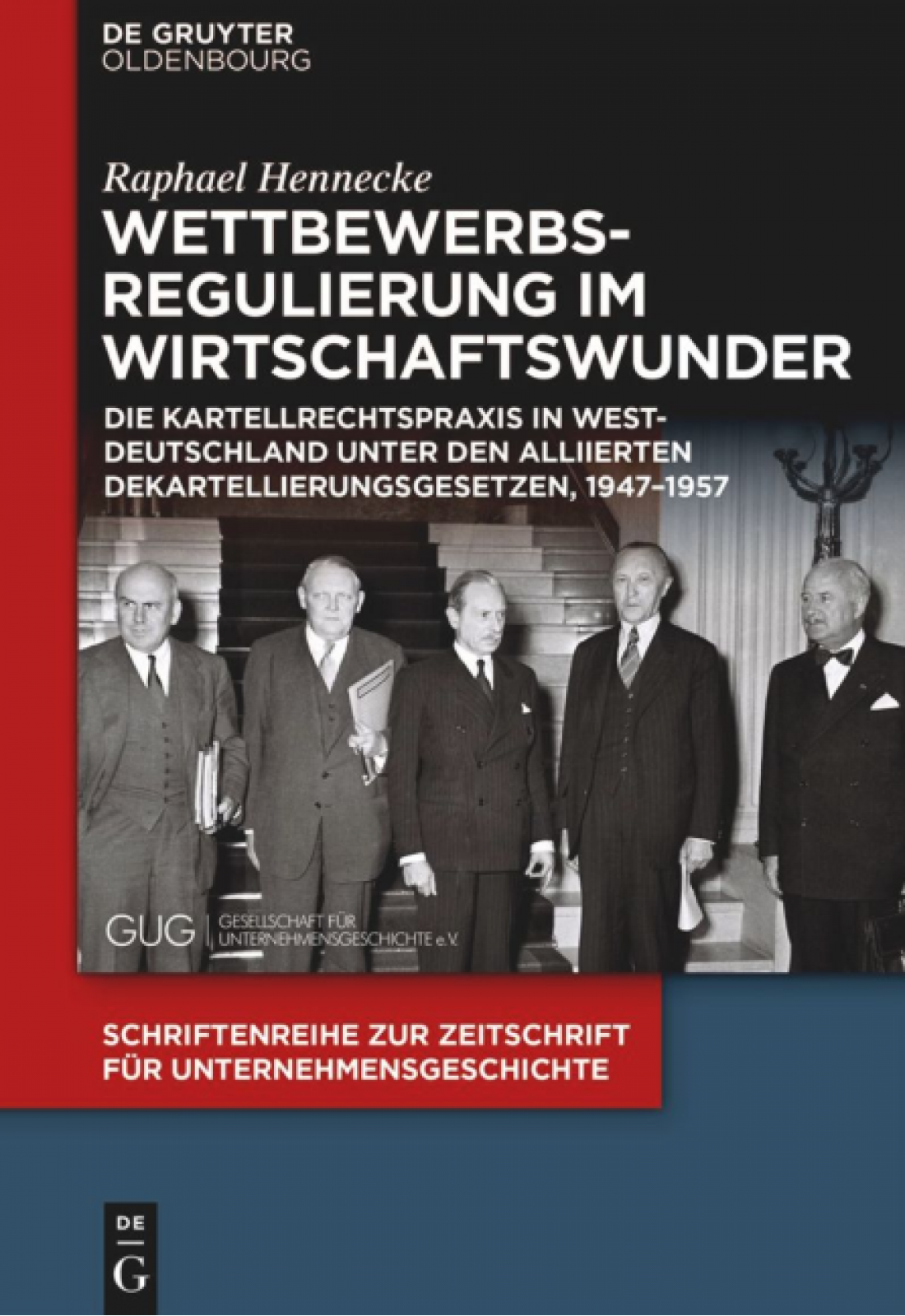
This work deals with antitrust practice in West Germany after the Second World War until the German Competition Act came into force in 1958. During this period, the legal situation was determined by the decartelisation laws enacted by the Allies in 1947 on the initiative of the United States and based on American antitrust law.
The topic has been neglected until now, as historical research has focused primarily on the development of the German Competition Act and neglected the specific legal practice during the period in question. This practice was shaped by Allied authorities and courts as well as by German judges and politicians.
The thesis examines from several perspectives, among other things, how successful Allied proceedings against violations were, whether the Allied ban on cartels was able to change the competitive practices of traditionally cartel-friendly German entrepreneurs, and how strictly German courts interpreted the laws in view of the existing scope for interpretation.
Further information can be found on the website of De Gruyter Publishing House

Foundation companies are considered to be an opaque form of enterprise. By examining the Carl Zeiss optical workshop from 1889 and 1993, this study provides a rare historical insight into this ‘black box’: without a personal owner, Zeiss did not pursue short-term profit interests, but focused on sustainable development that benefited both the company and the public.
Further information can be found on the website of De Gruyter Publishing House
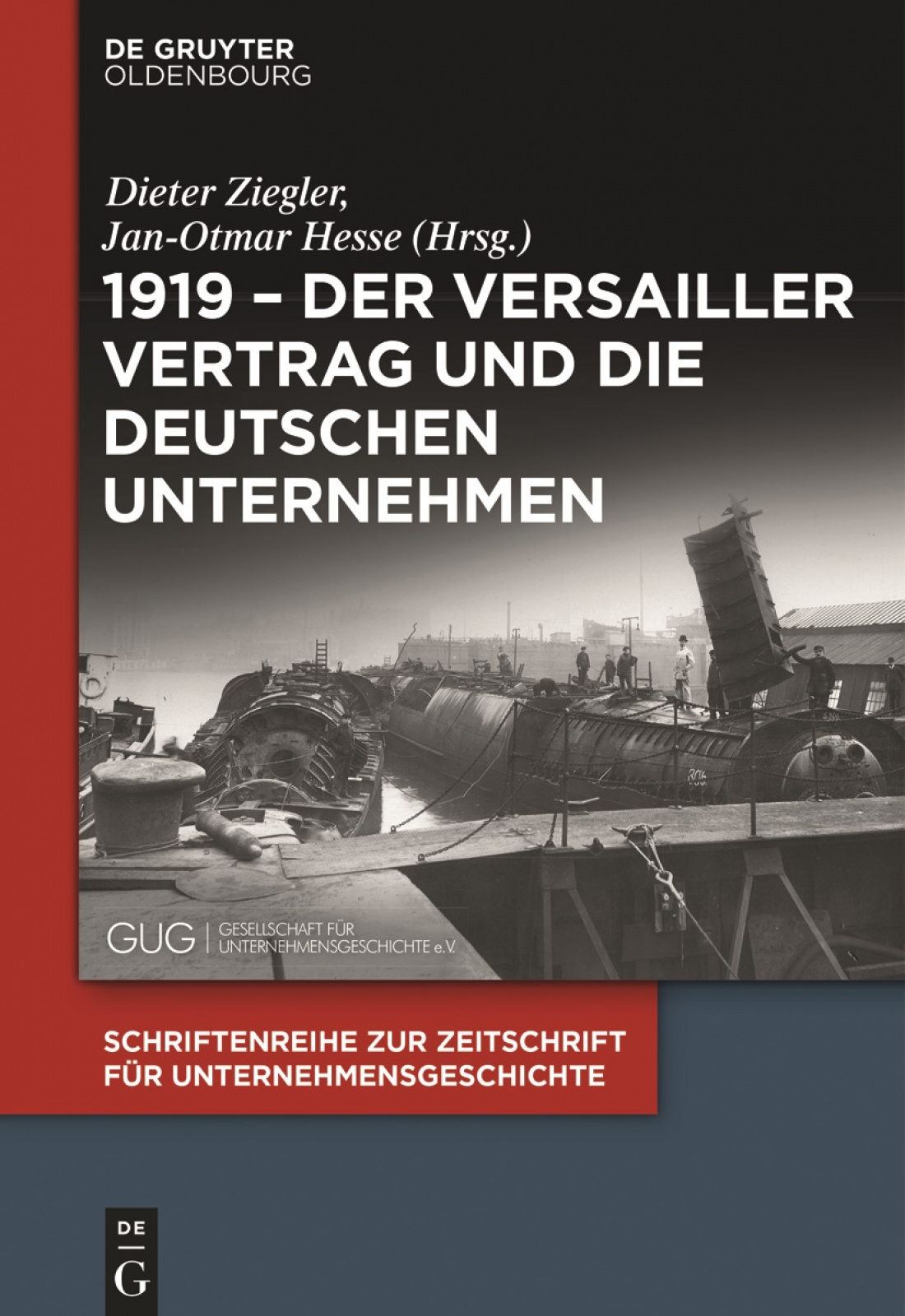
The provisions of the Treaty of Versailles triggered fierce reactions in Germany in 1919, not only because of the ‘war guilt clause’, the loss of territory and reparations, but also because these and numerous other provisions severely restricted the scope of action of German companies. The merchant fleet was confiscated, part of the annual production, for example of coal and chemical products, had to be paid to the victorious powers as reparations, and foreign subsidiaries and German patents abroad were expropriated. This volume uses selected examples to show how German companies dealt with these challenges.
Further information can be found on the website of De Gruyter Publishing House
Volume 34: Frederic Steinfeld, The Quantified Enterprise: Accounting, Financial Reporting, and Decision-Making in the German Chemical Industry, 1863–1916, Berlin 2021 (Review: VSWG / ZUG 22 (67:2))
Volume 33: Peter Wegenschimmel, Zombie Shipyards or Starving Artists? State Shipbuilding in East Central Europe after 1970, Berlin 2021 (Review: VSWG / HSozKult)
Volume 32: Wiebke Glässer, Market Power and Politics: The International Cartel of Oil Companies, 1960–1975, Berlin 2019
Volume 31: Luise Stein, Border Destinies: Corporate Evacuations in Germany and France, 1939/1940, Berlin 2018
Volume 30: Dietmar Bleidick, Ruhrgas 1926–2013: The Rise and Fall of a Market Leader, Berlin 2017
Volume 29: Sebastian Teupe, The Creation of a Market. Pricing Policy, Competition, and the Television Trade in West Germany and the U.S. 1945–1985, Berlin 2016
Volume 28: Hartmut Berghoff, Cornelia Rauh, Thomas Welskopp (eds.), Corporate Crime Scene: On the History of Economic Crime in the 20th and 21st Centuries, Berlin 2016
Volume 27: Karsten Voss, Slaves as Commodity and Capital. The Plantation Economy of Saint-Domingue as a Development Project 1697–1715, Munich 2016
Volume 26: Eva-Maria Roelevink, Organized Opacity. The Coal Syndicate and the Dutch Market 1915–1932, Munich 2015
Volume 25: Harold James/Martin L. Müller (eds.), Georg Solmssen—A German Banker. Letters from Half a Century 1900–1956, Munich 2012
Volume 24: Christiane Eifert, German Women Entrepreneurs in the 20th Century, Munich 2011
Volume 23: Roman Köster, Hugo Boss, 1924–1945. The History of a Clothing Factory Between the Weimar Republic and the “Third Reich,” Munich 2011
Volume 22: Katja Girschik, When Cash Registers Learned to Read. A History of Technology and Business in Swiss Retail, Munich 2010
Volume 21: Christina Lubinski, Family Businesses in West Germany. Corporate Governance and Shareholder Culture since the 1960s, Munich 2010
Volume 20: Hartmut Berghoff, Jürgen Kocka, Dieter Ziegler (eds.), The Economy in the Age of Extremes: Contributions to the Business History of Austria and Germany, Munich 2010
Volume 19: Cornelia Rauh, Swiss Aluminum for Hitler’s War? On the History of “Alusuisse” 1918–1950, Munich 2009
Volume 18: Michael Schäfer, Family Businesses and Entrepreneurial Families. On the Social and Economic History of Saxon Entrepreneurs 1850–1940, Munich 2007
Volume 17: Christof Biggeleben, The “Bastion of the Bourgeoisie”: Berlin Merchants 1870–1920, Munich 2006
Volume 16: Inken Rebentrost, The Lab in a Box. The Development of a Technique for Purifying Nucleic Acids and Its Significance for the Founding History of One of the First German Biotechnology Companies, Munich 2005
Volume 15: Jörg Denzer, The Conquista of the Augsburg Welser Company in South America 1528–1556, Munich 2005
Volume 14: Ingo Köhler, The “Aryanization” of Private Banks in the Third Reich. Displacement, Elimination, and the Question of Reparations. Munich 2005
Volume 13: Florian Triebel, The Eugen Diederichs Publishing House 1930–1949. A Business Between Culture and Calculation. Munich 2004
Volume 12: Klaus Weber, German Merchants in the Atlantic Trade 1680–1830. Businesses and Families in Hamburg, Cádiz, and Bordeaux. Munich 2004
Volume 11: Olaf Mertelsmann, Between War, Revolution, and Inflation. The Blohm & Voss Shipyard 1914–1923. Munich 2003
Volume 10: Manfred Rasch, Gerald D. Feldman (eds.), August Thyssen and Hugo Stinnes. A Correspondence 1898–1922. Munich 2003
Volume 9: Anne Nieberding, Corporate Culture in the German Empire. The J.M. Voith Foundry and the Former Friedr. Bayer & Co. Paint Factory, Munich 2003
Volume 8: Jan-Otmar Hesse, In the Web of Communication. The Imperial Postal and Telegraph Administration 1876–1914, Munich 2002
Volume 7: Stephan H. Lindner, Losing the Thread. The West German and French Textile Industries in Decline (1930/45–1990), Munich 2001
Prize for Business History
{PfUG_Kieffer_Award Ceremony}
Since 1998, the GUG has presented the Corporate History Award annually. The award recognizes unpublished dissertations, postdoctoral theses, and monographs that address topics and aspects of corporate history.
The jury consists of Professors Roman Köster, Monika Pöttinger and Dieter Ziegler, as well as Jan-Otmar Hesse, the editor-in-chief of the *Zeitschrift für Unternehmensgeschichte* (Journal of Business History). For further information, please contact the GUG’s executive director, Dr. Andrea Schneider-Braunberger.
The award ceremony takes place during the GUG’s public lecture series.
Call for Submissions 2026
The winning entry will be published in the GUG’s series accompanying the *Zeitschrift für Unternehmensgeschichte*, published by de Gruyter. The prize will be awarded in the form of a subsidy toward printing costs.
One copy of the thesis, along with a PDF file (including the reviews or the names of the reviewers) and a brief curriculum vitae, must be submitted to the GUG office. Unfortunately, for organizational reasons, the thesis cannot be returned.
The deadline for submissions is April 30 of each year.
You can download the current call for submissions here as a PDF file: Call for Submissions PUG 2026.
For further information, please contact the Executive Director of the GUG, Dr. Andrea Schneider-Braunberger.
Society for Corporate History (GUG)
Friedrichstraße 34
D-60323 Frankfurt am Main
Tel.: 069 / 97 20 33 14/15
Fax: 069 / 97 20 33 57
Email: ...
Translated with DeepL.com (free version)
Recipients
2025
Ronja Kieffer: Weißes Gold an der Werra – Kaliunternehmen und die deutsch-deutsche Grenze (1945-1989).2024
Florian Staffel: Zwischen Konkurrenz und Kooperation. Die ‹Japanische Herausforderung› und die deutsche Unterhaltungselektronik-industrie 1950–1987.
2023
Raphael Hennecke: Wettbewerbsregulierung im Wirtschaftswunder: Die Kartellrechtspraxis in Westdeutschland unter den alliierten Dekartellierungsgesetzen, 1947 bis 1957.2022
Preis nicht vergeben .2021
Johanna Steinfeld: Unternehmen ohne Eigentümer: Unternehmerische Entscheidungen der Optischen Werkstätte Carl Zeiss von 1889 bis 1933.2020
Frederic Steinfeld: Das quantifizierte Unternehmen: Rechnungswesen und Entscheidungen in der deutschen chemischen Industrie, 1863-1916.Peter Wegenschimmel: Non-Profit-Industrie. Die Abwicklung ostmitteleuropäischer Werften.
2019
Die Jury hat entschieden, 2019 keinen Preis für Unternehmensgeschichte zu vergeben.2018
Wiebke Lena Glässer: Marktmacht und Politik – Das internationale Kartell der Ölgesellschaften 1960-1975.2017
Luise Stein: Unternehmen evakuieren in Deutschland und Frankreich, 1939/1940.2016
Sebastian Brünge: Geschichte und Gewinn. Der Umgang deutscher Konzerne mit ihrer NS-Vergangenheit.2015
Sebastian Teupe: Die Gesetze des Marktes. Preispolitik, Wettbewerb und der Handel mit Fernsehgeräten in der Bundesrepublik Deutschland und den Vereinigten Staaten von Amerika, 1949-1985.2014
Eva-Maria Roelevink: Organisierte Intransparenz. Das Kohlensyndikat und der Niederländische Markt 1915-1932, München 2015.Karsten Voss: Das Entwicklungsprojekt Saint-Domingue unter den Sklavenhandelsmonopolen von 1697 bis 1715: Sklaven als Ware und Kapital.
Besondere Erwähnung gebührt der Studie von Sabine Christina Donauer: Emotions at Work - Working on Emotions: The Production of Economic Selves in Twentieth-Century Germany.
2013
Simon Gonser: Der Kapitalismus entdeckt das Volk. Wie die deutschen Großbanken in den 1950er und 1960er Jahren zu ihrer privaten Kundschaft kamen.2012
Ulrike Schulz: Die Geschichte der Firma «Simson», Suhl/Thüringen 1856-1993. Studie zur Transformation von Eigentumsrechten in Unternehmen.2011
Knut Stegmann: Das Bauunternehmen DyckerhoffGUG Project «SchoolEnterprise»
An understanding of the economy and related processes is an important part of general knowledge. However, the subject of economics is covered relatively little in schools, leaving many high school graduates lacking important basic knowledge. The Society for Business History (Gesellschaft für Unternehmensgeschichte e.V.) has therefore made it its mission, with support from academia and the business community, to address this issue by providing materials for teaching modules that were developed jointly by teachers and university scholars.
The aim is to deliberately open up a new approach that focuses on teaching historical facts from the history of economics and business.
The target audience consists of secondary school classes. The material is particularly suitable for upper-level high school instruction.
>b>PLEASE NOTEThis project was developed specificaaly for use in German school and thus is available only in German.
Module 1 - Consumption and the Consumer Goods Industry
Ein Impulsvortrag zum Thema „Unternehmen und Konsumgesellschaft“ bietet dem Lehrer das Hintergrundwissen und zeichnet die Entwicklung des (Massen-)Konsums von der frühen Neuzeit bis heute nach. Zunächst wird die Lage der Bevölkerung und das Konsumverhalten bis in das 20. Jahrhundert beschrieben und anschließend anhand der Beispiele „Bayer - Aspirin“, „Kleinkredite“ und „adidas - Superstar“ die Rolle von Unternehmen bei der Durchsetzung der Massenkonsumgesellschaft in der Bundesrepublik nach 1945 erläutert.
Aspirin gilt dabei als „Lehrstück“ der bundesdeutschen Entwicklung der Massenkonsumgesellschaft. Zum Unternehmen Bayer liegt zudem ein Hintergrundartikel vor, in dem die Unternehmensgeschichte von Bayer als Teil der I.G. Farbenindustrie näher beleuchtet wird. Im zweiten Text wird die Bedeutung von Kleinkrediten für die Durchsetzung der Konsumgesellschaft erklärt. Die Ausarbeitung zum Sportartikelhersteller adidas gibt auf vier Seiten einen knappen Einblick in die Geschichte von adidas und zeigt, wie sich das Unternehmen zu einem internationalen Konzern entwickelt hat und welche Rolle ein geschicktes Marketing hierbei spielt.
Texte und Informationen für Lehrkräfte zum Download
Informationen für Lehrkräfte
Impulsbeitrag
Banken und Kleinkredite
Bayer Aspirin
Bayer Hintegrundinformationen IG Farben
Adidas Superstar
audiovisuelle Materialien
Materialien zu Banken und Kleinkredite Querformat
Materialien zu Banken und Kleinkredite Hochformat
Materialien zu Bayer - Aspirin Querformat
Materialien zu Bayer - Aspirin Hochformat
Materialien zu Adidas - Superstar
Literaturliste und Glossar
Literaturliste
Glossar
Feedback und Vorschläge für weitere Module
Feedbackbogen
Themenvorschläge
Modul 2 - Banken
In einer sich wandelnden Zeit mit neuen technologischen Entwicklungen, außerordentlichen weltwirtschaftlichen Verflechtungen und gelegentlichen starken wirtschaftlichen Verwerfungen stellt sich immer häufiger die Frage nach der Funktion und auch der Legitimität von Banken. Das dreiteilige deutsche Bankensystem, das historisch gewachsen für die Stabilität der Wirtschaft steht, kann untersucht werden unter der einfachen, aber wichtigen Fragestellung: Brauchen wir Banken? Und wofür?
In diesem Modul wird die Besonderheit des deutschen Bankensystems mit seinem Drei-Säulen-Modell behandelt. Im Impulsbeitrag werden die verschiedenen Säulen des deutschen Bankwesens vorgestellt und in Bezug zueinander gesetzt. Ergänzt wird dies durch Texte zu Bankhäusern aus den verschiedenen Säulen des Bankwesens.
Es liegen Materialien zum Privat-Bankhaus Metzler sowie zur historischen Entwicklung der Sparkassen vor. Ein Beitrag zum Genossenschaftswesen ist zudem in Vorbereitung. Auf Grundlage dieser Texte kann im Unterricht der Frage nach den Spezifika der einzelnen Typen und ihre unterschiedlichen Funktionen nachgegangen werden.
Texte zum Download
Informationen für Lehrkräfte
Impulsbeitrag Geschichte der Banken
Sparkassen
Bankhaus Metzler
audiovisuelle Materialien
Materialien zu Bankhaus Metzler Querformat
Materialien zu Bankhaus Metzler Hochformat
Materialien zu Sparkassen Hochformat
Literaturliste und Glossar
Literaturliste
Glossar
Feedback und Vorschläge für weitere Module
Feedback
Themenvorschläge
Modul 3 - Unternehmen und Kolonialismus
In diesem Modul wird die Rolle von Unternehmen im Kontext des europäischen Kolonialismus seit der Frühen Neuzeit behandelt. Im Impulsbeitrag werden zunächst die verschiedenen Phasen der Kolonialgeschichte grob abgesteckt und die Rolle der Unternehmen darin beispielhaft herausgearbeitet. Im Anschluss konzentriert sich der Text auf die Geschichte des deutschen Kolonialismus seit 1884/85. Er zeigt, dass die Unternehmen vor 1884 vor Ort waren und Handelsbeziehungen geknüpft hatten. Diese Unternehmen hatten ein Interesse daran, den machtpolitischen Kontext zu ihren eigenen Gunsten zu drehen. Deshalb wirkten sie auf die deutsche Regierung ein, mit Waffen vor Ort präsent zu sein. Die resultierende Drohkulisse sollte Eindruck auf die Handelspartner vor Ort machen.
Dieses Modul legt die Verflechtungen und gegenseitigen Abhängigkeiten von Unternehmen und staatlicher Kolonialherrschaft in den Kolonien dar. Gerade im Umgang mit lokalen Arbeitskräften waren Unternehmen die Akteure „on the spot“, die hierarchische und rassistische Arbeitsbeziehungen etablierten, gegen die sich die Arbeiter:innen regelmäßig und mit verschiedenen Mitteln wehrten. Auf diese Art und Weise wurde „koloniale Herrschaft“ für die Menschen vor Ort spürbar. Zudem übernahmen Unternehmen oftmals staatliche Macht und Kontrolle etwa in den Chartered Companies. Sie setzten unternehmerische und kolonialpolitische Projekte um, die oftmals zu einer tiefgreifenden Transformation von Umwelt, sozialen Gefügen und wirtschaftlichen Beziehungen führten, wie etwa über den Abbau von Rohstoffen (Konzessionsgesellschaften) oder landwirtschaftlicher Massenproduktion (Plantagen).
Das Modul lenkt auch den Blick darauf, wie einflussreich das koloniale Denken in der sich entwickelnden Medien- und Konsumgesellschaft des Deutschen Reich war. Als Produzenten diverser Güter verarbeiteten sie nicht nur Rohstoffe kolonialen Ursprungs für die Märkte der Industrieländer, sondern sie waren auch Ausstatter für Großveranstaltungen, bspw. für Ausstellungen. Deren Produktdesign und Werbung produzierten und reproduzierten bis weit nach dem Ersten Weltkrieg koloniale Weltbilder und Imaginationen, die zum Teil bis heute für Konsumprodukte benutzt werden.
Für Deutsch-Ostafrika (heute v.a. Tansania) liegen Materialen zur Rolle von Unternehmen beim Eisenbahnbau und beim Baumwollanbau (Plantage) vor. In beiden Fällen wird besonderer Fokus auf die Arbeitsbedingungen der Menschen beim Baumwoll- und Eisenbahnbau gelegt, für die vor allem Unternehmen als deren Arbeitgeber verantwortlich waren. Weitere Bausteine geben Aufschluss über die Bedeutung von Unternehmen im Kontext von Handel, Kolonialwaren und Konsum im Rahmen der Stuttgarter Kolonialausstellung des Jahres 1928.
Texte zum Download
Impulsbeitrag Unternehmen und Kolonialismus
Baumwolle
Eisenbahn
Handelsunternehmen
Kolonialausstellungen
audiovisuelle Materialien
- Material kolonialen Eisenbahnbau:
Die Kolonialbahnen mit besonderer Berücksichtigung Afrikas
- Material Kolonialausstellungen:
- Material Baumwolle - die Textilfirma Otto:
Koloniale Lehrjahre
Die Behandlung der einheimischen Bevölkerung in den kolonialen Besitzungen Deutschlands und Englands
Botanische Zeitschrift
- Material Deutsche Handelskompanie NGK:
Literaturliste und Glossar
Literaturliste
Glossar
Feedback und Vorschläge für weitere Module
Feedback
Themenvorschläge
SDW-Workshop for Students
Together with the German Business Foundation (Stiftung der deutschen Wirtschaft), GUG organized the first workshop introducing students to business history in 2015. Since then, two workshops are offered every year. Participants are taught scientific methods and gain insights into the past and present of enterprises. Hosting enter-prises get the opportunity to present themselves to potential future employees. Prof. Dr. Jan-Otmar Hesse and Dr. Roman Köster taught the workshops in 2017. Barbara Eggenkämper of Allianz SE and Dr. Andrea Hohmeyer of Evonik Industries AG lec-tured on the history of their respective employers. If your enterprise is interested in hosting such a workshop, we are looking forward to hearing from you.
For further information, please contact Dr. Andrea H. Schneider-Braunberger
Should your enterprise be interested in hosting such a workshop, we would be delighted to hear from you.
The past workshops were held in cooperation with the following companies:
2019
Freudenberg
2018
Commerzbank AG und TRUMPF GmbH
2017
Evonik Industries AG und Allianz SE
2016
BMW AG und Thyssen Krupp AG
2015
Deutsche Bank AG und Volkswagen AG
L. Kniffler and Co. digital historic archive
The digital edition of the international business correspondence of the company L. Kniffler and Co. from 1859 to 1876 can be considered a lighthouse project for future digital preservation and use of historical sources. The edition project of the Ruhr University Bochum was accompanied organizationally and scientifically by the Society for Business History. The edited sources date from the early phase of the L. Kniffler and Co. company, which was founded in Nagasaki in 1859 by the Prussian merchant Louis Kniffler and taken over in 1880 by his partner Carl Illies and renamed C. Illies and Co. From Kniffler's time from 1859-1876 a total of 156 business letters have survived, which have now been published as the first business correspondence of a German company from the time of the Japanese treaty ports. The edition in itself, and equally its digital edition, therefore make a significant contribution to the study of German-Japanese economic history and the history of German trade with Asia.
In the course of editing, the letters have been digitized, transcribed and annotated. The sources, which are searchable by keyword, can be viewed freely at any time at: https://kniffler.ub.rub.de/exist/apps/Kniffler/index.html
Travel Grants

In 2026, the Society for Business History will award travel grants to early-career scholars to participate in the 3rd World Congress of Business History, organized by the Business History Society of Japan, the Canadian Business History Association, the Business History Conference, and the European Business History Association, which will take place from July 27 to 31, 2026, in Toronto, Canada, on the theme “Global Connections/Diverse Directions: Building Bridges Across Business Histories.”
University professors may nominate early-career scholars for a grant to attend the international conference. The nomination must be accompanied by a brief CV and an abstract of the conference paper, not exceeding two pages. Applicants must actively participate in the conference with a presentation and subsequently submit this presentation to the Journal of Business History (ZUG), which will decide on publication through its independent peer-review process.
The scholarship, currently up to 750 euros, may be paid upon submission of a certificate of participation, relevant travel expense receipts, and the submission of an article. A jury decides on the awarding of the travel scholarships. Members are Prof. Dr. Carsten Burhop (University of Bonn) and Prof. Dr. Tobias Straumann (University of Zurich).
Application materials must be submitted in electronic form by April 30, 2026, to the Executive Director of the Society for Business History, Dr. Andrea H. Schneider-Braunberger. She can also provide further information.
Essay Contest: History Lessons for Managers Coping With Impact of COVID-19
Contest Results

We received forty-one papers. These papers were first reviewed by a sub-committee of the Scientific Committee to determine which were suitable for publication online. We have decided to publish just six of the papers that were submitted to the competition (see table below). We decided not to publish the papers, which included some excellent studies that developed our understanding of political decisions but did not relate to the challenges company managers are now facing. Members of a separate sub-committee then ranked essays for the purposes of allocating the two prizes.
1st Price: Sioban Nelson (University of Toronto), Nursing infectious disease: a History with three Lessons
University of Toronto Professor Sioban Nelson’s paper “Nursing infectious disease: a history with three lessons” will be of great interest to health care managers currently dealing with COVID. The three lessons she presents to such managers are:
1) re-learn basis and important hygiene practices
2) innovate to cope with risk, as blood-service managers did during the HIV-AIDS pandemic
3) prepare for staffing challenges similar to those that Britain’s National Health Service experienced in the aftermath of the Second World War.
2nd Prize: Thomas DeBerge (University of Illionois), Thrift in a time of war and influenza: American mutual life insurance companies, 1917-1920
Managerial implications are presented by Thomas DeBerge, a PhD student University of Illinois, Urbana-Champaign, in his paper “Thrift in a time of war and influenza: American mutual life insurance companies, 1917-1920.” He examines the strategies used by the managers of US life insurance companies during a period in which death rates unexpectedly surged due to US participation the First World War and then, the 1918-1919 influenza epidemic. He argues that the firms that went in to the crisis with large cash reserves survived because their organizational cultures had previously promoted the value of thrift. Although it is too late for managers now dealing with COVID to go back in time and tell themselves to save more for this crisis, DeBerge’s research may be very useful for market actors who now need to predict which firms have the traits that suggest they are likely to survive the crisis. These actors include the lenders who now need to make tough judgement calls about which firms are likely to fail.
Bram Bouwens & Keetie Slyterman (Utrecht University), All Stakeholders count: the Dutch Beer Industry during the First World War
Two distinguhished Dutch business historians sent us a paper that they wanted to have published on our Website but did not want to be entered in to the Competition for the Prize. Their paper “All stakeholders count: the Dutch beer industry during the First World War,” argues that managers now confronted with COVID should strongly consider collaborating with competitors, as Dutch brewing companies did the First World War. During that crisis, the Dutch brewers mitigated the uncertainties and scarcities of the war by reaching out towards their competitors and by engaging with all their stakeholders. Their paper suggests that while commercial competition is perfectly healthy in normal periods, competitors need to cooperate during crises. They also need to be seen to be serving the common good.
Georg Colpitts (University of Calgary), Business Community Risilience while Fighting the Flu in the Fur Trade, 1797
In 1797, an influenza epidemic devastated the population of part of the territory that was important to the Hudson’s Bay Company, the London-based firm that then dominated the fur trade in the northern half of the North American continent. In his paper, “Business Community Resilience while Fighting the Flu in the Fur Trade, 1797” Professor George Colpitts of the University of Calgary explores how inter-personal relationships between HBC officers and local people in small communities helped the company to cope with this crisis. Colpitts suggests that while in normal position, a firm’s sense of purpose and identity can be promoted by non-face-to-face communications in textual media, in periods of crisis, the inter-personal networks previously developed by employees can become crucial. One possible managerial implication of this research is that in large firms faced with COVID, relationships between branch managers and local stakeholders will be particularly important.
Rika Fujioka & Tatsuro Watanabe (Kansai University), Lessons to Learn form Japanese Retailers on Natural Disaster Recovery
Japan is both an advanced economy and geologically active country with frequent earthquakes and infrequent but highly destructive tsunami. In their paper on how Japanese Retailers have recovered from historical natural disasters, Professors Rika Fujioka and Tatsuro Watanabe argue that having a pre-prepared Business Continuity Plan can help firms to survive natural disasters that disrupt their supply chains. They also show that it is important for firms to show solidarity with others in their communities during crises because stakeholders have long memories. Their research suggests that firms that act prosocially during crises are more likely to survive and emerge from the crisis with enhanced reputations. In our view, managers dealing with the social impact of COVID should pay particular attention to this last research finding.
Valerie E. Mock, Lessons From a Forgotten Pandemic
In her paper in “Lessons From a Forgotten Pandemic,” a study of how business responded to the HIV-AIDS crisis, Valerie Mock presents recommendations to managers dealing with the impact of COVID. She shows that they need to embrace the facts and be data driven, build coalitions, and analyse the needs of stakeholders.
Janice Traflet (Bucknell University), Protecting Investors in Tumultuous Times: How Reinstituting the 1938 Uptick Rule Can Make Markets More
In her paper, Professor Janice Traflet of Bucknell University drew on her earlier research on the history of the New York Stock Exchange. She explores the reasons why the so-called uptick rule was implemented in 1938 and why it was later repealed. She argues that to limit the potential negative impact of major crises, so-called “black swan” events, stock exchanges would benefit by taking steps (such as possibly reinstating the 1938 uptick rule) to improve market fairness and orderliness, and in so doing, strengthen public trust.
Contest Rules
The rules for the contest were as follows:
1. DEADLINE
All essays must be received by Tuesday 21 April by 11pm EST (New York time). The essays must be submitted before the deadline to contest@historylessonscovid.org
2. TERMS
a. Participants are free to base their essays on either primary sources, secondary sources, or a mixture of the two but they must not break local self-isolation/social distancing guidelines in the course of preparing their essays. No going to the library!!
b. By submitting your essay, you declare that you are the author, is based on accurate historical data, and that you give us your consent to publish the essay.
3. FORMAT
a. Essays must be fully referenced according to a single consistent format such as APA or Chicago footnotes and should be between 4 and 5 pages (double spaced, Times New Roman, 12 point font) not including list of references at the end.
b. APA format and should be between 4 and 5 pages (double spaced, Times New Roman, 12 point font) not including list of references at the end.
c. We encourage authors to hyperlink to cited sources whenever possible.
d. Each essay must begin with a one-paragraph practitioner summary that gives clear advice to managers.
e. All submitted essays must be in English.
f. Essays can summarise your own previously published research, and can draw on the existing secondary literature, or can be based on primary source you start doing now.
4. ADJUDICATION
The submissions will be judged by the Contest’s Scientific Committee, comprised of distinguished business historians who have relevant expertise and who have, in the past, made historical research findings relevant to managers (see the list of jurors). The Committee’s findings will be final.
5. PRIZES
The prize for the best essay is $500 U.S.
The prize for the second best essay is £200.
6. CRITERIA
In judging the essays, we will give equal weighting to two criteria: the utility of managers of the recommendations you provide based on your historical research and the reliability of your historical research findings. Your conclusions about what worked for managers in the past will be more convincing to the jury if they are based on solid historical research and analysis rather than a very limited and cursory review of a couple of sources.
7. PUBLICATION
The essays will be published on this webside.
Acknowledgement
The Prize for the best essay has been generously donated by Dimitry Anastakis, L.R. Wilson/R.J. Currie Chair in Canadian Business History at the Rotman School and the Department of History at the University of Toronto.
The Prize for the second-best essay of 200GBP has been generously provided by Dr Nicholas Wong and Professor John Wilson of Newcastle Business School, Northumbria University.
Many thanks to the Gesellschaft für Unternehmensgeschichte for hosting the website associated with this initiative.
Dr Andrew Smith would also like to acknowledge the assistance of Ken Umemura-Smith.
Scientific Commitee
- Alfred Reckendrees, Copenhagen Business School
- Andrea H. Schneider-Braunberger, Gesellschaft für Unternehmensgeschichte GUG e.V., Frankfurt-am-Main
- Aparajith Ramnath, Amrut Mody School of Management, Ahmedabad University
- Catherine Casson, University of Manchester
- Charles Harvey, Newcastle University Business School
- Chris McKenna, Saïd Business School and Brasenose College, Oxford
- Dimitry Anastakis, Wilson-Currie Chair in Business History, University of Toronto
- Greig Mordue, ArcelorMittal Chair in Advanced Manufacturing Policy, McMaster University
- Hubert Bonin, Université de Bordeaux
- Jan Ottosson, Professor of Economic History Uppsala University
J#ohn Wilson, Newcastle Business School - Kenneth Lipartito, Florida International University
- Laurence B. Mussio, SIERC, Inc.; Co-Founder, Long Run Initiative (LRI).
- Ludovic Cailluet, EDHEC Business School, Paris and Lille
- Marcelo Bucheli, Gies College of Business, University of Illinois at Urbana-Champaign
- Nicholas Wong, Newcastle Business School
- Peter Miskell, Henley Business School
- Pierre-Yves Donzé, Osaka University, Graduate School of Economics
- Rika Fujioka, Faculty of Commerce, Kansai University
- Robert E. Wright, Rudy and Marilyn Nef Family Chair of Political Economy at Augustana University
- Tom Buckley, University of Sheffield Management School
Download Contest Essays:
History Lessons Covid Essays