Event Calendar
2026
NOV
Buchvorstellung «Deutsche Kaufleute in Südostasien»
Vorgestellt wird eine Edition, in der erstmals die historischen Geschäftsbriefe, Aufzeichnungen und Verträge der beiden Gründungsväter des Handelshauses Behn, Meyer & Co. versammelt und kommentiert herausgegeben werden.Bei Interesse wenden Sie sich gerne per Email an unsere Geschäftsstelle unter veranstaltung@unternehmensgeschichte.de
NOV
10. gemeinsames Symposium Unternehmensgeschichte
(in Kooperation mit dem Wittener Institut für Familienunternehmen)Thema: «Familienunternehmen in der NS-Zeit. Aufarbeitung und Verantwortung »
Tagungsort: Isabellenhütte Heusler GmbH & Co. KG, Dillenburg
Bei Interesse wenden Sie sich gerne per Email an unsere Geschäftsstelle unter veranstaltung@unternehmensgeschichte.deProgramm
NOV
Buchvorstellung «Macher und Machenschaften?»
Der Band «Macher und Machenschaften? Ein Familienunternehmen im Nationalsozialismus - Die Siegener Aktiengesellschaft für Eisenkonstruktion, Brückenbau und Verzinkerei (SAG)» schildert, wie das für Stahlbau und Verzinkung bekannte Siegener Familienunternehmen und seine handelnden Akteure sich während der Zeit des Nationalsozialismus an die politischen und wirtschaftlichen Verhältnisse anpassten, um innerhalb des NS-Systems wirtschaftlich erfolgreich zu sein.Tagungsort: Weisse Villa, KreuztalProgrammAnmeldung
NOV
Buchvorstellung «Alfried Krupp und der Nationalsozialismus. Perspektiven auf einen Unternehmer»
Der multidisziplinäre Band fragt nach dem Verhältnis des Großindustriellen Alfried Krupp von Bohlen und Halbach (1907-1967) zum Nationalsozialismus und beleuchtet dabei den Unternehmer aus verschiedenen Perspektiven.Tagungsort: FUNKE Event-Center, Essen
Bei Interesse wenden Sie sich gerne per Email an unsere Geschäftsstelle unter veranstaltung@unternehmensgeschichte.deProgramm
2027
APR
2. AGI-Symposium
Thema/Topic: «Business History in Austria, Germany and Italy»Tagungsort/Venue: Deutsche Handelskammer, Vienna
Bei Interesse wenden Sie sich gerne per Email an unsere Geschäftsstelle unter veranstaltungen@unternehmensgeschichte.de
Please contact the GUG Office via veranstaltung@unternehmensgeschichte.de if you are interested.Call for Papers
AUG
EBHA Annual Congress
Thema: «Business History and Geopolitical Challenges»Tagungsort: Humboldt-Universität Berlin
Ein Link zur Anmeldung wird rechtzeitig freigeschaltet.
Ausführliche Informationen finden Sie hier:
https://unternehmensgeschichte.de/EBHA2027
Bei Interesse wenden Sie sich gerne per Email an unsere Geschäftsstelle unter veranstaltungen@unternehmensgeschichte.deCall for Papers
Public Conference
Once a year, the Society for Business History organizes a public lecture series. Prominent figures from academia, politics, and business are invited to discuss current issues—including their historical context. Each year, a different company or association serves as our host.
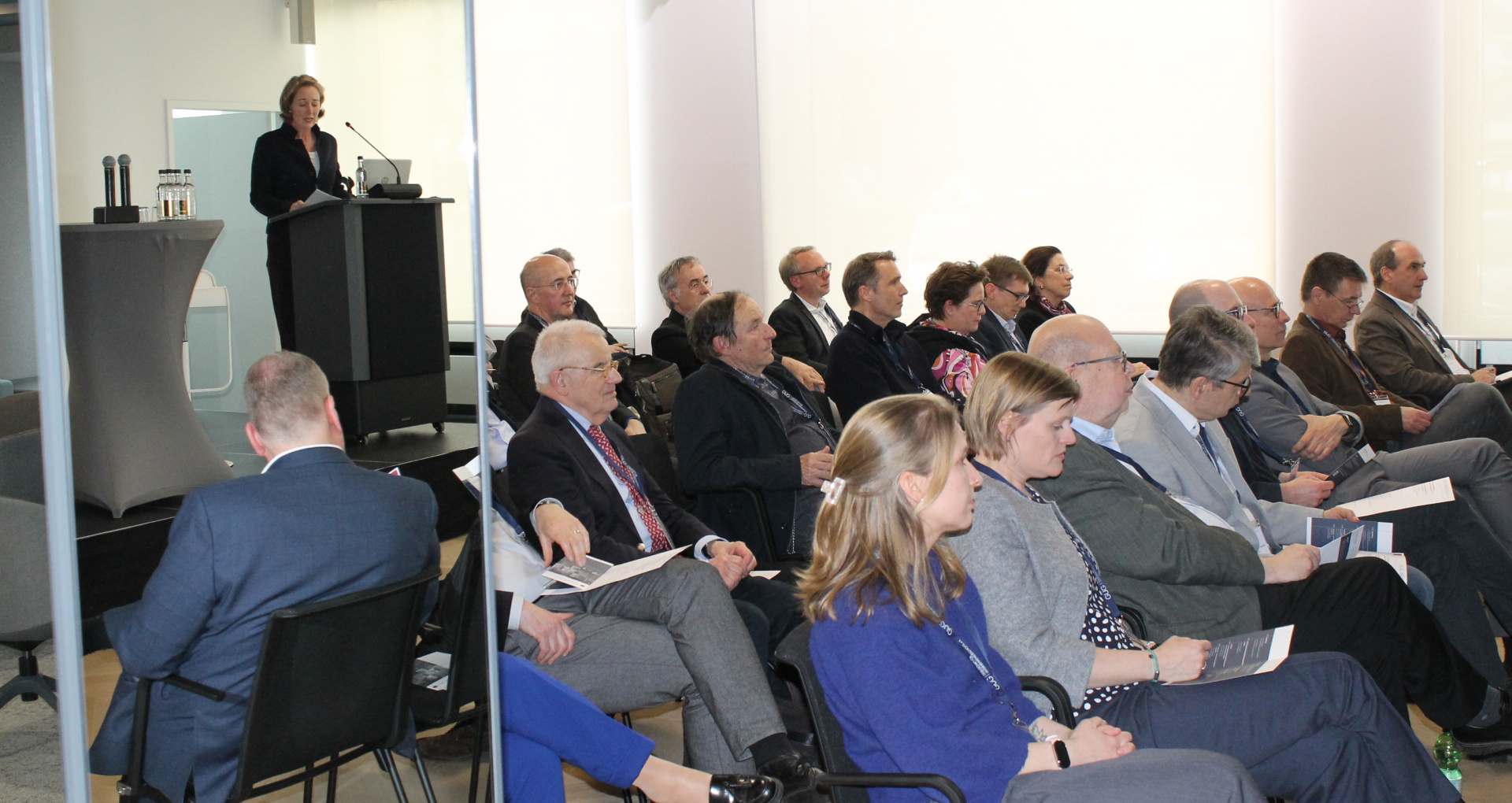
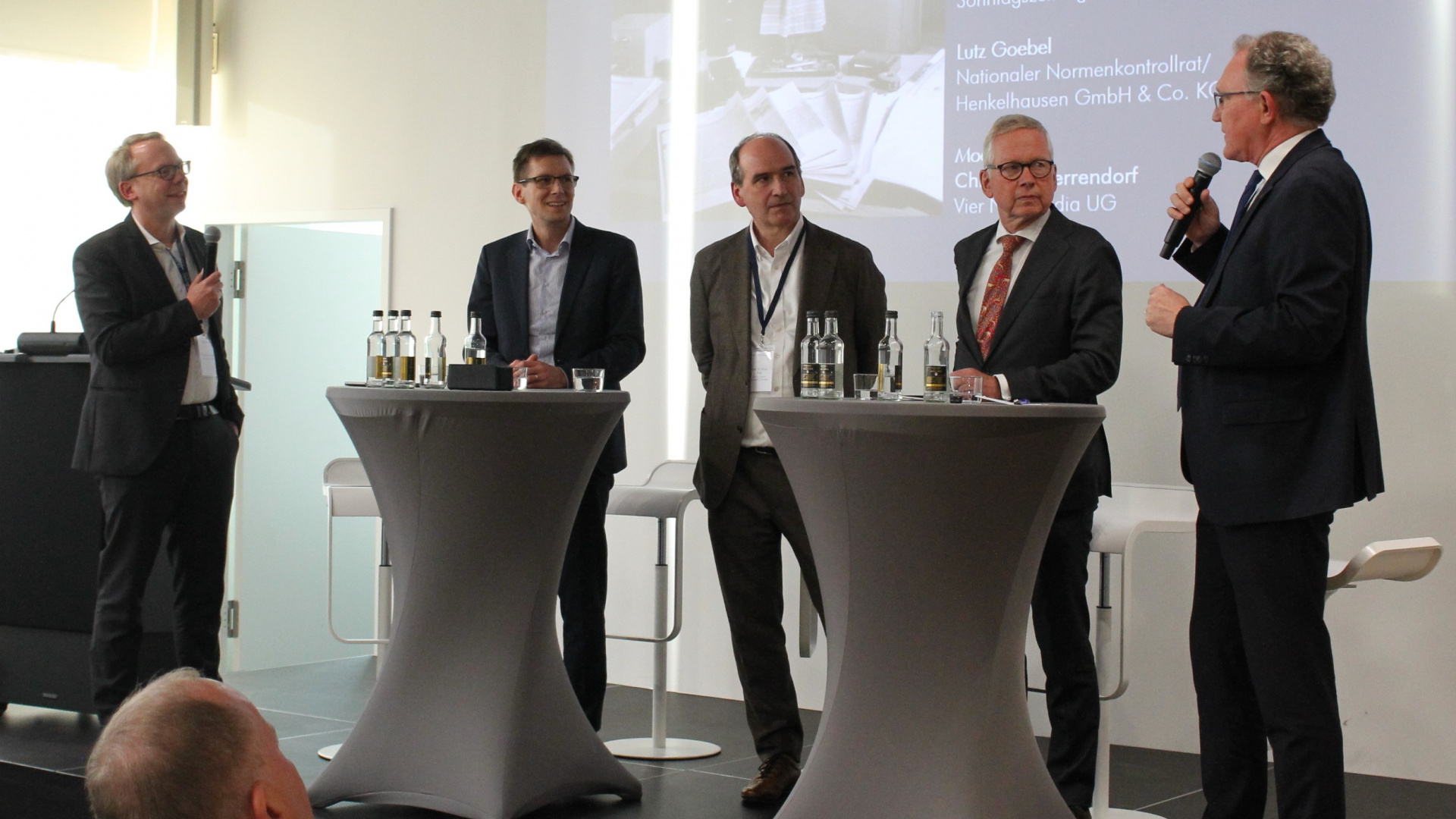
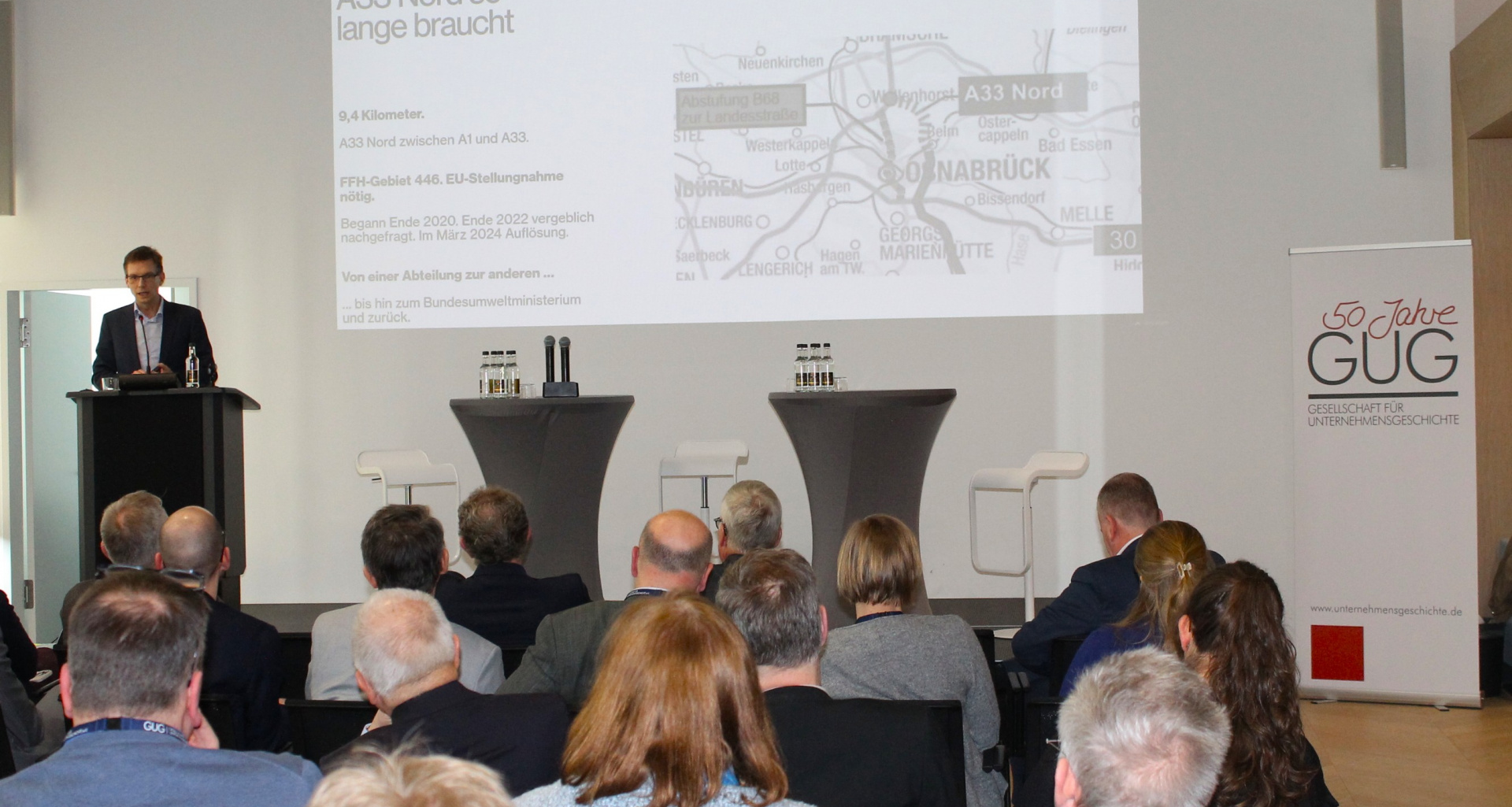
Review: Lecture Series 2026 – “Companies in the Stranglehold of Bureaucracy? The Need for Regulation vs. Innovation”
Date: March 12, 2026
Venue: Düsseldorf Chamber of Industry and Commerce
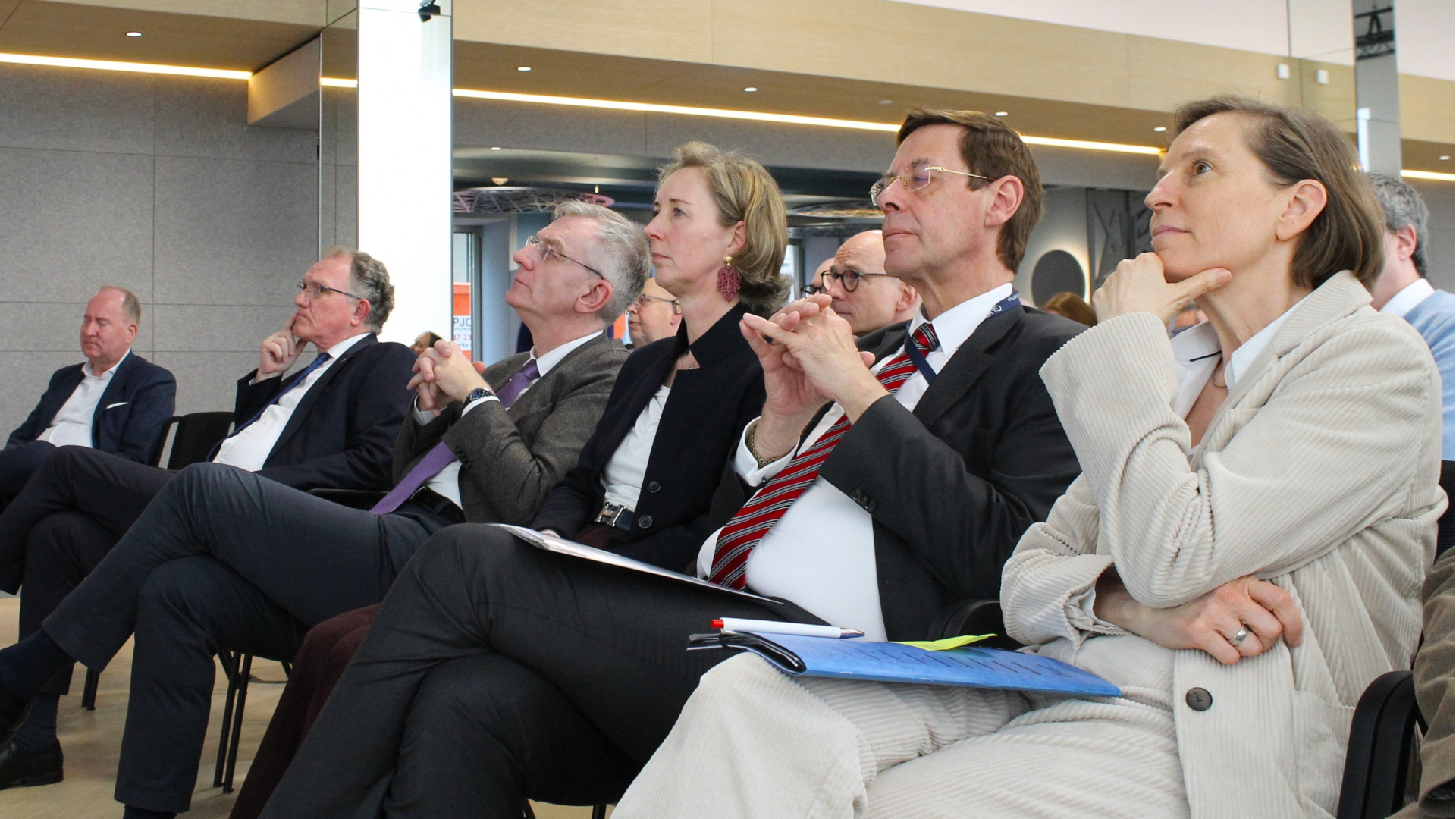
Bureaucratization is a topic that affects and polarizes both business and academia alike. Businesses in particular are increasingly confronted with a contradiction: although there has been talk of reducing bureaucracy for years, bureaucracy seems to be growing steadily in both complexity and scope. What dynamics lie behind this phenomenon and this criticism? And why, despite numerous attempts at reform, can bureaucratization not be reduced but remains a central characteristic of modern organizations?
The conference aimed to examine the historical background and dynamics behind (de)bureaucratization processes, as well as their significance for corporate practice. Why is bureaucracy criticized both historically and in the present day, yet continues to expand? How do bureaucratization processes influence innovation and efficiency in companies? What lessons can be drawn from historical examples of dealing with bureaucratization in today’s economy? What does growing bureaucratization mean for the international competitiveness of companies? What strategies could companies and policymakers develop to strike a balance between necessary regulations and entrepreneurial freedom?
The program and a detailed conference report can be found below.
Impressions
Review: 2025 Lecture Series – “Deglobalization in History and the Present”
Date: March 20, 2025
Venue: German Chamber of Industry and Commerce, Berlin
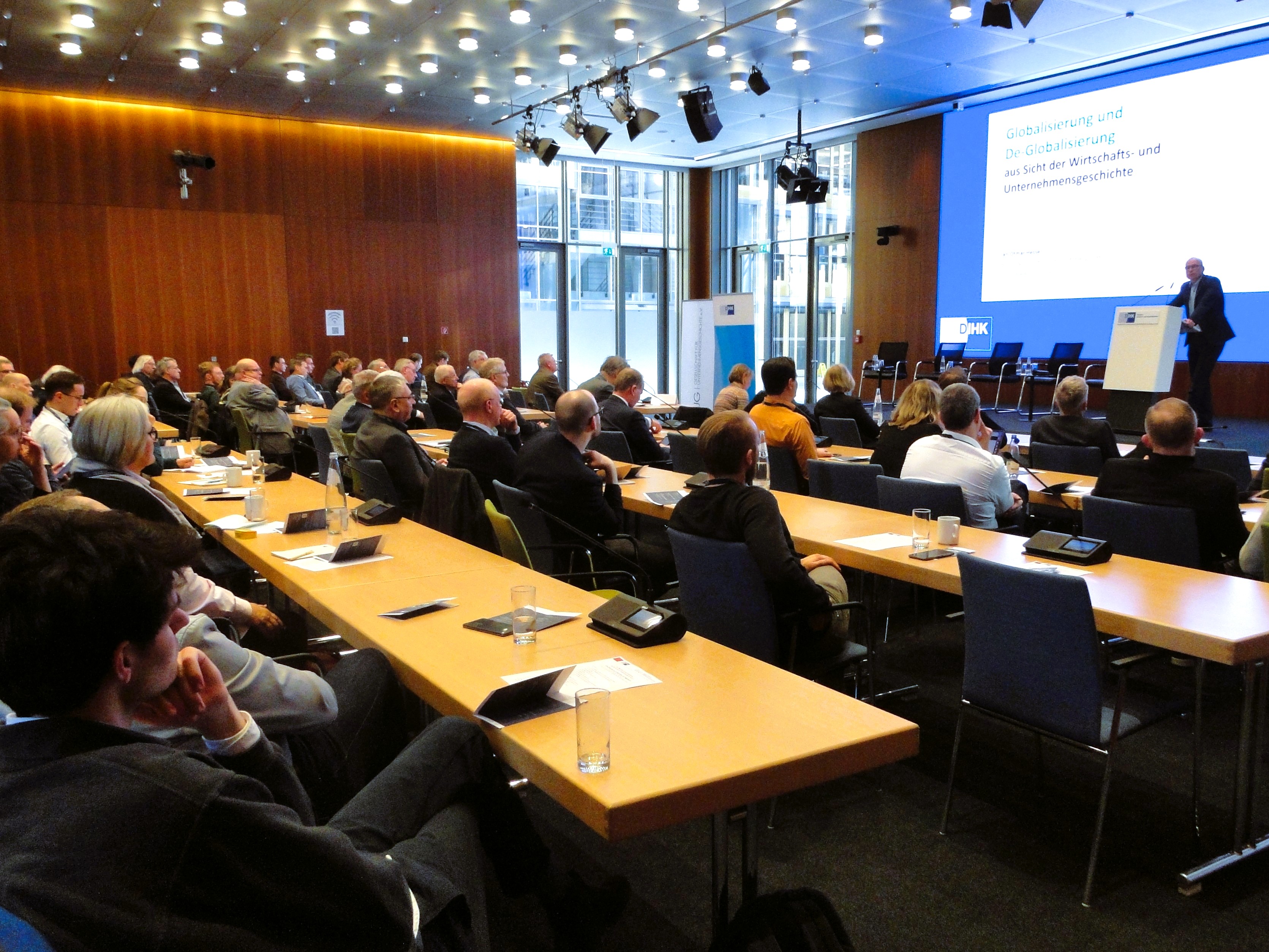
Supply chain crises, geopolitical tensions, rising protectionism – the global economy is under pressure. What historical parallels can be drawn, and how are companies responding to these changes? These questions were the focus of the 48th public lecture event of the Society for Business History (GUG), which took place on March 20, 2025, at the German Chamber of Industry and Commerce (DIHK) in Berlin.
Under the title “De-Globalization in History and the Present,” Jan-Otmar Hesse (University of Bayreuth), Moritz Schularick (Kiel Institute for the World Economy), and Volker Treier (DIHK) discussed the economic, political, and corporate-strategic dimensions of a multifaceted process. Rainer Kurtz (Kurtz Holding) provided insights into the perspective of small and medium-sized enterprises; the concluding panel discussion was moderated by Helene Bubrowski (Table.Media).
A historical review made it clear that in times of economic isolation, companies did not merely react but actively shaped the landscape—for example, through international subsidiaries, cartels, or tax-optimized structures. Moritz Schularick demonstrated how economic interdependence, while bringing economic success, proved politically disappointing: instead of convergence, rivalry and strategic autonomy dominate today. The discussion highlighted the “fragmentation paradox”—the risk that reduced economic interdependence makes political escalations more likely. There was agreement that companies must become more resilient in the future—through diversification, reshoring, or “China 1” strategies—without losing sight of international cooperation. In this context, deglobalization appears less as a step backward and more as an expression of a profound transformation of the global economic order.
The program and a detailed conference report can be found below.
Impressions
.jpg)
.jpg)
.jpg)
Past Events
48th Public Lecture Series on March 20, 2025, in Berlin:
Deglobalization in History and the Present
Programm ÖV 2025/Bericht ÖV 2025
47th Public Lecture Event on March 14, 2024, in Darmstadt:
Diversity Management in Companies
Programm ÖV 2024
46th Public Lecture Series on March 16, 2023, in Munich:
Companies and Universities – Success Through Cooperation?
Programm ÖV 2023/Bericht ÖV 2023
45th Public Lecture Event on March 24, 2022, in Frankfurt am Main:
The Importance of Price and Currency Stability for Businesses
Programm ÖV 2022/Bericht ÖV 2022
44th Public Lecture Event on October 22, 2021, in Stuttgart:
Skills Shortages and Migration
Programm ÖV 2021/Bericht ÖV 2021
2020
Unfortunately, the event had to be canceled at short notice due to the COVID-19 pandemic!
43rd Public Lecture Series on March 24, 2019, in Stuttgart:
Global Corporate Strategies: Cross-Border Approaches to Human Rights
Programm ÖV 2020
42nd Public Lecture Series on March 7, 2019, in Walldorf:
Enterprise 4.0 – Hope or Horror?
Programm ÖV 2019/Bericht ÖV 2019
41st Public Lecture Event on March 15, 2018, in Ditzingen:
Charisma: Risk Factor or Guarantee of Success?
Programm ÖV 2018/Bericht ÖV 2018
40th Public Lecture Event on March 16, 2017, in Munich:
Risk: Politics?
Programm ÖV 2017/Bericht ÖV 2017
39th Public Lecture Event on March 17, 2016, in Duisburg:
Pax Britannica, Pax Americana, Pax Sinica? Structural Change in the Global Economy and the Situation of Companies
Bericht ÖV 2016
38th Public Lecture Event on March 19, 2015, in Cologne:
The Battle for Resources – The Relevance of Energy Prices for German Companies
Bericht ÖV 2015
37th Public Lecture Event = Annual Conference of the Business History Conference March 13–15, 2014, in Frankfurt:
The Vices and Virtues of Business - a historical perspective
Bericht ÖV 2014
36th Public Lecture Event on March 14, 2013, in Leverkusen:
From Workplace Social Policy to Corporate Citizenship
Bericht ÖV 2013
35th Public Lecture on March 15, 2012, in Munich:
20 Years After Maastricht: The European Crisis
and Structural Change in the Global Economy
Bericht ÖV 2012
34th Public Lecture Event on March 16, 2011, in Stuttgart:
Europeanization of Co-determination
Bericht ÖV 2011
33rd Public Lecture Event on March 11, 2010, in Munich:
Economic Crises – The Entrepreneur’s Moment?
Download Program
Programm ÖV 2010
32nd Public Lecture on March 12, 2009, in Berlin:
The Fall of the Berlin Wall and German Companies. 1989 – A Turning Point or Continuity?
Programm ÖV 2009
31st Public Lecture on March 13, 2008, in Wolfsburg:
The Future of Mobility. Cars and Energy Use as a Technical-Economic Problem
Programm ÖV 2008
30th Public Lecture on March 8, 2007, in Essen:
Business in China
Programm ÖV 2007
29th Public Lecture Event on March 23, 2006, in Wiesbaden:
Women in Economic Leadership Positions
Bericht ÖV 2006
28th Public Lecture on March 7, 2005, in Berlin:
The Entrepreneur’s Responsibility
Programm ÖV 2005
27th Public Lecture on April 27, 2004, in Freyburg an der Unstrut:
Self-Employment: Between Success Model and Crisis Phenomenon
Programm ÖV 2004
26th Public Lecture on May 5, 2003, in Berlin:
1968 and German Companies
Bericht ÖV 2003
25th Public Lecture on April 29, 2002, in Berlin:
Business Cultures – A Comparison of Germany and the USA
Programm ÖV 2002
24th Public Lecture Series on April 5, 2001, in Frankfurt am Main:
Consulting
Programm ÖV 2001
23rd Public Lecture on April 6, 2000, in Berlin:
German Entrepreneurs in the World. From Internationalization to Globalization
22nd Public Lecture on April 21, 1999, in Cologne:
Business Succession – A Never-Ending Story
21st Public Lecture on April 23, 1998, in Frankfurt am Main:
Banks’ Willingness to Take Risks in Start-ups
Keynote Lecture on November 17, 1997, in Cologne:
Prof. Gerald D. Feldman: Politics and Business in the Weimar Republic
21st Public Lecture Series on February 29, 1996 in Frankfurt am Main:
Privatization – Municipalization
20th Public Lecture Series on February 13, 1995 in Cologne:
The Road Through the Centuries – Social Significance and Technical Innovation
19th Public Lecture on May 30, 1994, in Waiblingen:
Location Selection and Policy of German Companies
18th Public Lecture:
Corporate Culture and History
17th Public Lecture on May 26, 1992, in Frankfurt am Main:
Entrepreneurs and Political Responsibility
16th Public Lecture on May 15, 1991, in Mannheim:
Industry and the Environment
15th Public Lecture:
Family Businesses in the Economy and Society from the 19th Century to the Present
14th Public Lecture:
Business Associations. Partners of Politics or Pressure Groups?
13th Public Lecture:
Structural Development in German Economic Regions
12th Public Lecture on May 22, 1987, in Bonn:
Public-Sector Enterprises. Yesterday – Today – Tomorrow
11th Public Lecture on June 10, 1986, in Munich:
Small and Medium-Sized Enterprises and the Labor Market. Can Small and Medium-Sized Enterprises Solve the Employment Problems of the German Economy?
10th Public Lecture on June 26, 1985, in Frankfurt am Main:
The Origins and Development of the Social Market Economy
9th Public Lecture on May 18, 1984, in Düsseldorf:
Protectionism. Progress or Regression?
Academic Lecture by the GUG and the Association for Scientific Research in the Field of Entrepreneurial Biography and Business History on October 11, 1984, in Vienna:
Business and the State after World War II. A German-Austrian Comparison
8. Public lecture on May 25, 1983, in Cologne:
Integration of Foreign Employees
7th Public Lecture on June 25, 1982, in Munich:
The Changing Legitimacy of Management. On the Discussion Regarding the Function and Mandate of Business Leadership Over the Last 150 Years
6th Public Lecture on May 13, 1981, in Fürth:
Sales Strategies of German Companies. Yesterday – Today – Tomorrow
5. Public Lecture on May 7, 1980, in Düsseldorf:
Co-determination. Origins and Development
4th Public Lecture/German-Japanese Symposium at the Siemens Training Centre in Berlin, March 20–23, 1979:
Innovation, Know-How, Rationalization, and Investment in German and Japanese Economics 1868/1871–1930/1980
3. Public Lecture Series on May 31, 1978, in Frankfurt am Main:
Foundations and Enterprises: Experiences and Future Prospects
2nd Public Lecture on June 28, 1977, in Cologne:
Concentration in the German Economy since the 19th Century
1st Public Lecture:
The Entrepreneur in History and the Present
Scientific Symposia
Through academic symposia on selected topics, the GUG stimulates historical research. It seeks to identify gaps in research and provides the necessary space for discussing current academic issues.
Upcoming event: 49th Academic Symposium:
“The Defense Industry and Arms Deals in Peacetime”
One of the most astonishing comebacks in the Federal Republic’s economy is currently that of the defense industry. This refers not only to the unprecedented boom in orders, the shift in image, and the soaring stock prices, but also to the growing academic attention. Economists and politicians are already speculating about the arms trade as a lifeline for struggling automakers and suppliers, as a pillar of the German IT sector, and as a catalyst for a revival of the space industry.
For this reason, the GUG is planning its 49th Scientific Symposium for October 8 and 9, 2026, under the theme “The Defense Industry and Defense Business in Peacetime.” While business history research has extensively examined the arms industry during the world wars, there are significant gaps in research regarding the post-1945 period; more recent studies cover the development of arms manufacturers in the Federal Republic of Germany only sporadically at best.
The symposium aims to take stock of the current state of research while also incorporating related fields, including military history, to the extent that they pertain to the arms industry. The focus will extend beyond arms manufacturers and the defense divisions of conglomerates to include suppliers—such as those from the steel industry—the trade in military equipment, and defense research. Developments in the Federal Republic of Germany will also be placed in a comparative context through contributions on other peacetime periods and other European countries
.
The symposium will also address public perceptions of the arms industry and examine how the industry responded to them. It serves as a forum for current academic research and facilitates dialogue with representatives of companies and other relevant stakeholders.
Review: 48th Academic Symposium:
“Companies and the Colonial Past”
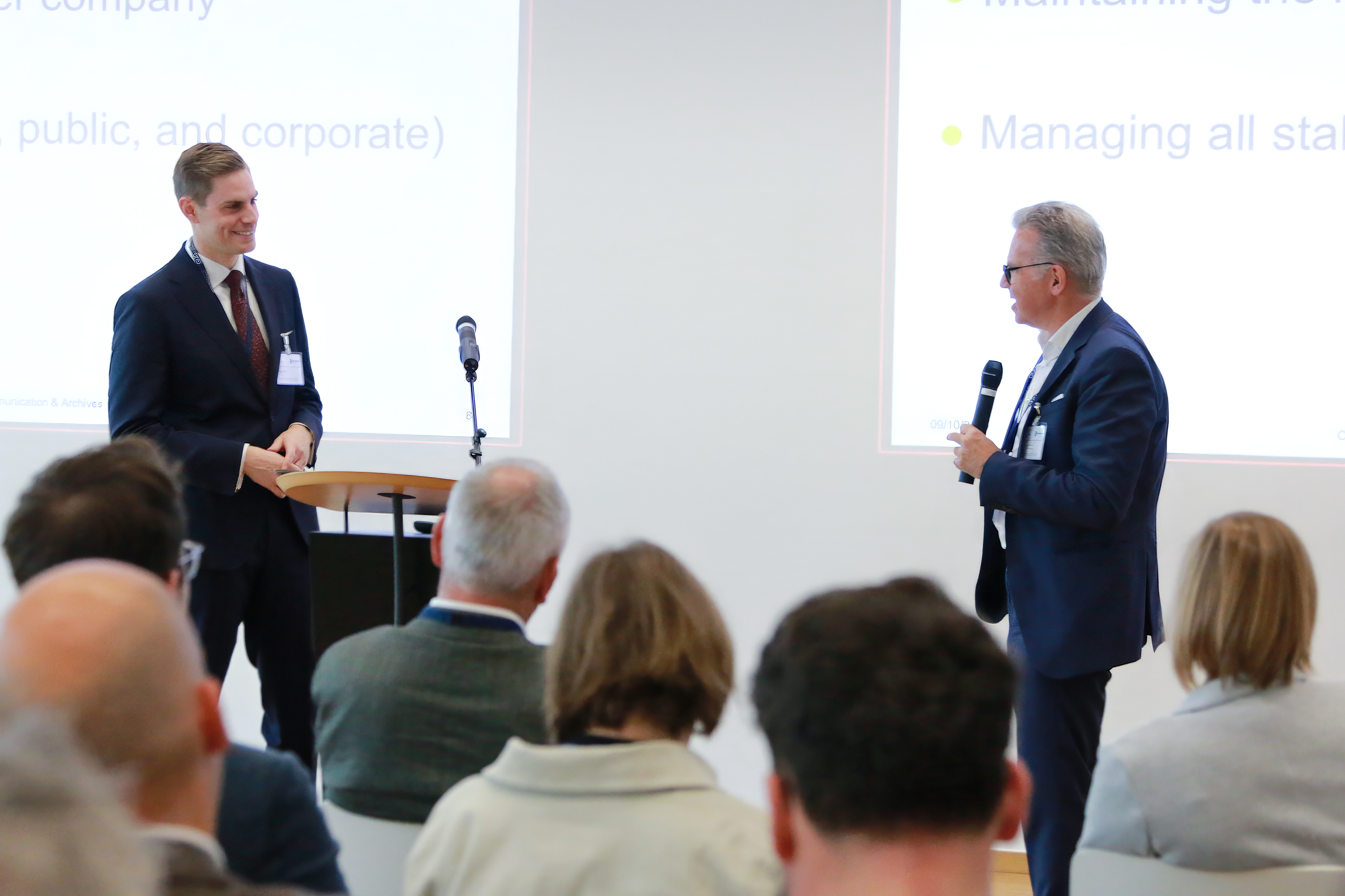
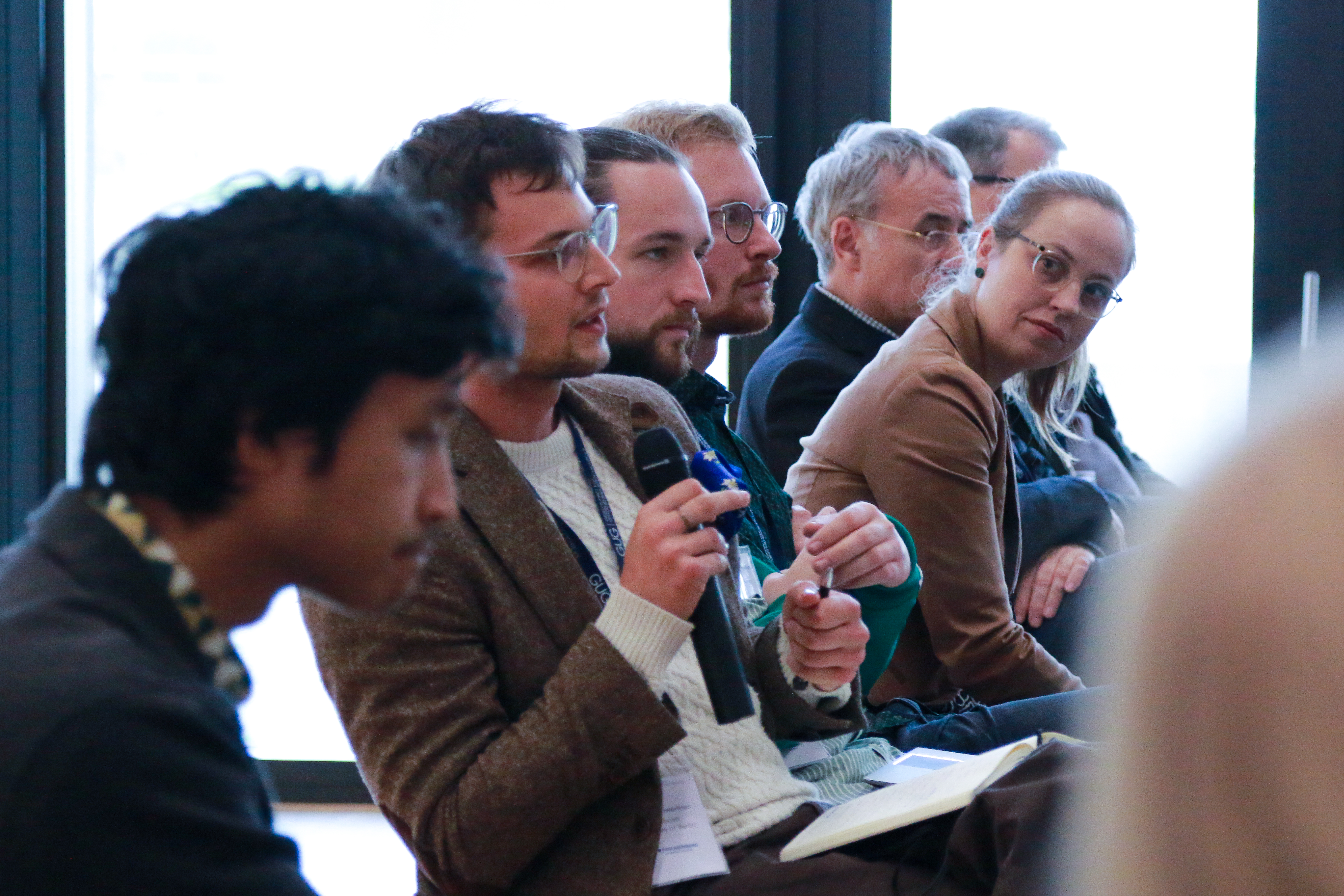
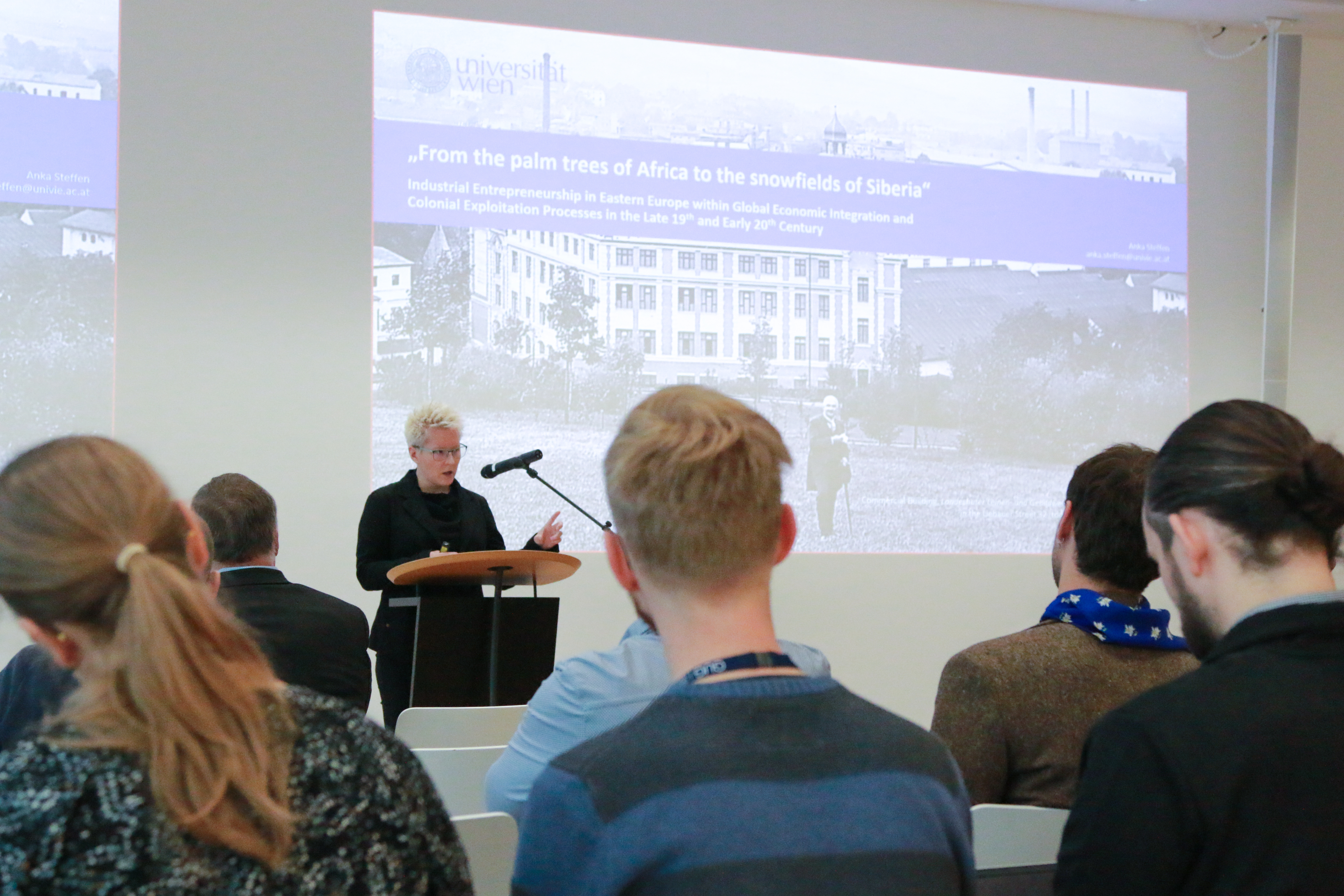
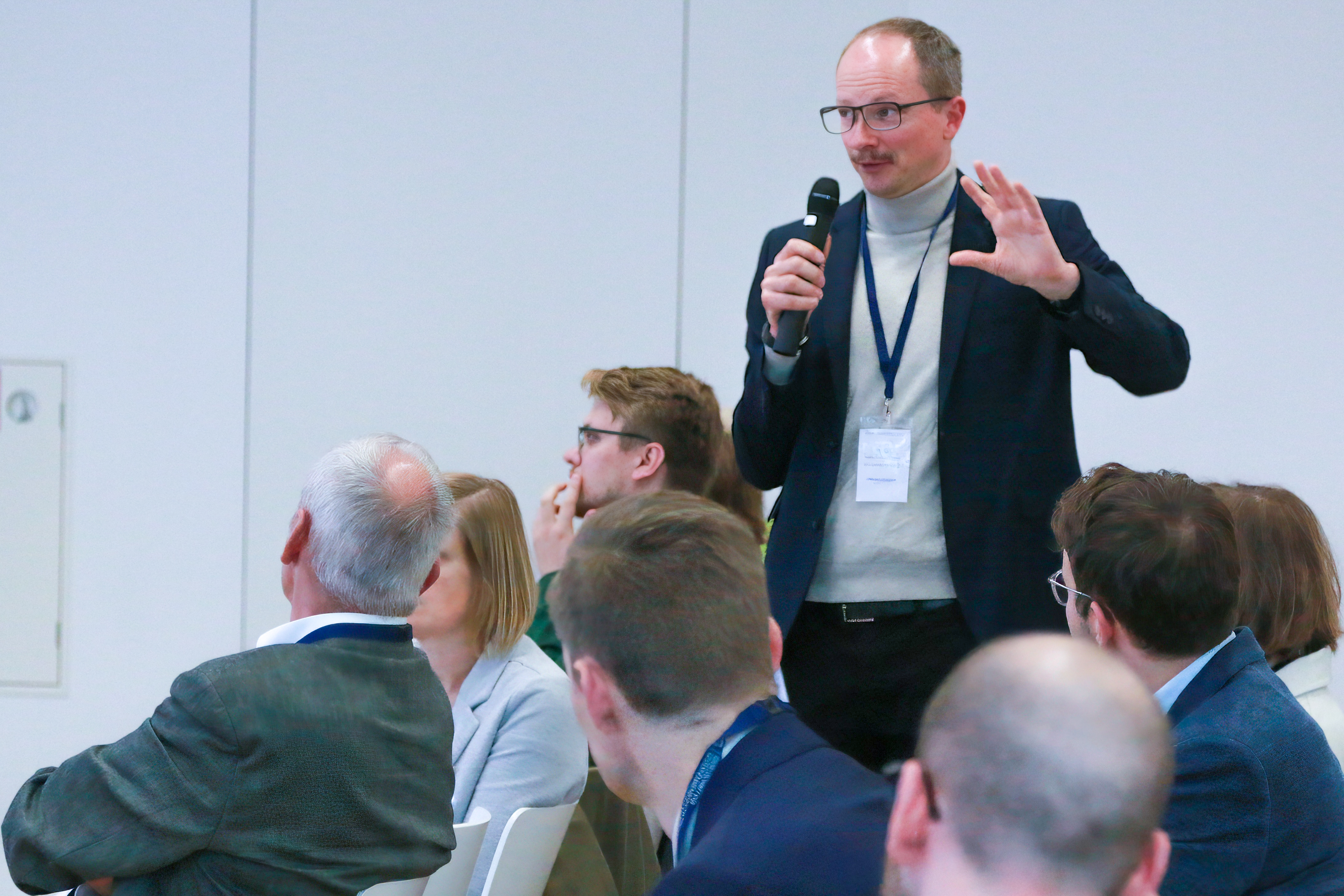
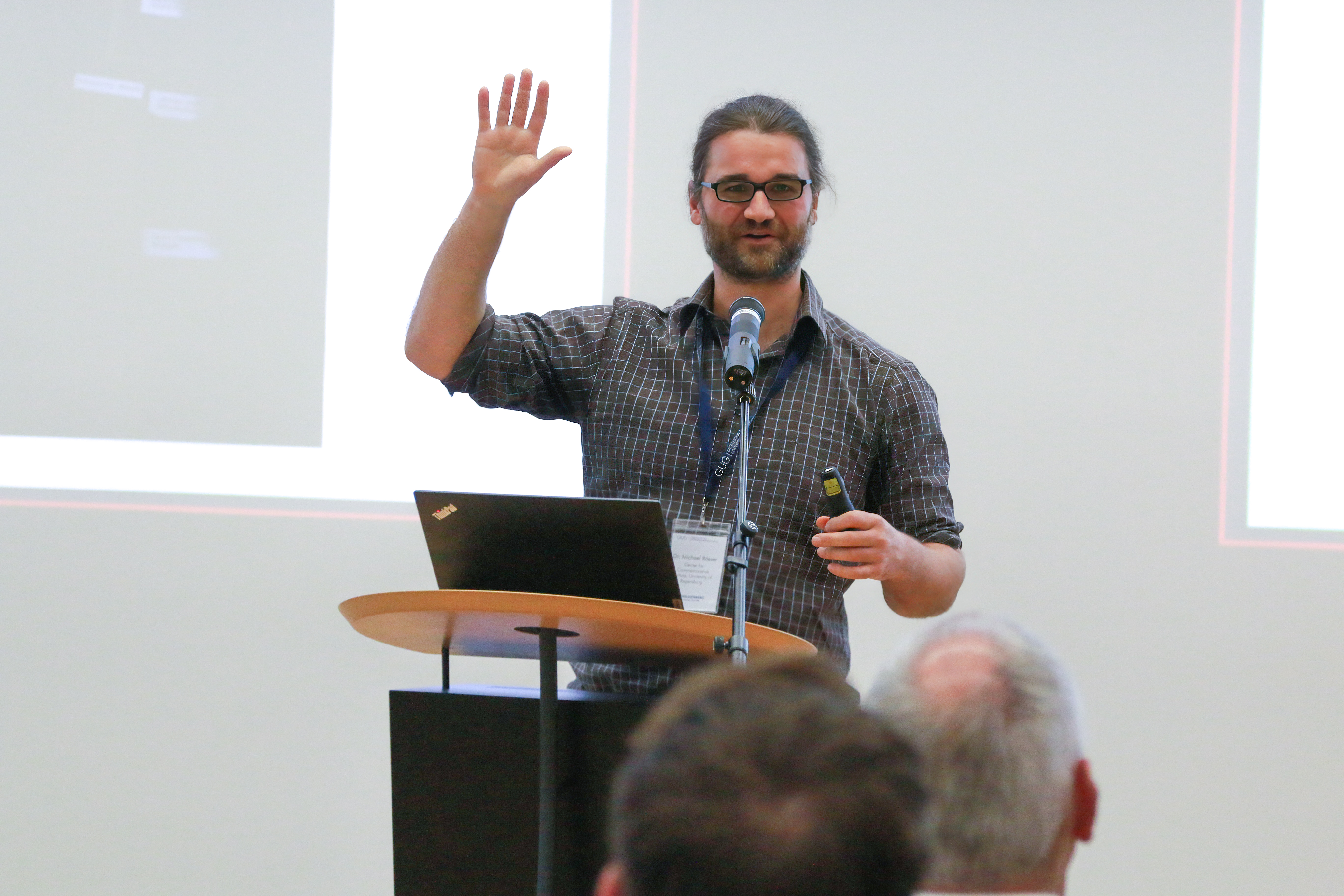
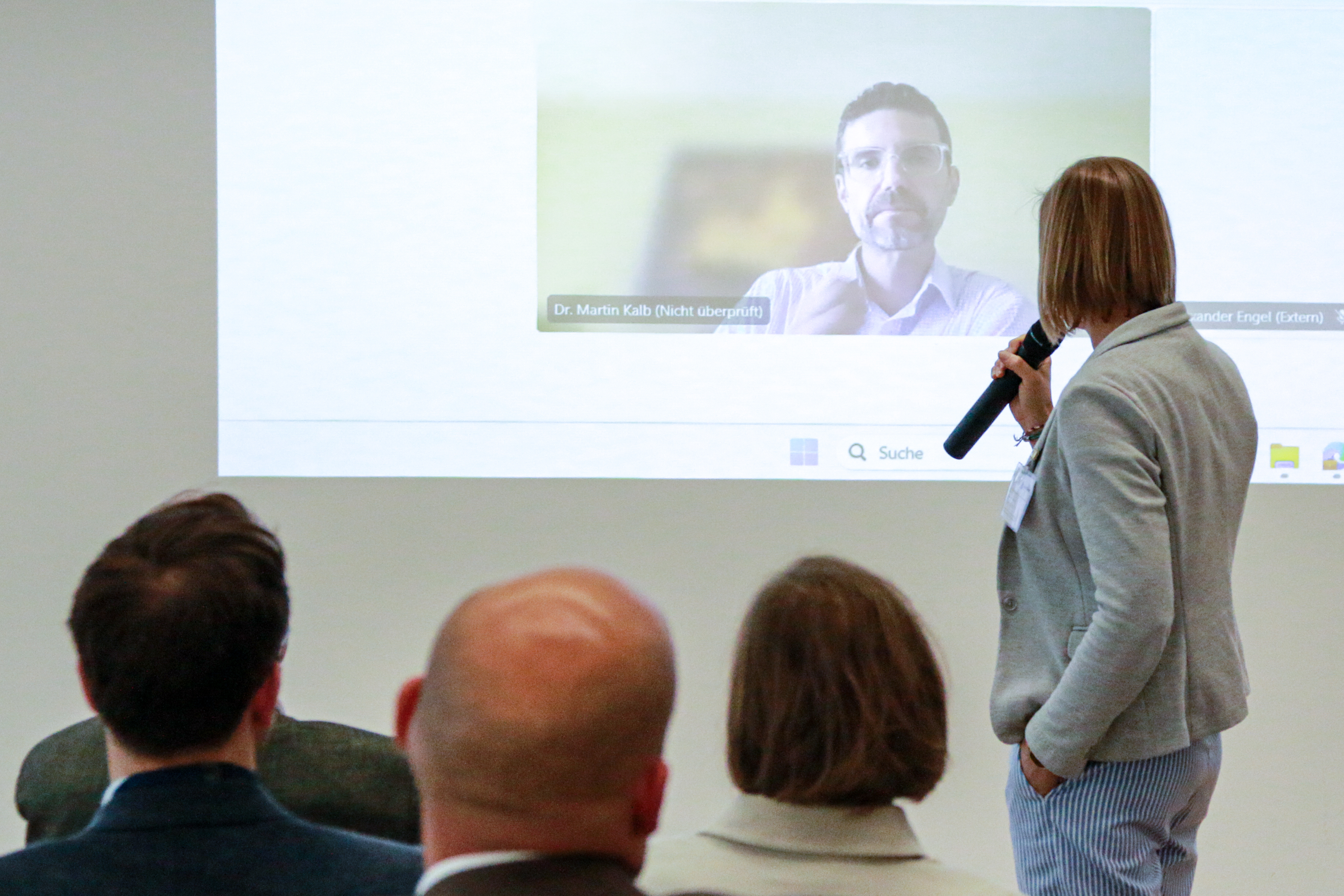
What responsibility do companies bear whose history is intertwined with colonial structures? This question was at the heart of the 48th Academic Symposium, which brought together economic historians, experts in (post)colonial studies, and corporate archivists at the Freudenberg Group’s premises in Weinheim under the theme “Companies and the Colonial Past.” The focus was on the complex connections between companies and colonial systems—both historically and in the present day. The discussions showed that an interdisciplinary dialogue with practitioners is essential for reflecting on historical responsibility and the current relevance of the topic for companies.
MATTHIAS KEMMERER and TRISTAN OESTERMANN provided illustrative insights into the source material in the archives. It also became clear just how wide the range of possible research questions is: MARTIN KALB, SABRINA SCHMITZ-ZERRES, and MICHAEL RÖSSER presented case studies on trade and consumption, while ANKA STEFFEN and JAYITA SARKAR addressed markets and (post-)colonial conditions. KIM S. TODZI and THOMAS IRMER focused on the topic of infrastructure.
In the ensuing debates, key questions were raised: Should our understanding of “companies” in colonial contexts be fundamentally rethought? How can we move beyond individual case studies and make visible the embedding of corporate activities within broader colonial structures? And what contribution can business history make to colonial research—for example, through the analysis of multinational enterprises (MNEs)? It also became clear that companies today should confront their colonial past. Whether and how corporate reappraisal of National Socialism can serve as a frame of reference for dealing with colonial legacies must be explored further through methodological considerations and research.
You can find the program below in the download section; the conference report will follow.
Impressions
Review and Downloads
48th Academic Symposium:
Companies and the Colonial Past
Call for Papers WS 2025
47th Academic Symposium on October 10 and 11, 2024, in Zurich:
Tax management and competition in historical perspective
Programm WS 2024/Bericht WS 2024
46th Academic Symposium on October 12 and 13, 2023, in Berlin:
The Construction of the Entrepreneur. Self-Perceptions and External Perceptions since the 19th Century
Programm WS 2023
45th Scientific Symposium on October 6 and 7, 2022, in Frankfurt am Main:
Changing Sides. Entrepreneurs in Politics and Politicians in Business
Programm WS 2022/Bericht WS 2022
44th Scientific Symposium on October 21 and 22, 2021, in Stuttgart:
Careers of Executives Inside and Outside Organizations
Programm WS 2021/Bericht WS 2021
43rd Scientific Symposium on October 8, 2020, in Mettingen:
Doomed to Size and Growth? Structural Change in Retail Since the 1950s
Programm WS 2020/Bericht WS 2020
42nd Scientific Symposium on October 17 and 18, 2019, in Essen:
1919 – the Treaty of Versailles, the Reorganization of Europe, and German Companies
Programm WS 2019/Bericht WS 2019
41st Scientific Symposium Joint Conference BHSJ and GUG on September 13 and 14, 2018, in Frankfurt am Main:
Corporate Governance in Japan and Germany in the 19th and 20th Centuries
Programm WS 2018/Bericht WS 2018
40th Scientific Symposium on October 13, 2017, in Leipzig:
Business in the East: West German Companies in the GDR
Programm WS 2017/Bericht WS 2017
39th Academic Symposium Joint Conference ABH and Gesellschaft für Unternehmensgeschichte e.V. on May 27–28, 2016, in Berlin:
Creativity and Entrepreneurship in the Global Economy
Programm WS 2016/Bericht WS 2016
38th Scientific Symposium on October 8–9, 2015, in Vienna:
Experience, Expectation, Decision – Decision-Making Processes in Companies from a Conceptual Perspective
Programm WS 2015/Bericht WS 2015
37th Scientific Symposium on October 16–17, 2014, in Frankfurt am Main
Economic Crime and Business
36th Scientific Symposium on October 10–11, 2013, in Mannheim:
Business and War.
Recent Research on World War I
35th Academic Symposium on October 11–12, 2012, in Berlin:
Internationalization and Management after 1945
34th Academic Symposium on October 6–7, 2011, in Frankfurt am Main:
Entrepreneurs and Migration
33rd Academic Symposium on October 7–8, 2010, in Düsseldorf:
Religion and Business
32nd Academic Symposium on October 8–9, 2009, in Vienna:
Nationalization and Privatization
31st Academic Symposium on October 8–9, 2008, in Frankfurt am Main:
Business and Art from a Historical Perspective
30th Academic Symposium on October 8–9, 2007, in Munich:
Structural Change in Corporate Organization, 1960–1980
29th Academic Symposium on October 12–13, 2006, in Stuttgart:
Entrepreneurial Networks. A Historical Form of Organization with a Future?
28th Academic Symposium 9th European Business History Conference September 1–4, 2005, in Frankfurt am Main:
Corporate Images – Images of the Corporation
27th Academic Symposium on October 14–15, 2004, in Walldorf:
Corporate Knowledge Markets
26th Academic Symposium on October 1–2, 2003, in Recklinghausen:
Regulation and Deregulation
25th Academic Symposium on September 5–6, 2002, in Cologne:
Companies and Old-Age Security
24th Scientific Symposium on October 11–13, 2001, in Bochum (in collaboration with the Working Group for Critical Corporate and Industrial History, or AKKU for short):
Economic Elites in the 20th Century
23rd Scientific Symposium on October 20–21, 2000, in Frankfurt am Main:
Innovations in Banking
22nd Academic Symposium on October 22–23, 1999, in Königswinter:
The Internationalization of the German Economy
21st Academic Symposium on October 23–24, 1998, in Berlin:
Print Media in Competition
20th Academic Symposium on June 20–21, 1997, in Frankfurt am Main:
Companies and Entrepreneurs under National Socialism
19th Academic Symposium on September 12–13 in Vienna:
Austria, Bohemia, and Hungary as Economic Locations
18th Academic Symposium on October 10–11, 1995, in Düsseldorf:
Crises and Crisis Management from the 19th Century to the Present
17th Academic Symposium on November 24–25, 1994, in Jena:
History of Organizational Structures in Corporate Sales Departments in the New and Old Federal States
16th Academic Symposium on September 30–October 1, 1993, in Trier:
Co-determination and Works Constitution in Germany and France since the 19th Century
15th Academic Symposium on August 12–14, 1992, in Munich:
Transnational Investment from the 19th Century to the Present
14th Academic Symposium on December 13–14, 1990, in Berlin:
The Development of Corporate Forms and Structures in West Germany since World War II
13th Academic Symposium/Academic Lecture Series of the GUG and the Institute for Banking History Research on November 3, 1989, in Frankfurt am Main:
Survival Prospects of New Business Start-ups
12th Academic Symposium on November 24–25, 1988, in Berlin:
The Influence of Foreign Companies on the German Economy from the Late Middle Ages to the Present
11th Academic Symposium on November 27–28, 1986, in Fellbach:
The Impact of Motorization on Transportation from 1886 to 1986
10th Academic Symposium, September 25–27, 1985, in Lüneburg:
Restrictions on Competition in International Markets
9th Academic Symposium, January 17–18, 1985, in Kehl:
Municipal Enterprises: Past and Present
8th Scientific Symposium on December 8–9, 1983, in Essen:
Women in the German Economy
7th Scientific Symposium on November 19, 1982, in Leverkusen:
Economy, Schools, and Universities. The Promotion of School Education and Scientific Research by German Companies Since the 19th Century
6th Academic Symposium on December 15–16, 1981, in Hamburg:
Economic Growth, Technology, and Working Hours in an International Comparison
5th Academic Symposium:
Profit Sharing and Wealth Accumulation Among Employees of Selected German Companies (1850–1945)
4th Scientific Symposium on December 7, 1979, in Hanover:
The Development of Labor Dispute Law in Germany and Its Western Neighboring Countries
3rd Scientific Symposium:
Financing, Innovation, Know-How
2nd Scientific Symposium on December 7, 1978, in Sindelfingen:
Vocational Training and Continuing Education in the German Economy Since the 19th Century
1st Scientific Symposium on November 25, 1977, in Hamburg:
Corporate Social Policy of German Companies Since the 19th Century
Working Group History of Banking and Insurances
Entstanden aus den Arbeitskreisen Bankengeschichte und Versicherungsgeschichte, trifft sich dieser Arbeitskreis einmal jährlich. Diskutiert werden Forschungen zu spezifischen Themen aus dem Feld des Arbeitskreises. Der Arbeitskreis traf sich zum ersten Mal am 21. Oktober 2005.
Mitglieder: 113 (Stand 2025)
Vorsitz:
PD Dr. Friederike Sattler, Goethe-Universität Frankfurt, Vorsitzende
Stefan Pretzlik, Historische Archive der Munich Re Group, München
Mitglied werden:
Sollten Sie Interesse an einer Mitarbeit im Arbeitskreis Bank- und Versicherungsgeschichte haben, wenden Sie sich bitte an unsere Geschäftsstelle.
Upcoming Event: 23rd Meeting of the Working Group on Banking and Insurance History
More information will follow shortly.
Review: 22nd Meeting of the Working Group on Banking and Insurance History
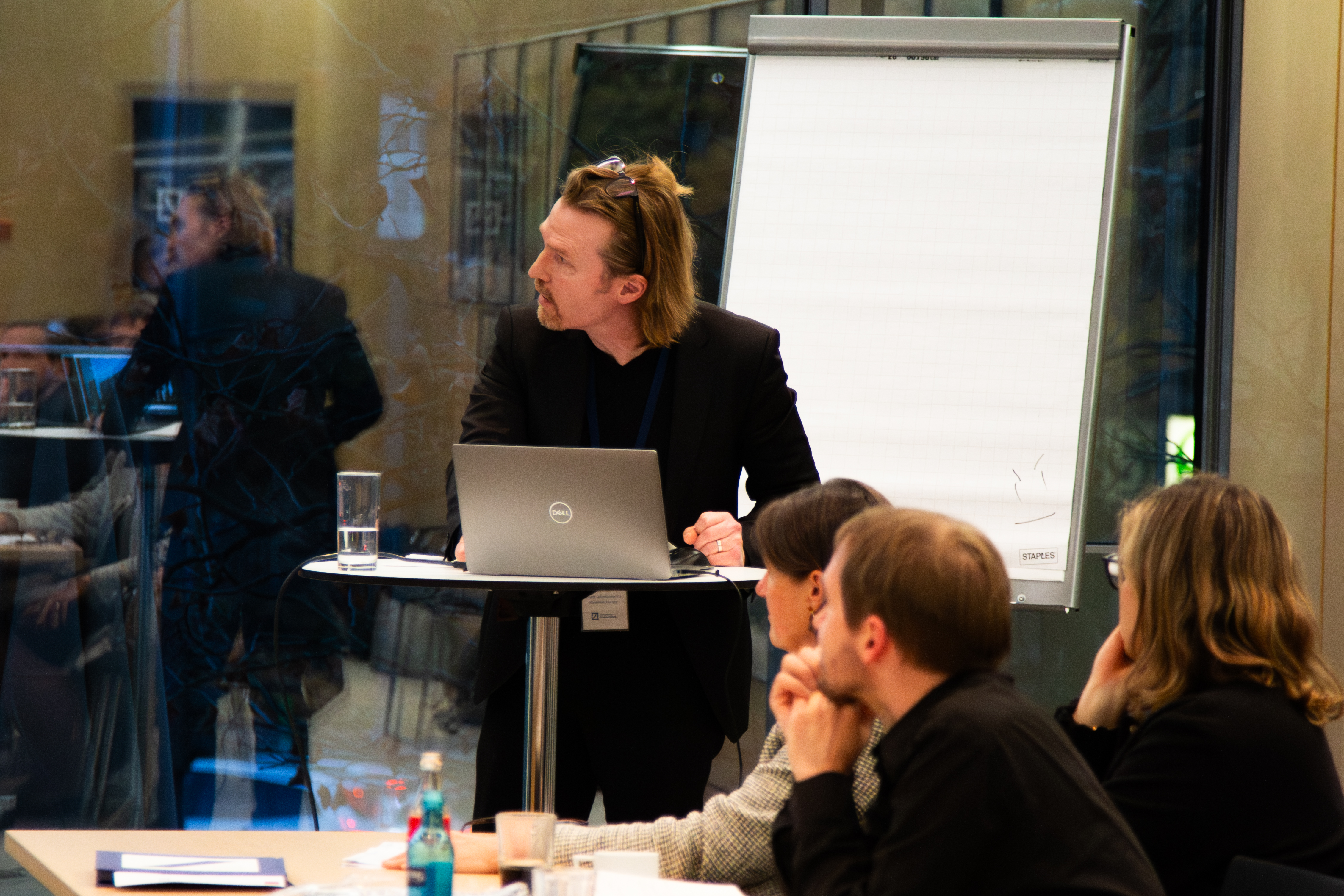
How much does a bank building reveal about the institution it houses—and what role does corporate design play in this? These questions were the focus of the 22nd meeting of the Working Group on Banking and Insurance History, which took place on November 21, 2025, in Frankfurt am Main on the topic of “Architecture and Corporate Design in the Financial Industry.”
The historical case studies—ranging from the Banca d’Italia to the Austro-Hungarian Bank and savings bank buildings to the ECB—made it clear that architectural solutions often emerge from negotiation processes between bank executives, architects, and societal ideals—the spirit of the times. Surprisingly, the findings revealed that even conservative bank executives often supported modernist designs that signaled openness and future-readiness.
A central discussion also addressed the increasing homogenization of banking business models: The more interchangeable products and services become, the more image, corporate design, and representative buildings gain significance as communicative points of reference between banks and the public.
There was an intensive discussion of the symbolic transparency of modern glass architecture, which suggests openness without necessarily delivering institutional transparency. Other focal points included sustainable design concepts as well as the growing influence of the consumer industry, whose showroom aesthetics are increasingly finding their way into bank buildings.
Using the examples of the Banca d’Italia, the Austro-Hungarian Bank, and the ECB, it ultimately became clear that bank architecture consistently serves to shape identity on multiple levels while simultaneously positioning financial institutions as bearers of political significance within the urban landscape.
The program is available in the download section. A detailed conference report will follow shortly.
Impressions
.jpg)
.jpg)
.jpg)
Review und Downloads
22nd Meeting of the Working Group on Banking and Insurance History on November 21, 2025, at Deutsche Bank AG:
Architecture and Corporate Design in the Financial Industry
Programm AK Banken 2025
21st Meeting of the Working Group on Banking and Insurance History on November 15, 2024, at Commerzbank AG:
Sustainable Finance and Insurance. Concepts and Practices Since the 18th Century
Programm AK Banken 2024
20th Meeting of the Working Group on Banking and Insurance History on December 1, 2023, at Ergo Group:
Business Risks – Research, Manage, and Control?
Programm AK Banken 2023/Bericht AK Banken 2023
19th meeting of the Working Group on Banking and Insurance History on November 18, 2022, at Commerzbank AG:
German Banks and the Second Globalization
Programm AK Banken 2022/Bericht AK Banken 2022
18th meeting of the Working Group on Banking and Insurance History together with the 17th meeting of the Working Group on Family Businesses on November 19, 2021, at ODDO BHF Bank:
Banks and Family Businesses
Programm AK Banken 2021/Bericht AK Banken 2021
17th meeting of the Working Group on Banking and Insurance History on November 8, 2019, at KPMG Wirtschaftsprüfungsgesellschaft:
Careers in the Financial World
Programm AK Banken 2019/ Bericht AK Banken 2019
16th meeting of the Working Group on Banking and Insurance History on October 26, 2018, at Fürstlich Castell’sche Bank:
Bank and Family
Programm AK Banken 2018/Bericht AK Banken 2018
15th Meeting of the Working Group on Banking and Insurance History on November 3, 2017, at KfW, Frankfurt am Main:
German Banks and the Return of German Industry to the World Market (1953–1973)
{2017_Programm_AK_Banken}/{2017_Bericht_AK_Banken}
14th Meeting of the Working Group on Banking and Insurance History on November 24 and 25, 2016, in cooperation with the European Association for Banking History (eabh), Frankfurt am Main:
The rise (and decline) of retail banking? 1960s to 2020s
{2016_Programm_AK Banken}/ {2016_Bericht_AK Banken}
13th meeting of the working group (unscheduled) on February 26, 2016, at Munich Re, Munich:
Natural Disasters and Risk Management in the Insurance Industry
{2016_2_Programm_AK Banken}/ {2016_2_Bericht_AK Banken}
12th meeting of the Working Group on Banking and Insurance History on September 26, 2014, in cooperation with BNP Paribas:
The Internationalization of Financial Services
Programm AK Banken 2014/Bericht AK Banken 2014
Workshop of the Working Group on Banking and Insurance History on September 19–20, 2013, in cooperation with the Finanzgruppe Wissenschaftsförderung:
Marketing Strategies in the Financial Sector since the 20th Century
Programm AK Banken 2013/Bericht AK Banken 2013
11th Meeting of the Working Group on Banking and Insurance History on October 5, 2012:
Bankers in the Network of Bank-Industry Relations
Programm AK Banken 2012/{2012_Bericht_AK Banken}
10th Meeting of the Working Group on Banking and Insurance History on September 9, 2011:
Banking Regulation
Programm AK Banken 2011/Bericht AK Banken 2011
9th Meeting of the Working Group on Banking and Insurance History on September 10, 2010:
Insurance and Environmental Risks
Programm AK Banken 2010
8th Meeting of the Working Group on Banking and Insurance History on September 25, 2009:
Retail Banking
Programm AK Banken 2009
7th Meeting of the Working Group on Banking and Insurance History on September 5, 2008:
Banks in Times of Crisis: Challenges and Solutions
6th Meeting of the Working Group on Banking and Insurance History on May 25, 2008:
Liberalization of the Banking Sector after 1957
Programm AK Banken 2008
5th Meeting of the Working Group on Banking and Insurance History on June 22, 2007:
History of Insurance
Programm AK Banken 2007
4th Meeting of the Working Group on Banking and Insurance History on December 15, 2006:
Bank Lending Operations
3rd Meeting of the Working Group on Banking and Insurance History on June 9, 2006:
History of Mutual Fund Companies
Programm AK Banken 2006
2nd meeting of the Working Group on Banking and Insurance History on November 25, 2005:
Banks and Insurance Companies in the Globalization Process of the 19th and 20th Centuries
Programm AK Banken 2005
Joint meeting of the Working Group on Banking History and the Working Group on Insurance History on November 28, 2003:
Banks and Insurance Companies
9th meeting of the Working Group on Banking History on April 4, 2003
Programm AK Banken 2003
8th Meeting of the Working Group on Banking History:
Companies and Old-Age Security
Programm AK Banken 2002
7th Meeting of the Working Group on Banking History on November 8 and 9, 2001:
Health and Insurance
6th Meeting of the Working Group on Banking History on June 7 and 8, 2001
Programm AK Banken 2001
5th Meeting of the Working Group on Banking History on October 6, 2000:
Internationalization of the Insurance Industry
4th Meeting of the Working Group on Banking History on May 3, 2000
Programm AK Banken 2000
3rd Meeting of the Working Group on Banking History on June 24, 1999
2nd Meeting of the Working Group on Banking History on February 5, 1999
Programm AK Banken 1999
1st Constitutive Meeting of the Working Group on Banking and Insurance History on June 17, 2005
Times of Transition Following the Two World Wars: Problems of Transition in the Banking and Insurance Industries
Working Group Family Businesses
The working group’s inaugural meeting took place on October 21, 2005. The working group on Small and Medium-Sized Enterprises, which had existed until then, was renamed the Family Business Working Group in November 2016.
Members: 113 (as of 2025)
Chair:
Dr. Jörg Lesczenski, Goethe University Frankfurt am Main, Chair
Sabine Falke-Ibach, RUD. IBACH SOHN GmbH
Become a member:
If you are interested in participating in the Family Business Working Group, please contact our office.
Review: 21st Meeting of the Family Business Working Group
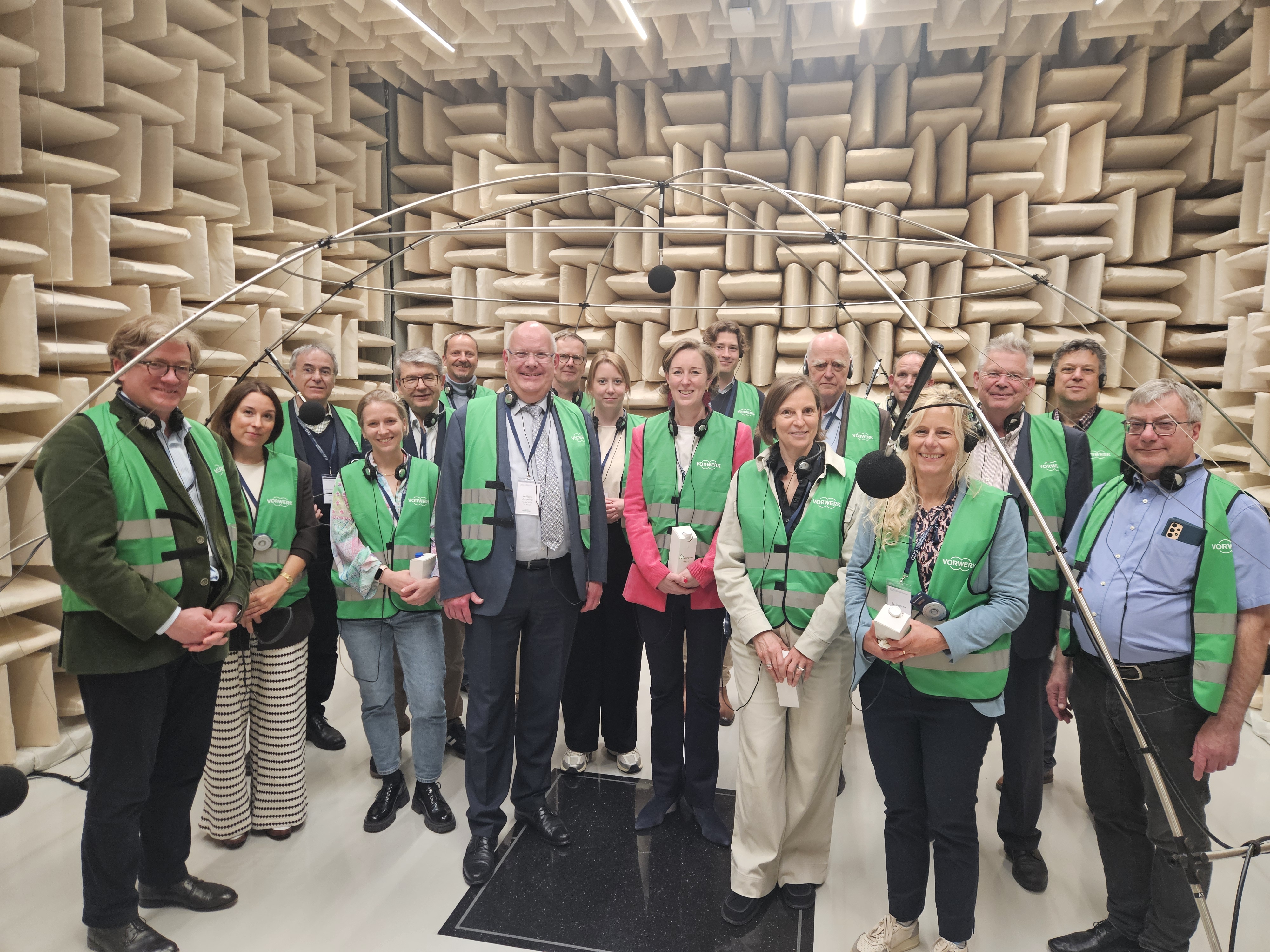
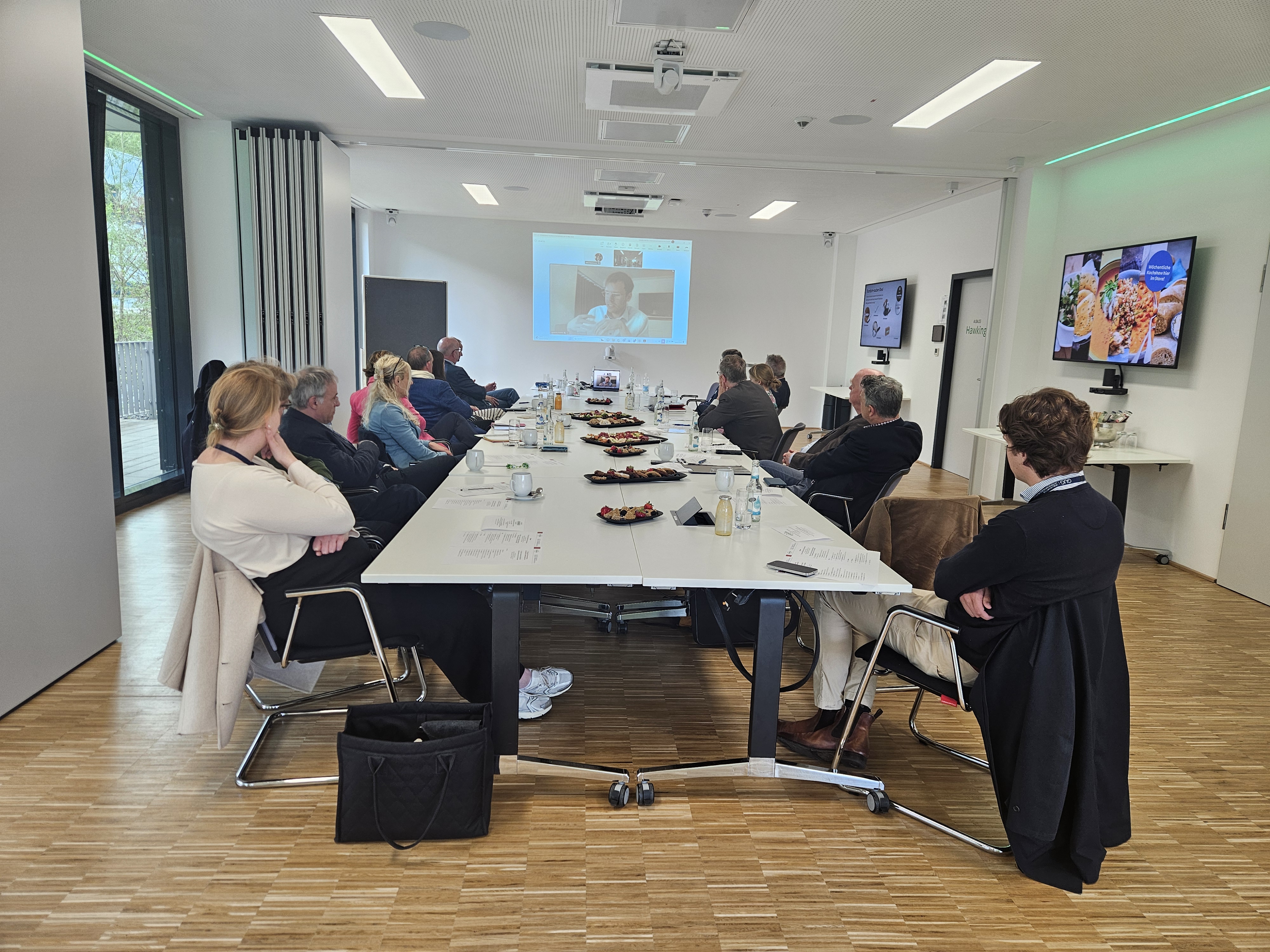
“In the ‘Land of Opportunity’?” Under this guiding question, the Family Business Working Group met on May 8, 2026, at Vorwerk SE & Co. KG in Wuppertal. The 21st meeting focused on transatlantic economic relations and the question of how the presence of German family businesses in the U.S. market has evolved over the past decades—as a sales market, a production location, and a starting point for entrepreneurial transformation.
JÖRG LESCZENSKI (Frankfurt am Main), chairman of the working group, began by providing an overview of family-owned companies’ investment activities and contextualized their U.S. operations within current trends. It became clear that, over the past decade, the U.S. has been the most important destination for investments by German family-owned companies. THOMAS STOFFMEHL (Vorwerk SE & Co. KG) then explained the evolution of Vorwerk’s business model and the importance of direct sales for the company’s stability and growth. However, compared to European markets, Vorwerk’s U.S. business played a relatively minor role.
Using historical case studies, BENJAMIN PFANNES (Potsdam), DIETRICH KUHLGATZ (Gerlingen), WOLFGANG ZENGERLING (Düsseldorf), and CHRISTIAN KLEINSCHMIDT (Marburg) illustrated the various paths taken by German family-owned companies into the U.S. market. The focus was on the Mainz-based freight forwarding company J.F. Hillebrand, Robert Bosch GmbH, Henkel, and Sartorius. The presentations highlighted the wide variety of motivations for entering the U.S. market—ranging from tapping into new sales markets and achieving production and cost advantages to technological and political conditions. At the same time, the U.S. market proved in many cases to be an important catalyst for the companies’ international development.
In the download section, you will find the program and the event report.
Rückblick: 20. Sitzung des Arbeitskreises Familienunternehmen
«Wohlfühloase oder Gesetzeslücken-Trickser?» Zu dieser kontroversen Frage tagte der Arbeitskreis Familienunternehmen am 4. April 2025. Dabei entwickelte sich in den Räumen der Messer SE & Co. KGaA in Bad Soden ein intensiver Austausch über Mitbestimmung und Arbeitskonflikte in familiengeführten Unternehmen.
Im Zentrum stand die Frage, warum gerade in Familienunternehmen betriebliche Mitbestimmung oft eine besonders ambivalente Rolle spielt: zwischen Fürsorgeversprechen, Konfliktvermeidung und strategischer Gesetzesumgehung. Die Vorträge spannten einen Bogen von historischen Fallbeispielen über aktuelle Entwicklungen bis hin zu rechtlichen Grauzonen – und machten deutlich, wie tief verwurzelt und zugleich umkämpft Mitbestimmung in diesem Unternehmensfeld ist.
KOLJA HOSCH (Messer SE & Co. KGaA) beleuchtete zunächst die aktuelle, von Unsicherheiten und Krisensymptomen bestimmte Situation der deutschen Industrie und skizzierte, welche Folgen der Strukturwandel und der generationenbedingte Wandel in der Chemiebranche auf die Betriebsratsarbeit haben. DANIEL HAY (Hans Böckler Stiftung) präsentierte neueste Forschungsergebnisse zu aktuellen Entwicklungen der betrieblichen Mitbestimmung, während BENJAMIN PFANNES und LARS HENRIK HOLLMANN mit dem Speditionsunternehmen J.F. Hillebrand und dem Medienhaus Burda zwei historische Fallbeispiele mit unterschiedlichen Strategien zur Konfliktlösung vorstellten.
Das Programm finden Sie unten. Ein ausführlicher Tagungsbericht folgt in Kürze.
Review: 20th Meeting of the Family Business Working Group
“Oasis of Well-Being or Loophole Exploiters?” The Family Business Working Group convened on April 4, 2025, to address this controversial question. An intense discussion on employee participation and labor disputes in family-run businesses unfolded at the offices of Messer SE & Co. KGaA in Bad Soden.
The focus was on why, particularly in family businesses, workplace co-determination often plays a particularly ambivalent role: oscillating between promises of care, conflict avoidance, and strategic circumvention of the law. The presentations spanned a range from historical case studies to current developments and legal gray areas—and made it clear how deeply rooted and, at the same time, contested co-determination is in this business sector.
KOLJA HOSCH (Messer SE & Co. KGaA) first examined the current situation in German industry, marked by uncertainty and signs of crisis, and outlined the consequences of structural change and generational transition in the chemical industry on works council activities. DANIEL HAY (Hans Böckler Foundation) presented the latest research findings on current developments in workplace co-determination, while BENJAMIN PFANNES and LARS HENRIK HOLLMANN presented two historical case studies—the freight forwarding company J.F. Hillebrand and the media company Burda—featuring different strategies for conflict resolution.
The program is available below. A detailed conference report will follow shortly.
.jpg)
.jpg)
.jpg)
.jpg)
Review and Download
20th Meeting of the Family Business Working Group on April 4, 2025, at Messer SE & Co. KGaA:
‹Oasis of Well-Being or Exploiters of Loopholes?› Co-determination and Labor Disputes in Family-Run Businesses
{2025_Program_Family_Business_Working_Group}
19th Meeting of the Family Business Working Group on November 3, 2023, at The Coatinc Company Holding GmbH:
Family Businesses under National Socialism
{2023_Program_Family_Business_Working_Group}
18th Meeting of the Family Business Working Group on September 21, 2022, at Miele & Cie. KG:
The World Is Their Market. The Internationalization of Family Businesses
{2022_Program_Family_Business_WG}/{2022_Report_Family_Business_WG}
17th Meeting of the Working Group on Family Businesses in conjunction with the 18th Meeting of the Working Group on Banking and Insurance History on November 19, 2021, at ODDO BHF Bank:
Banks and Family Businesses
{2021_Program_WG_Family_Businesses}/{2021_Report_WG_Family_Businesses}
16th meeting of the Family Business Working Group on November 22, 2019, at Coroplast Fritz Müller GmbH & Co. KG:
Family Whisperers. Family Businesses and Their Advisors
{2019_Program_Family_Business_Working_Group}/{2019_Report_Family_Business_Working_Group}
15th Meeting of the Family Business Working Group on November 9, 2018, at the Werner Reimers Foundation, Bad Homburg:
“Bankruptcies, Bad Luck, and Mishaps” in Family Businesses
{2018_Program_Family_Business_Working_Group}/{2018_Report_Family_Business_Working_Group}
14th Meeting of the Family Business Working Group on November 10, 2017, at Falke KGaA, Schmallenberg:
The Longevity of Family Businesses. Strategic Skill or Happy Coincidence?
{2017_Program_Family_Business_Working_Group}/{2017_Report_Family_Business_Working_Group}
13th Meeting of the Family Business Working Group on November 11, 2016, at Johann Borgers GmbH & Co. KG, Bocholt:
Crises in Family Businesses
{2016_Program_Family_Business_Working_Group}/{2016_Report_Family_Business_Working_Group}
12th Meeting of the Working Group on Small and Medium-Sized Enterprises on November 13, 2015, at the Chamber of Industry and Commerce, Frankfurt am Main:
Types of Entrepreneurs and Leadership Styles
{2015_Program_WG_Family_Businesses}/{2015_Report_WG_Family_Businesses}
11th Meeting of the Working Group on Small and Medium-Sized Enterprises on November 7, 2014, at the Kurtz Ersa Group, Hasloch:
Family Businesses – The Entrepreneur and His Family
{2014_Program_WG_Family_Businesses}/{2014_Report_WG_Family_Businesses}
10th Meeting of the Working Group on Small and Medium-Sized Enterprises on November 7–8, 2013, at Gerolsteiner Brunnen GmbH & Co. KG, Gerolstein:
Hidden Champions
{2013_Program_WG_Family_Businesses}/{2013_Report_WG_Family_Businesses}
9th Meeting of the Working Group on Small and Medium-Sized Enterprises on October 26, 2012, Eintracht Museum, Commerzbank-Arena, Frankfurt am Main:
Sports
{2012_Program_WG_Family_Businesses}/{2012_Report_WG_Family_Businesses}
8th Meeting of the Working Group on Small and Medium-Sized Enterprises on October 28, 2011, Darmstadt Chamber of Commerce and Industry (IHK Darmstadt), Darmstadt:
Energy and Environment
{2011_Program_WG_Family_Businesses}/{2011_Report_WG_Family_Businesses}
2010
No meeting of the Working Group on Small and Medium-Sized Enterprises took place.
6th Meeting of the Working Group on Small and Medium-Sized Enterprises on September 18 and 19, 2009, at Borgers GmbH, Bocholt:
Internationalization
{2009_Program_AK_Family_Businesses}/{2009_Report_AK_Family_Businesses}
5th Meeting of the Working Group on Small and Medium-Sized Enterprises on September 28 and 29, 2008, at Standortinitiative Wurzen e.V. and Sächsisches Wirtschaftsarchiv e.V., Wurzen and Leipzig:
SMEs in Eastern Germany
{2008_Program_WG_Family_Businesses}/{2008_Report_WG_Family_Businesses}
4th Meeting of the Working Group on Small and Medium-Sized Enterprises on September 7, 2007, Kreuzwertheim:
Companies and ‘Their’ Location
{2007_Program_AK_Family_Businesses}/{2007_Report_AK_Family_Businesses}
3rd Conference of the Working Group on Small and Medium-Sized Enterprises on February 22, 2007, Museum of Olfry Ziegelwerke GmbH & Co. KG, Gut Daren:
Companies and Archives
{2007_2_Program_WG_Family_Businesses}/{2007_2_Report_WG_Family_Businesses}
2nd Meeting of the Working Group on Small and Medium-Sized Enterprises on September 29, 2006, at ODU Steckverbindungen GmbH & Co. KG:
Family Businesses – A Spectrum Reflected in Recent Research
{2006_Program_Working_Group_Family_Businesses}
1st Constitutive Meeting of the Working Group on Small and Medium-Sized Enterprises on October 21, 2005, at the Chamber of Industry and Commerce, Frankfurt am Main:
Structure of the Working Group
{2005_Program_WG_Family_Business}
Working Group Global Economy and Multinational Enterprises (GEME)
The working group was established on October 9, 2024. Discussions focus on research related to specific topics within the working group’s field.
Co-chairs:
Prof. Dr. Jan-Otmar Hesse, University of Bayreuth
PD Dr. Christian Marx, Leibniz Institute for Contemporary History
Prof. Dr. Sabine Pitteloud, Swiss Distance Learning University
Become a member:
If you are interested in participating in the Global Economy and Multinational Enterprises (GEME) working group, please contact our office.
Upcoming Event: 2nd Meeting of the Global Economy and Multinational Enterprises (GEME) Working Group:
The upcoming meeting in 2026 will be held online. More information will follow soon.
Review: 1st Meeting of the Global Economy and Multinational Enterprises (GEME) Working Group
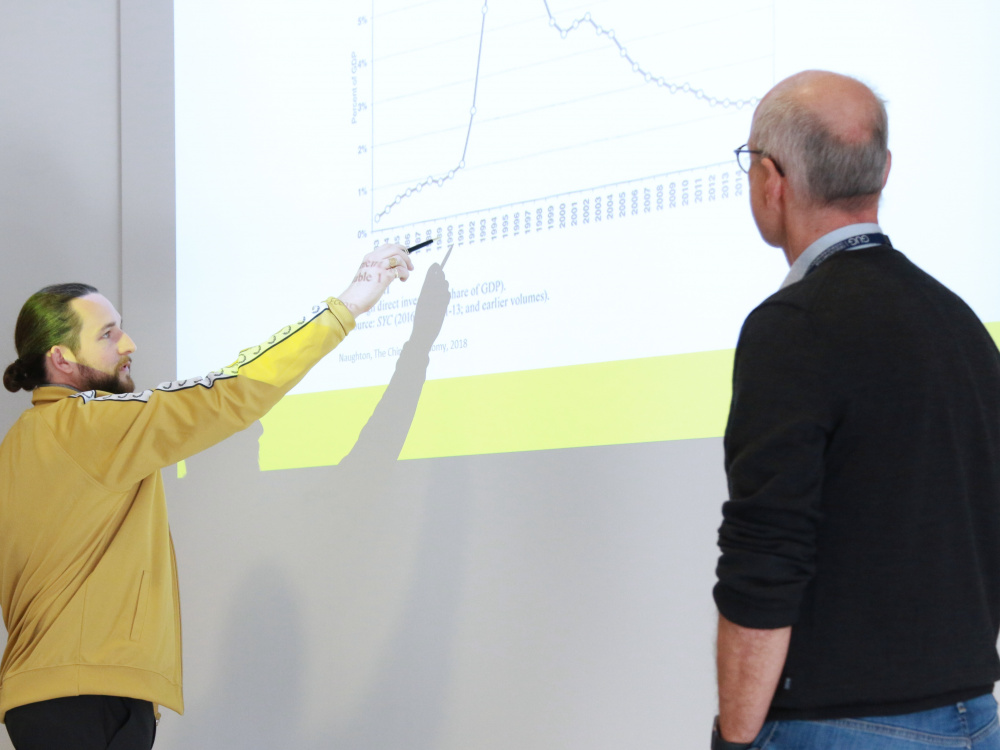
What happens when economic history views foreign direct investment (FDI) not as a statistic, but as a lived reality? With this topic, the new international working group Global Economy and Multinational Enterprises (GEME) began its work on October 8, 2025. The meeting at the BASF Visitor Center in Ludwigshafen opened up new methodological and conceptual perspectives on international corporate strategies.
The opening lecture by NEIL ROLLINGS (University of Glasgow) provided key insights for the subsequent discussions. Case studies on Sartorius in China (CAETANO FRANZ), German leather companies in postcolonial India (CHRISTINA HÄBERLE), and the European rubber industry (TONIO SCHWERTNER) demonstrated the diversity and path dependencies of corporate internationalization. The discussions made it clear that FDI should not be treated solely as a macroeconomic measure. A more productive approach is to understand it as a complex, lived process shaped by strategies, decisions, negotiations, and institutional frameworks. Furthermore, internationalization is not based solely on capital flows but also on non-market-related strategies: chambers of commerce, international conferences, lobbying, and informal networks form key infrastructures that deserve greater analytical attention.
The Uppsala model remains a useful theoretical framework for incremental internationalization, yet it became apparent that real-world developments are often fragmented, experimental, or contentious, and thus deviate from the ideal-typical trajectory. Supply chains were discussed as an alternative analytical perspective. Their heuristic value is undisputed, but every “chain” has gaps and breaks—it therefore remains more of a metaphor than a robust method. A cautious and context-sensitive approach therefore seems warranted.
The working group will continue its discussions in upcoming meetings. The event program can be found in the download section. A detailed conference report will follow shortly.
Impressions
.jpg)
.jpg)
.jpg)
Review and Download
Foreign Direct Investment and the Globalization of German Industry in the 1970s
Programm
Business and European Integration
Programm 2024
Inactive Working Groups
The working groups listed here are currently inactive. They can be reactivated if the need arises. Here you will find a list of all working group meetings, including all speakers and presentations.
History of Marketing
Sitzungsprogramme des Arbeitskreises Marktetinggeschichte 2007-2024
Sitzungsberichte des Arbeitskreises Marktetinggeschichte 2007-2024
History of Media Companies
East German Companies in the Process of Transformation
Liste der Vorträge 2010 - 2012
Tagungsbericht März 2012
Tagungsbericht März 2011
History of Transportation
Businesses Under National Socialism
Workshops
Workshop: Understanding the Past - Assuming Responsibility: Nazi-Era Forced Labor within the Company’s Own History
On the initiative of the Hans and Berthold Finkelstein Foundation and in cooperation with the GUG and the Foundation Remembrance, Responsibility and Future (EVZ), workshops have been held since 2024 to help companies deal with the Nazi period and democratic engagement in business. The annual workshop offers professionals from the fields of (historical) communication, public affairs, and corporate social (or political) responsibility an opportunity to confidentially exchange ideas about various possibilities and best practice examples for historical reappraisal and the commitment to democracy in companies. The goal is to establish a network based on this kind of work to strengthen democratic values.
Following the successful inaugural workshop «Looking Back to Move Forward: Reappraising the Nazi period and promoting democracy in companies», held in June 2024 in Frankfurt am Main, the event format was continued in November 2025. Under the theme «No Time to Forget: Corporate Historical Responsibility and Engagement for Democracy Today», another workshop for business representatives, with a focus on forced labor, took place in Weimar.
After a guided tour of the recently opened Museum Forced Labor under National Socialism and expert inputs on research, cultures of remembrance, and educational work, participants engaged in in-depth discussions on how companies can critically examine their own histories and, building on this foundation, credibly commit to democracy and diversity today. The discussions once again underscored the importance of archival research, careful source analysis, and independent scholarly inquiry. Together, these elements provide the fact-based foundation that enables companies to assume responsibility in a credible manner and to strengthen democratic values—particularly at a time when fundamental democratic principles are increasingly under pressure.
Impressions
.jpg)
.jpg)
.jpg)
Dass die «Unternehmensgeschichte(n) der Zivilluftfahrt» äußerst anschlussfähig und dynamisch sind und als wirtschaftshistorisches Thema noch zahlreiche neue Forschungsfragen bieten, bewies der gleichnamige Workshop am 16. Mai 2025 in Frankfurt a.M. Er wurde von der Gesellschaft für Unternehmensgeschichte, der Professur für Europäische Wissens- und Kommunikationsgeschichte der Moderne an der Universität Siegen und den Arbeitsbereichen Neuere und Neueste Geschichte sowie Zeitgeschichte an der Universität Paderborn ausgerichtet. Das Ziel: Neue Kooperationen und Projekte im Feld der wirtschafts- und unternehmenshistorischen Erforschung der Zivilluftfahrt anzustoßen.
In den Räumen der Lufthansa AG diskutierten Forscher:innen, Archivar:innen und Praktiker:innen aus der Luftfahrt methodische Ansätze, teilten Perspektiven und lernten sich
und ihre verschiedenen Forschungsansätze gegenseitig besser kennen. Dabei wurde deutlich: Das Thema Zivilluftfahrt ist keine Nischenforschung! Es eröffnet neue Blickwinkel auf die Wirtschaftsgeschichte, auf (post-)koloniale Forschung, Globalgeschichte, historische Sicherheitsforschung, Infrastrukturgeschichte, Sozialgeschichte – und bleibt auch für die Technikgeschichte relevant.
Wie eng dabei historische und gegenwärtige Fragestellungen verwoben sind, zeigte sich an den diskutierten Themen, etwa die Rolle politischer und wirtschaftlicher Interessenlagen im globalen Luftverkehr oder der wachsende Einfluss ökologischer Debatten auf unternehmerische Entscheidungen. Von großer Aktualität waren auch die Fragen nach der Systemrelevanz von Flughäfen, Airlines oder anderer Infrastrukturen der Zivilluftfahrt sowie der Bedeutung von Markenbildung und öffentlicher Wahrnehmung in der Luftfahrtbranche.
Programme
.jpg)
.jpg)
.jpg)
Workshop History Communication
Our understanding of History Communication:
“History Communication is the communication of a company's history in all its facets. In doing so, History Communication navigates the tension between corporate interests, stakeholder expectations, and the external public. The basis of this communication must be a scholarly examination of history.”
Since the terms History Marketing and History Communication are often not clearly distinguished from one another in practice, this workshop aims to help clarify the goals, methods, and fields of application of historical communication. Since 2013, corporate representatives have been meeting regularly to discuss fundamental questions, share experiences, and exchange best practices in this field.
The focus is explicitly not on the use of individual historical facts to market products in the sense of History Marketing. Rather, the focus is on the systematic engagement with a company’s own history: This includes the processes for acquiring historical knowledge—such as through archival work, scholarly research, or eyewitness projects—as well as the professional handling of the results obtained from these efforts.
The discussion will cover both forms of presentation—such as in publications, exhibitions, or multimedia platforms—as well as suitable communication tools like books, apps, podcasts, intranet offerings, or other digital formats. The aim of the workshop is to promote the exchange of experiences, provide practical insights, and develop a deeper understanding of how historical communication can be used strategically and sustainably.
The workshop invites experts (theorists/scholars) to give keynote presentations. Furthermore, participants share their experiences in relation to the topic. Since sensitive data is exchanged and discussed among participants during the workshop and a working atmosphere prevails, the workshop is generally reserved for GUG member companies and the number of participants is limited (max. 15 people).
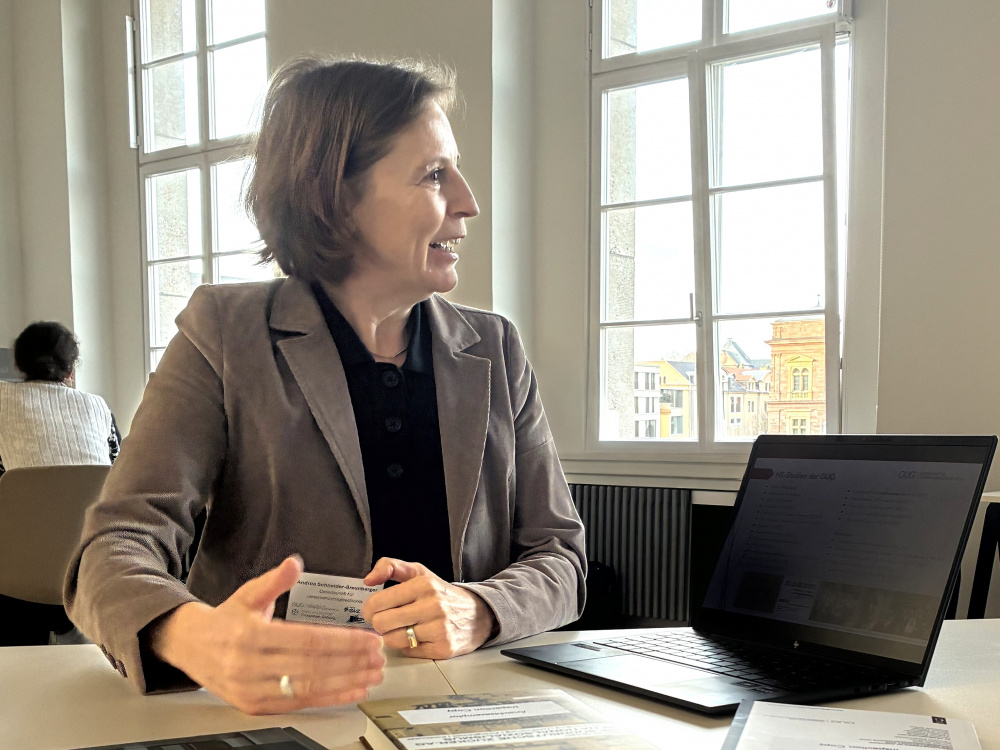
The workshop is led by Dr. Andrea H. Schneider-Braunberger (GUG). It meets once a year.
Previous sessions have taken place, for example, at the Siemens MedMuseum, the Kurtz-Ersa Group, Gerolsteiner Brunnen GmbH & Co. KG, adidas AG, Spielwarenmesse Nürnberg eG, the FC Bayern München Erlebniswelt, Alfred Kärcher GmbH & Co. KG, the Vitra Design Museum, BASF, Mast-Jägermeister, Bankhaus Metzler, and Fraport AG.
Interested parties are kindly asked to contact Dr. Andrea H. Schneider-Braunberger.
Symposium GUG-WIFU
.jpg)
In 2017, the first joint event with the WIFU Foundation took place, aimed primarily at members of family businesses and entrepreneurial families, but also inviting scholars engaged in research on family businesses. The symposium is a collaborative event organized by the Witten Institute for Family Business (WIFU) and the Society for Business History.
“If you want to know something, ask an experienced person, not a scholar,” goes a Chinese proverb. In addition to thematic presentations by our speakers, this event provides a professionally guided framework to give participants the opportunity for mutual, confidential exchange. This allows participants to gain insights into the problems and solution strategies of other family businesses.
.jpg)
The ninth symposium took place on November 13, 2025, at Semper idem Underberg AG in Rheinberg on the topic “Family Businesses in the Context of the German Economic Miracle.”
9th Symposium on Business History
Location: Semper idem Underberg AG, Rheinberg
Family Businesses in the Context of the German Economic Miracle
Special Events
Past Events
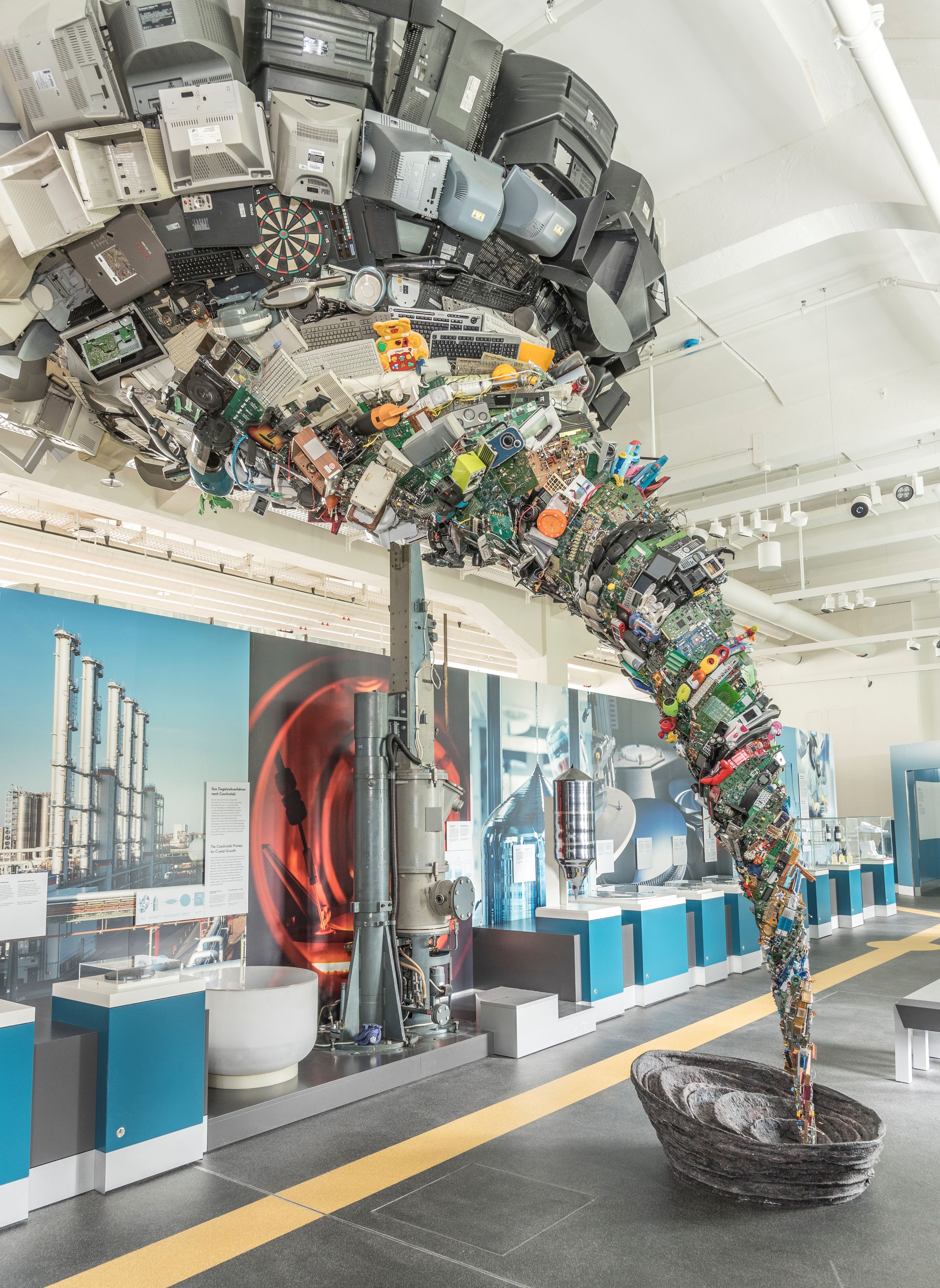
Technikbewertung lässt sich als eine institutionalisierte Form des systematischen Nachdenkens verstehen. Es soll überlegt, erklärt und begründet werden, was technische Innovationen für die Zukunft einer Gesellschaft bedeuten, bevor diese in ihren Auswirkungen unumkehrbar geworden sind. Während in Unternehmen, Ingenieurverbänden, Politik und anderen Kontexten schon lange über die Vor- und Nachteile verschiedener Techniken diskutiert worden ist, hat diese systematisch betriebene Technikbewertung, die heute meist als Technikfolgenabschätzung (Technology Assessment oder TA) bezeichnet wird, eine relativ junge Geschichte. Diese ist, und das war der Hintergrund des am Deutschen Museum München ausgerichteten Workshops, der sowohl technik-, unternehmens- und wissenshistorische Ansätze, als auch Perspektiven aus der Technikphilosophie, Science and Technology Studies sowie Anthropologie zusammenbrachte, noch kaum erforscht.
Bis Anfang der 1970er-Jahre war die Technikbewertung in den meisten Ländern der Welt noch weitgehend unbekannt. Ihr Aufstieg in der BRD fiel einerseits mit dem Verständnis der Technik als „sozioökonomisches System“ (Günther Ropohl) zusammen, deren Funktionsweise und Auswirkungen, wie nun erkannt wurde, eng mit der Gesellschaft verknüpft waren, und andererseits mit der Wahrnehmung der Technik als etwas Riskantem, wie dies besonders prominent in Ulrich Becks „Risikogesellschaft“ von 1986 zum Ausdruck kam. Von Anfang an war allerdings völlig offen, in welchem institutionellen Rahmen, mit welchen methodischen Konzepten und mit welchen politischen, technischen und wirtschaftlichen Konsequenzen sich die Entwicklung der Technikbewertung vollziehen würde.
Den Bericht zur Veranstaltung finden sie hier oder auf h-soz-kult.
Impressions
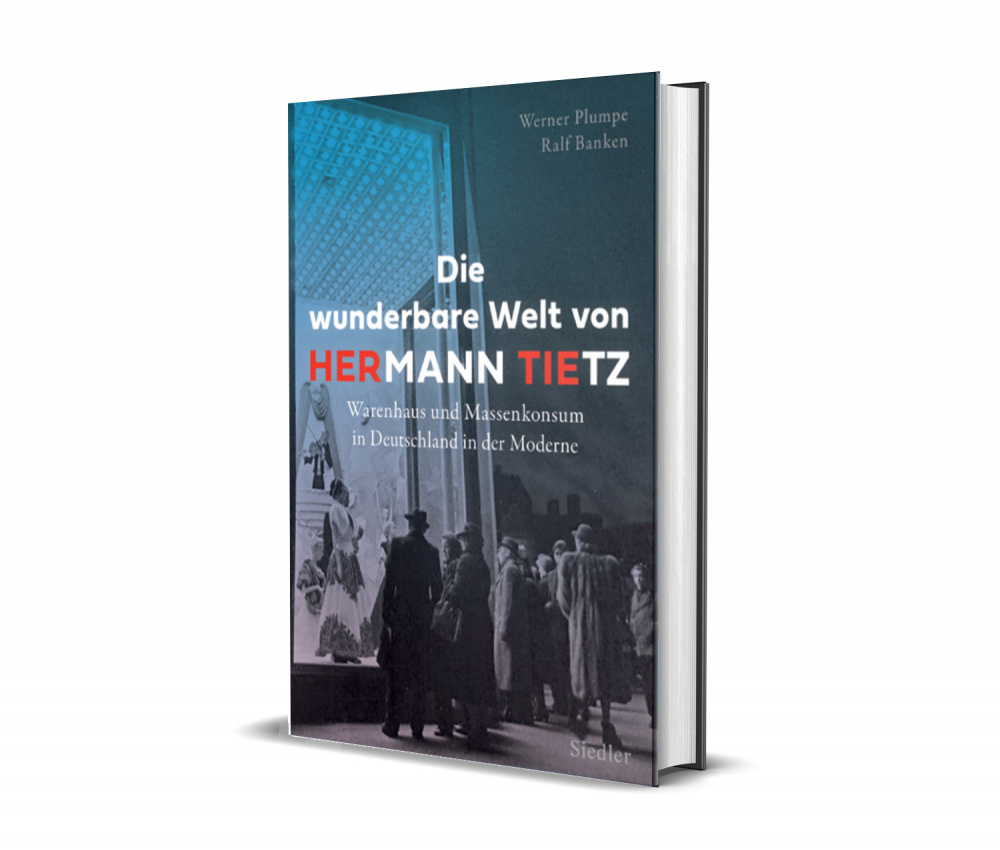
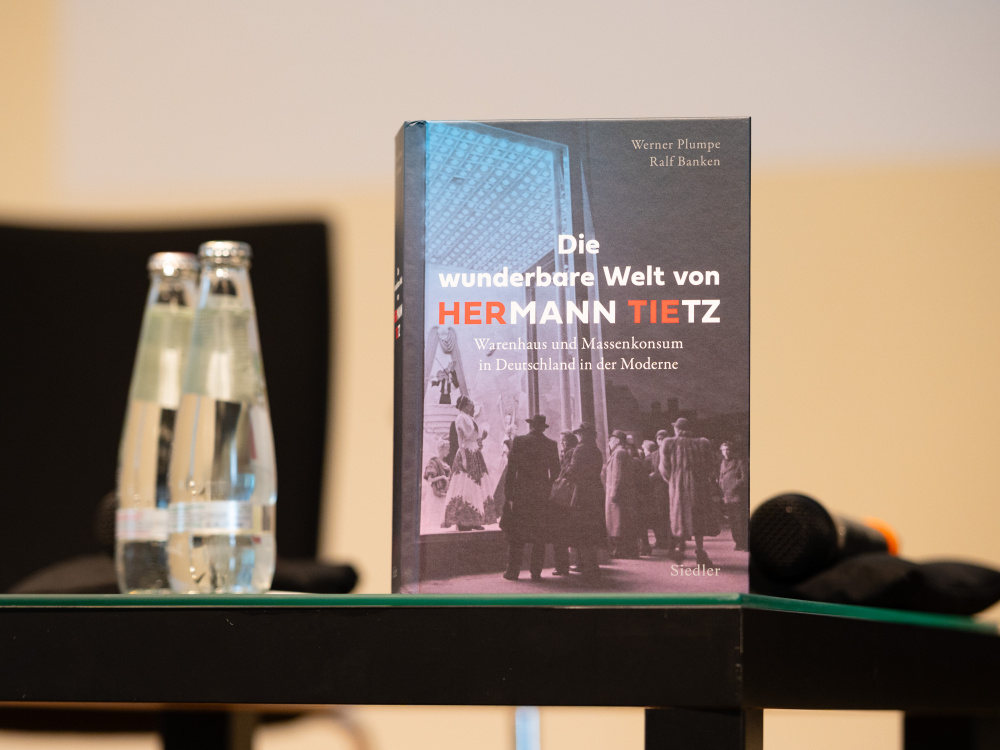
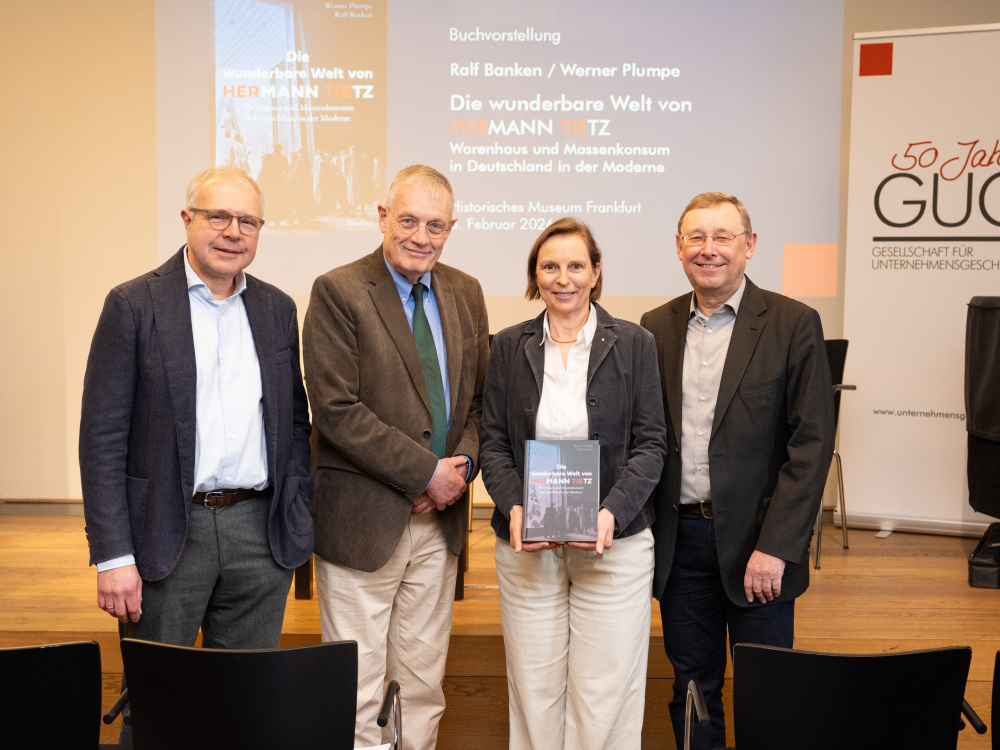
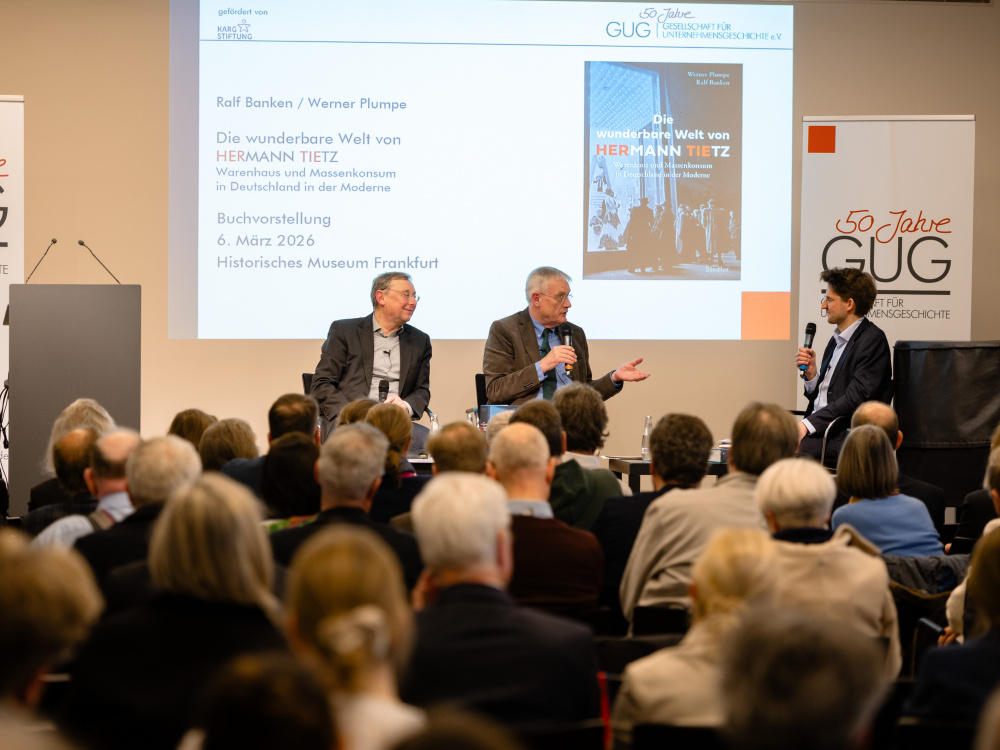
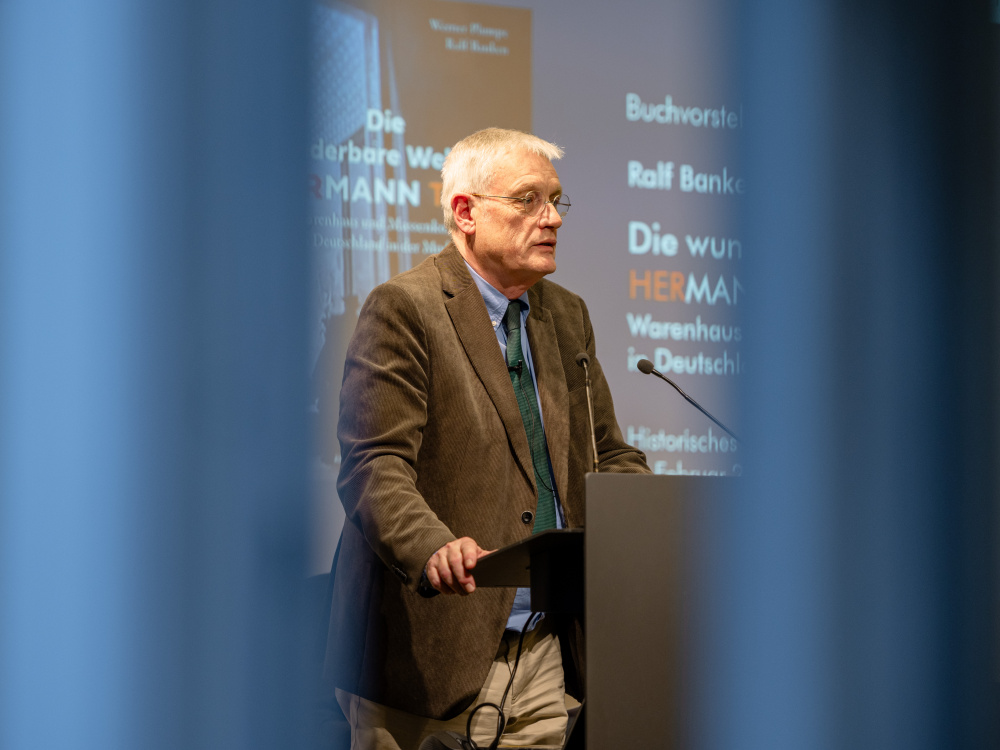
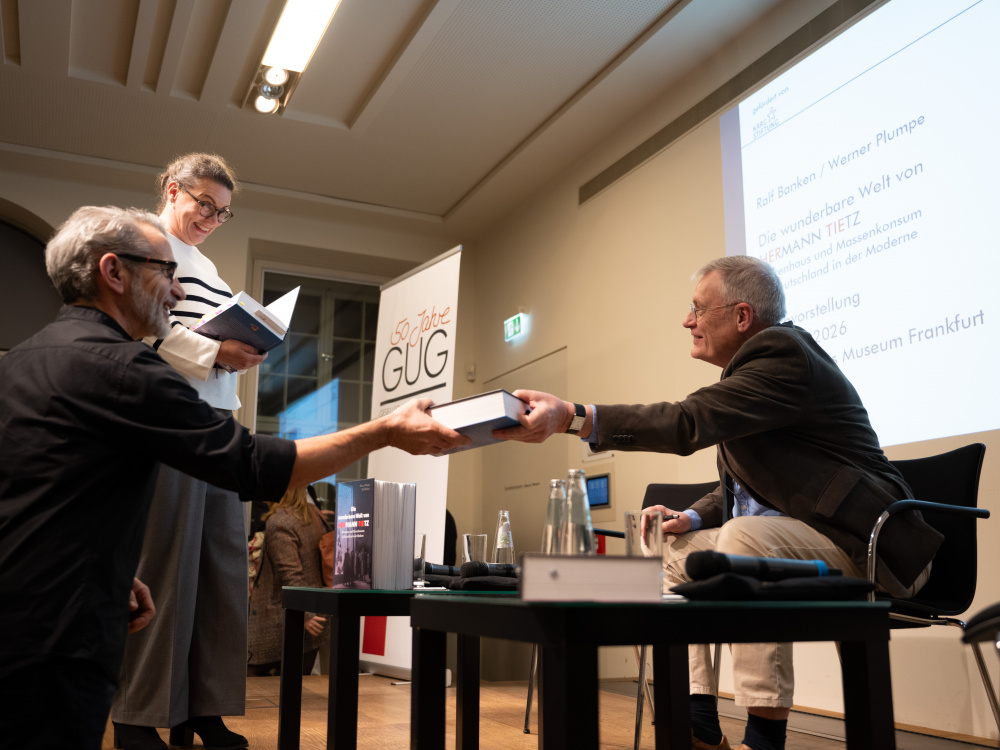
Department stores fundamentally changed the nature of retail since the late 19th century. Their shopping palaces were monumental symbols of modern mass consumer society, which they both enabled and embodied. A few, mostly Jewish names were at the forefront: Abraham Wertheim, Rudolf Karstadt, Hermann Wronker, Salman Schocken, Helmut Horten, and, of course, Hermann Tietz and Leonard Tietz. The stores named after their founders were for a long time the undisputed attractions for goods and customers, their shop windows gave the big cities a face, and they attracted admirers and critics as if by magic. It was not until the 1980s that their image faded, when they almost all fell victim to structural change. They were replaced by new forms of shopping, but the memory of the heyday of these temples of consumerism has not been lost. Hermann Tietz/Hertie, whose history is reconstructed in this book, was one of the most outstanding examples. It stands equally for greatness and success as well as persecution, crisis, and decline: from “Aryanization” during the Nazi era to its phoenix-like resurgence after 1945 to the decline in importance of department stores at the turn of the millennium.
The research project, the publication, and the book launch were funded by the Karg Foundation. Foundation director Ingmar Ahl emphasized that the Hertie department store had been the center of life and life’s work for the founders, Hans-Georg and Adelheid Karg. It is the foundation’s responsibility to commemorate the department store’s development and to preserve and academically examine the history of Hertie, with all its ups and downs.
Download Programm der Buchpräsentation
Further reading:
The study is available in bookstores: Werner Plumpe and Ralf Banken, “The Wonderful World of HERmann TIEtz. Department Stores and Mass Consumption in Modern Germany,” Siedler Verlag, Munich, 2026, 752 pages. ISBN 978-3-8275-0214-8.
You can find the publication as a free eBook at the following link: Die wunderbare Welt von HERmann TIEtz (eBook)
In addition to the print edition published by Siedler, the Karg Foundation offers a German and an English summary as open-access publications, available for free download:
Download Werner Plumpe Ralf Banken 2026 Warenhaus und Konsum in der Moderne Kurzfassung der Studie Die wunderbare Welt von HERmann TIEtz
Download Werner Plumpe Ralf Banken 2026 Department store and Consumerism in the Modern Era Summary of the publication Die wunderbare Welt von HERmann TIEtz
Press reviews:
{Download FAZ Wie Hertie einst nach Frankfurt kam
Download Buchtipp der Immobilienzeitung zur Hertie-Studie
The Department Store – A German Dream, WELT, May 26, 2026
Academic Symposium on Consumer History:
In addition to the public book launch, the foundation also sponsored the academic symposium “The European Department Store in the 20th Century: Perspectives from Business and Consumer History,” which took place the following day, Saturday, March 7, 2026, at Goethe University Frankfurt. In three sessions, international economic and business historians discussed the development of department stores using examples from Germany, the United Kingdom, the Netherlands, and the United States.
Download Programm wissenschaftliches Symposium (1)}
Impressions
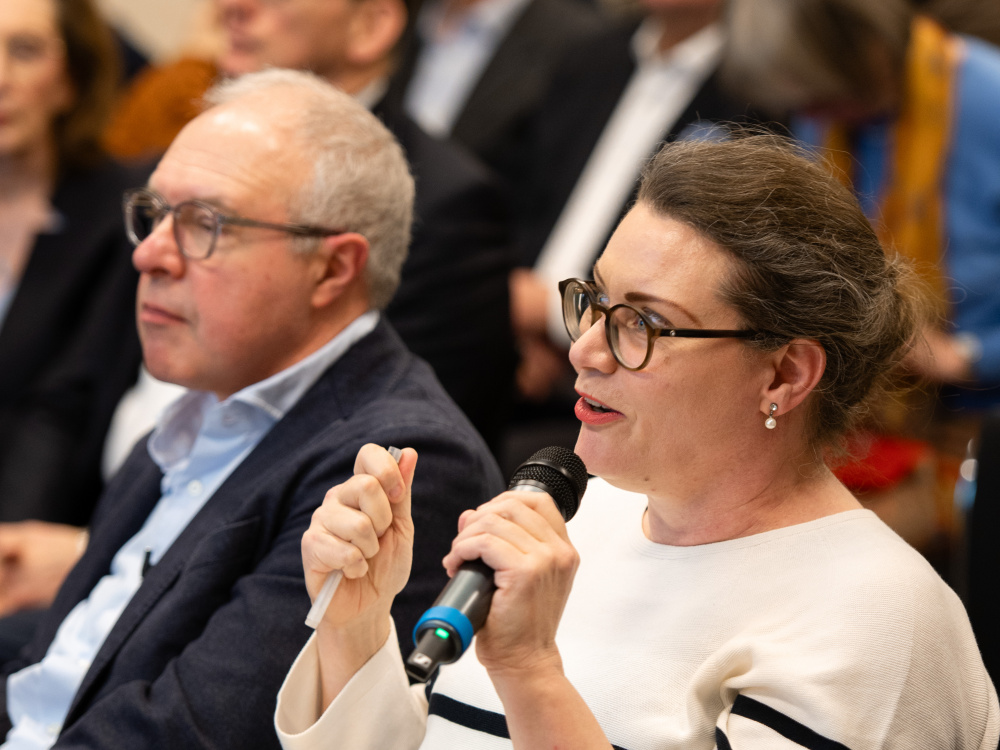
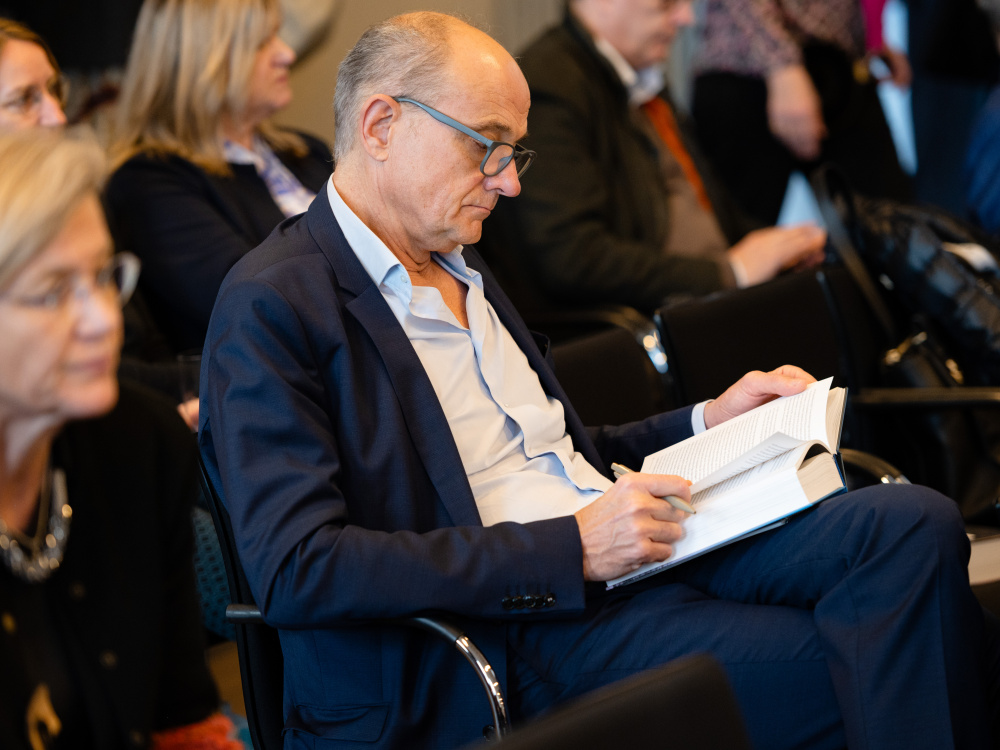
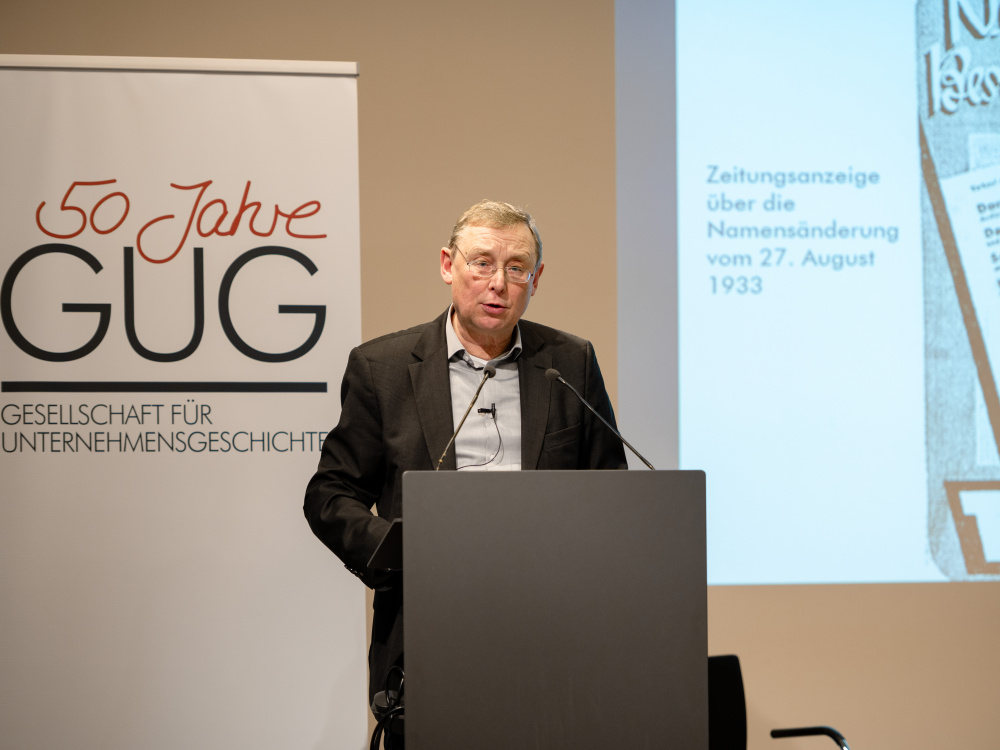
Following the successful inaugural workshop «Looking Back to Move Forward», held in June 2024 in Frankfurt am Main, the Hans and Berthold Finkelstein Foundation and the Foundation “Remembrance, Responsibility and Future” (EVZ), in cooperation with the Society for Business History (GUG), continued this event format. Under the theme «No Time to Forget: Corporate Historical Responsibility and Engagement for Democracy Today», another workshop for business representatives, with a focus on forced labor, took place in Weimar on 12 November 2025.
After a guided tour of the recently opened Museum Forced Labor under National Socialism and expert inputs on research, cultures of remembrance, and educational work, participants engaged in in-depth discussions on how companies can critically examine their own histories and, building on this foundation, credibly commit to democracy and diversity today. The discussions once again underscored the importance of archival research, careful source analysis, and independent scholarly inquiry. Together, these elements provide the fact-based foundation that enables companies to assume responsibility in a credible manner and to strengthen democratic values—particularly at a time when fundamental democratic principles are increasingly under pressure.
Impressions
.jpg)
.jpg)
.jpg)
.jpg)
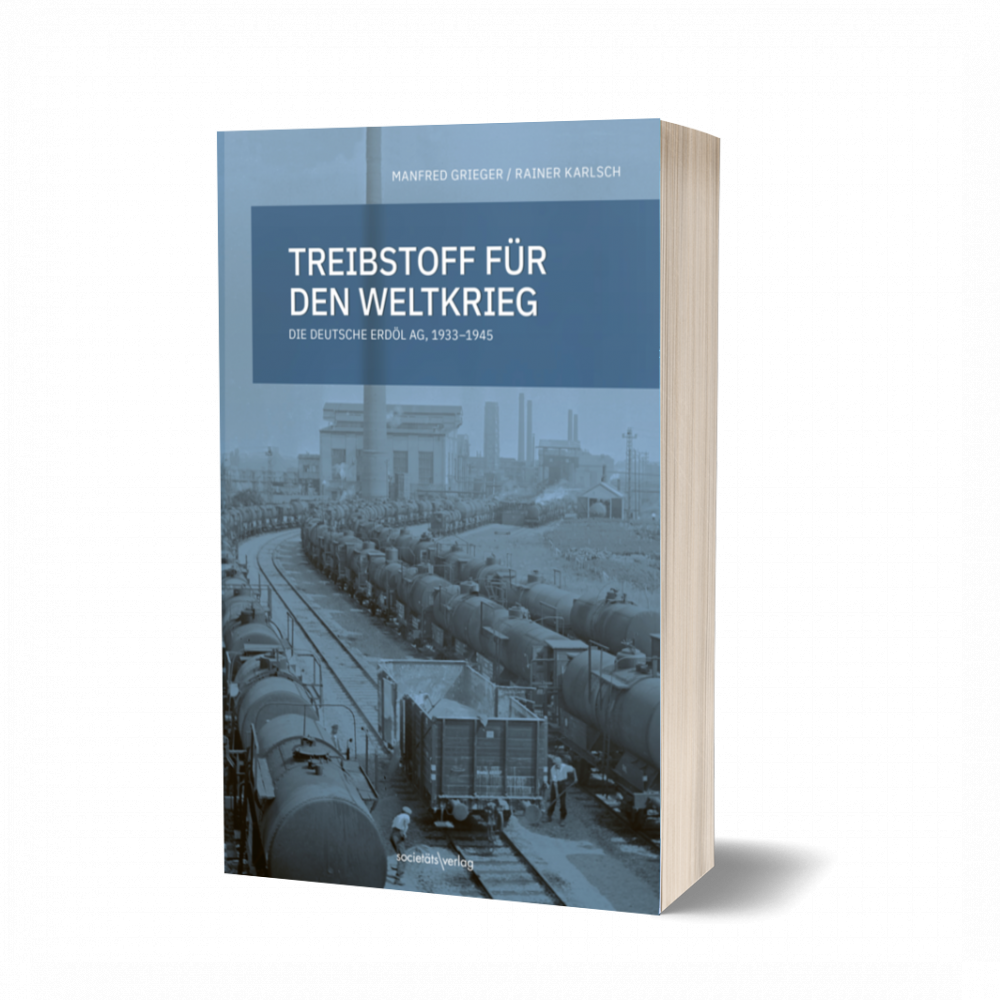
‘Fuel for the World War. Deutsche Erdöl AG, 1933-1945’
In November 2024, the GUG was a guest at Wintershall Dea in Hamburg for the presentation of the book ‘Fuel for World War II’. The study by economic historians MANFRED GRIEGER and RAINER KARLSCH continues the reappraisal of the Nazi history of Wintershall Dea's predecessor companies: Following the 2020 publication of the study ‘Expansion at Any Price’ on Wintershall AG, the history of the second predecessor company, DEA, has now also been examined. The event, hosted by the GUG in collaboration with the Wintershall Dea Foundation for Democracy and Diversity, was opened by Andrea Schneider Braunberger and Stefan Schnell, CEO of Wintershall Dea. Using numerous new sources from Germany and abroad, the authors revealed the company's deep involvement in Nazi armament and war policies. The two-year research project documented how the oil division in particular benefited from German expansion into Austria and Eastern Europe. In the process, the company exploited tens of thousands of forced labourers. For the first time, historians comprehensively documented the DEA's involvement in ‘Aryanisation’ and the personal enrichment of its board members at the expense of Jewish businesspeople. In the panel discussion moderated by WALTER IBER, the authors discussed the significance of historical reappraisal for the present and the future with MARIA WILKE (EVZ Foundation) and DETLEF GARBE (former Hamburg Memorials Foundation). Stefan Schnell emphasised the enduring historical responsibility – even beyond the planned closure of the company following its takeover by Harbour Energy.
A recording of the event can be found here.
Press information can be found here.
Recording of the event (German}
Impressions
.jpg)
.jpg)
.jpg)
.jpg)
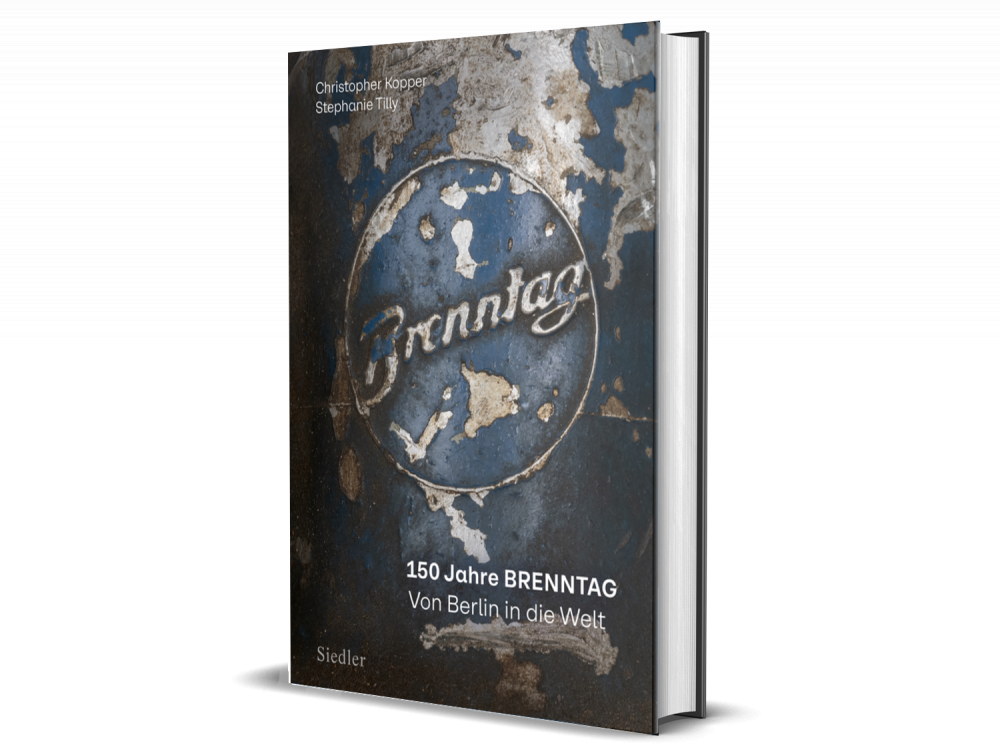
‘From Berlin to the world – 150 years of Brenntag’
On 30 September 2024, CHRISTOPHER KOPPER and STEPHANIE TILLY presented their academic study on the 150-year history of chemical distributor Brenntag at the company's headquarters in Essen. In front of around 100 participants, mainly Brenntag employees, the authors traced the company's remarkable journey: from a Berlin-based agricultural products trading company founded by Jewish merchant Philipp Mühsam in 1874 to today's DAX-listed corporation. The study highlights key turning points such as the ‘Aryanisation’ by the Stinnes family in 1937, post-war developments under changing owners, and the strategic realignment to become the world's leading chemical distributor. The authors show how, after a period as a family business, the company became part of Hugo Stinnes AG in 1964. In the 1970s and 1980s, ‘Eastern business’ became increasingly important, especially the ‘church business’ with the GDR, in which Brenntag acted as a ‘trusted company’ of the Diakonisches Werk. After several changes of ownership – from Deutsche Bahn AG to Bain Capital to the investment company BC Partners – Brenntag was successfully floated on the stock exchange in 2010. The transformation from wholesaler to specialised chemical distributor reflects the structural change in the entire chemical industry. In addition to the company archive, the research was based on numerous public archives. CEO CHRISTIAN KOHLPAINTNER praised the importance of historical research for the company. Following the presentation, guests were able to view an exhibition illustrating important milestones in the company's history through historical documents and photographs.
Impressions
.jpg)
.jpg)
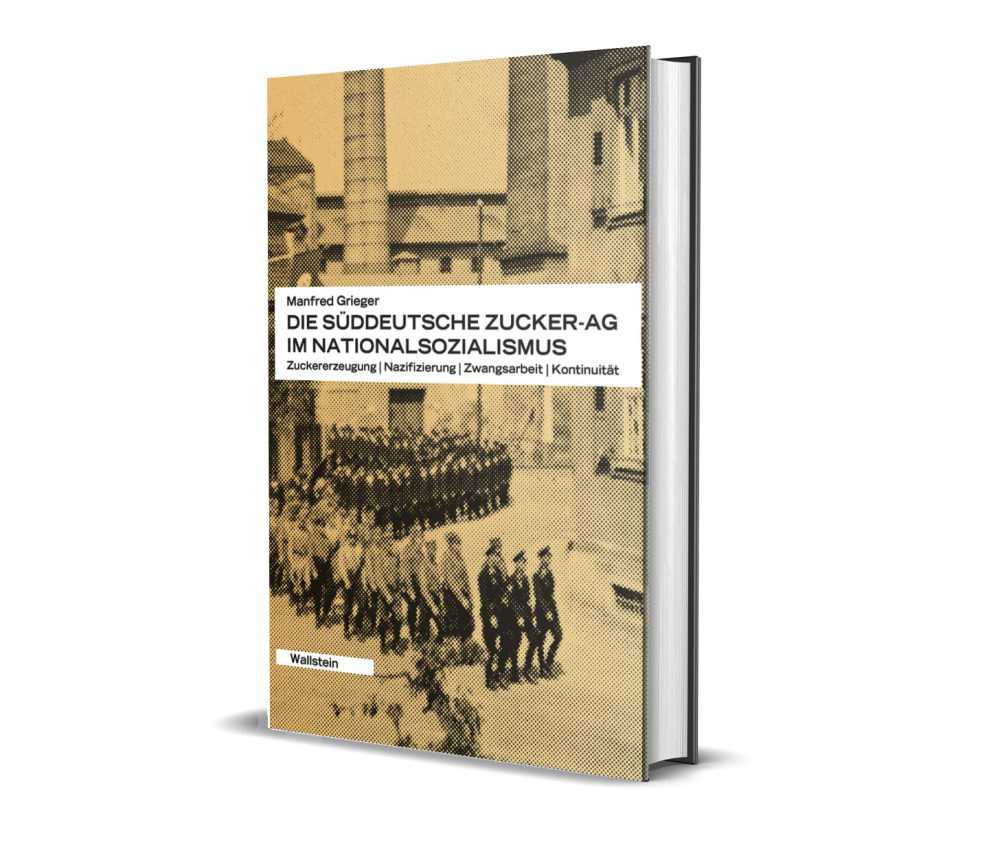
‘The Süddeutsche Zucker-AG during National Socialism’
On 26 September 2024, the GUG and Südzucker AG hosted a conference at the MARCHIVUM in Mannheim, where the results of the study on the history of Südzucker AG during National Socialism were presented. Conference participants also had the opportunity to visit the MARCHIVUM's exhibition on National Socialism. The lecture programme began with a presentation by economic historian DIRK SCHAAL, who outlined the history of sugar consumption, thereby setting the historical context for the study. The author of the study, MANFRED GRIEGER, then presented the key findings of his research on the role of Südzucker AG in the Nazi regime for the first time. The focus was on the company's involvement with National Socialism, conflicts with institutions such as the Reichsnährstand (Reich Food Administration), and the exploitation of the system for its own economic interests. A central focus was the extensive use of forced labourers, who made up more than half of the workforce during the war – significantly more than the Reich average. The displacement of Jewish shareholders and the use of conscripted German Jews, Sinti and Roma were also discussed. The conference concluded with a panel discussion featuring Grieger, NIELS PÖRKSEN (CEO of Südzucker AG) and JOHANNA SOKOLIEß (EVZ Foundation), moderated by ANDREA SCHNEIDER-BRAUNBERGER. The discussion focused on the social responsibility of companies resulting from a critical reappraisal of the Nazi past. The discussion emphasised the importance of not only examining historical findings scientifically, but also drawing practical conclusions for today's corporate practice and social discourse.
Das Programm als PDF-Download
.jpg)
Impressions
.jpg)
.jpg)
.jpg)
.jpg)
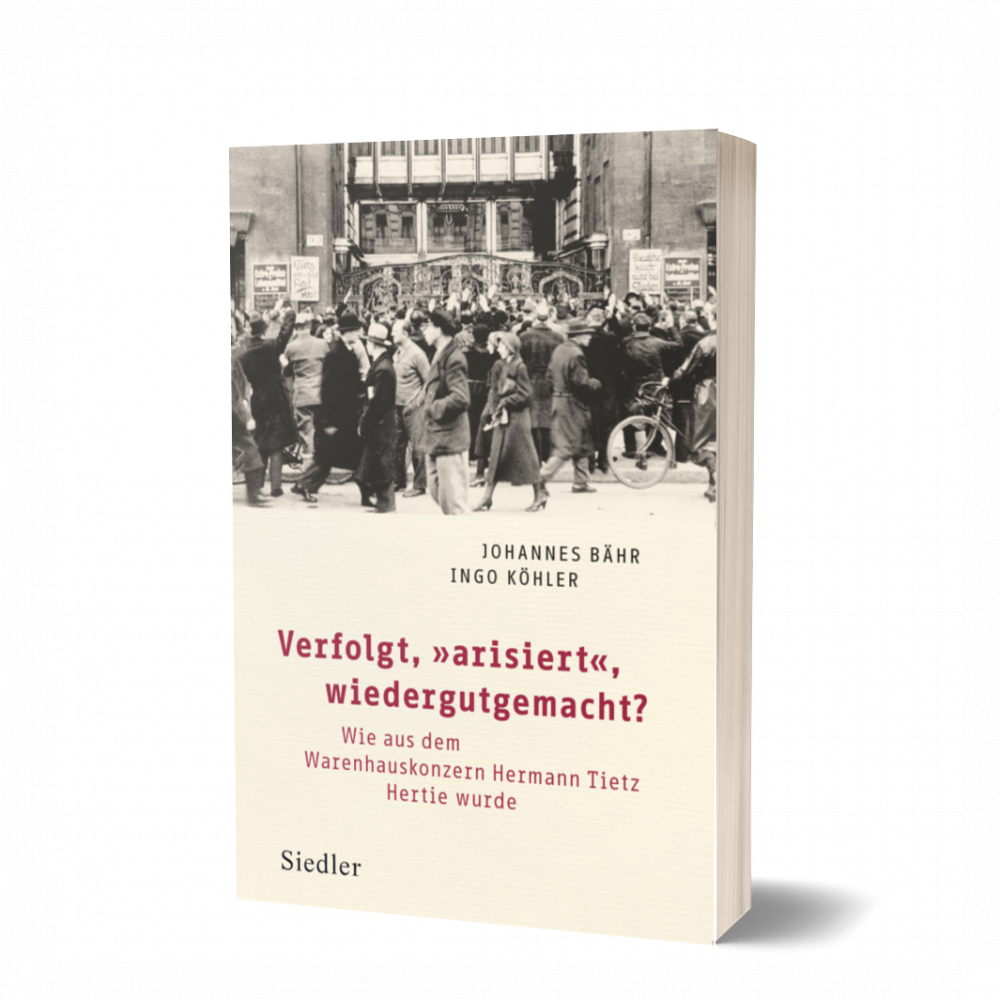
The Hermann Tietz family group was one of the pioneers of the German department store industry at the beginning of the 20th century. After the National Socialist takeover, the Jewish owner family was forced out of the company by a banking consortium and Hermann Tietz became Hertie. For a long time, the troubled past of this major department store brand of the West German economic miracle lay in the dark. In their study, Johannes Bähr and Ingo Köhler shed light on the anti-Semitic agitation against the owners of the Hermann Tietz Group, the Tietz/Zwillenberg family, the "Aryanization" of their company assets and the fate of both families after their ousting from the company. They also investigated the development of the Hertie Group up to the disputes over restitution and compensation in the immediate post-war years. Drawing on a wide range of sources, including previously inaccessible documents, a detailed picture emerges of a department store history caught between persecution, loss and responsibility.
GUG was commissioned to carry out this study in 2020 by the non-profit Hertie Foundation, which was also co-financed and supported by the Karg'sche Familienstiftung. From the outset, the Nazi experts Bähr and Köhler had complete academic freedom and independence in their study.
Press reviews:
FAZ “Hertie in the Third Reich”, January 15, 2024
FAZ “Blackmailed and Plundered”, February 7, 2023
Deutschlandfunk “Hertie Department Stores During the Nazi Era. It’s About Keeping the Memory of the Tietz Family Alive,” November 30, 2020
Cooperation event of Wintershall Dea AG and the GUG e.V. Topic: DEA under National Socialism
Wintershall Dea and GUG hosted a historical conference in Hamburg to present the interim results of a study on Deutsche Erdöl Aktiengesellschaft (DEA). However, the presentations were not limited to DEA alone, but also dealt with the German oil industry in general.
ANDREA SCHNEIDER-BRAUNBERGER (GUG) and MICHAEL SASSE (Wintershall Dea AG) introduced the event. Taking a micro-perspective approach, MANFRED GRIEGER first spoke about the DEA site in Rositz and emphasized that it owed its creation, growth and development primarily to armaments. RAINER KARLSCH reported on DEA's most important production area, the "Ostmark" (Austria), providing information on the conspiratorial Nazi oil strategy before and after the "Anschluss" and the significance of the Austrian oil fields for DEA's development from a coal to an oil-producing company. KARSTEN LINNE then dealt with the German oil industry and the Nazi economic system using the Kontinental Öl-AG (Konti Öl) as an example, through which an attempt was made to establish a German global corporation in the global oil sector. The last lecture was a joint presentation by CHRISTIAN HELLWIG, RITA SEIDEL and JANA STOKLASA on the oldest oil production area in Celle. The focus here was on topics such as the Nazi connection of workforces, the use of forced labor and research and teaching on mineral oil at the Hanover University of Applied Sciences and Arts.
The conference was rounded off by a panel discussion chaired by INGO KÖHLER. Grieger, Hellwig, Sasse and Schneider-Braunberger discussed the history of Wintershall Dea, what lessons can be learned from the history of the oil industry under National Socialism, as well as technical questions about the context of the oil industry in the Nazi system.
You can find the conference report here.
.jpg)
.jpg)
Impressions
.jpg)
.jpg)
.jpg)
.jpg)
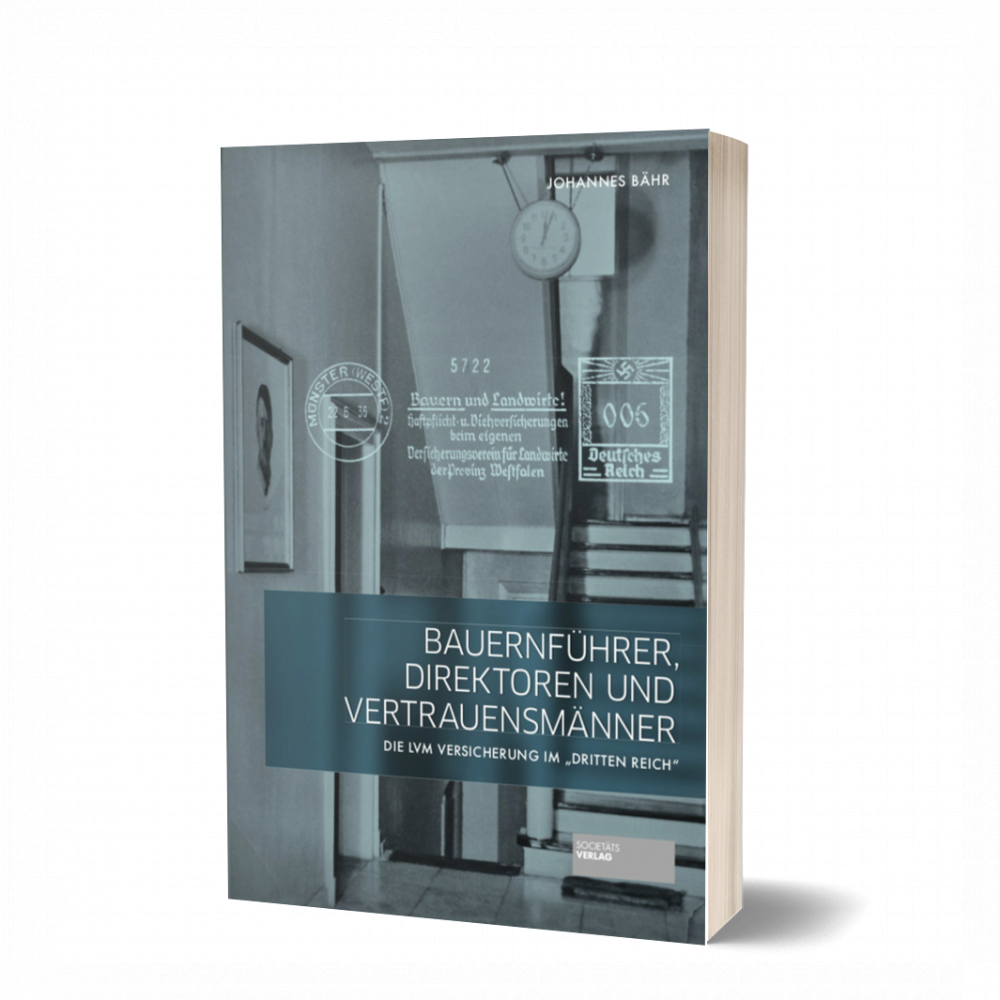
On the occasion of its 125th anniversary, LVM Insurance commissioned the Gesellschaft für Unternehmensgeschichte to conduct a study examining the insurance company's personnel structure and business developments during the Nazi regime. In a digital lecture on 9 March 2022, Prof. Dr. Johannes Bähr presented the key findings of his research, ‘Farmers' Leaders, Directors and Representatives: LVM Insurance in the Third Reich,’ which examined the company's agricultural orientation, its relationship with the Nazi regime, and its role in the persecution of Jews. LVM Insurance in the Third Reich,’ which reveal the company's proximity to the Nazi regime due to its agricultural orientation, its associated roots in the Reichsnährstand (Reich Food Administration) and the ideological affiliations of its management bodies. Apl. Prof. Dr. Bähr concludes that LVM Versicherung did not participate in Nazi crimes itself, but rather benefited from high growth in membership numbers and premium income. Nevertheless, the company must be aware of its historical responsibility, especially with regard to the political burden of its leaders. This was followed by a discussion between the participants and the speakers on the findings and their significance for the company today, with concluding remarks by the CEO of LVM Insurance, Dr Mathias Kleuker, on the relevance of coming to terms with one's own past.
Press Release of LVM Insurance
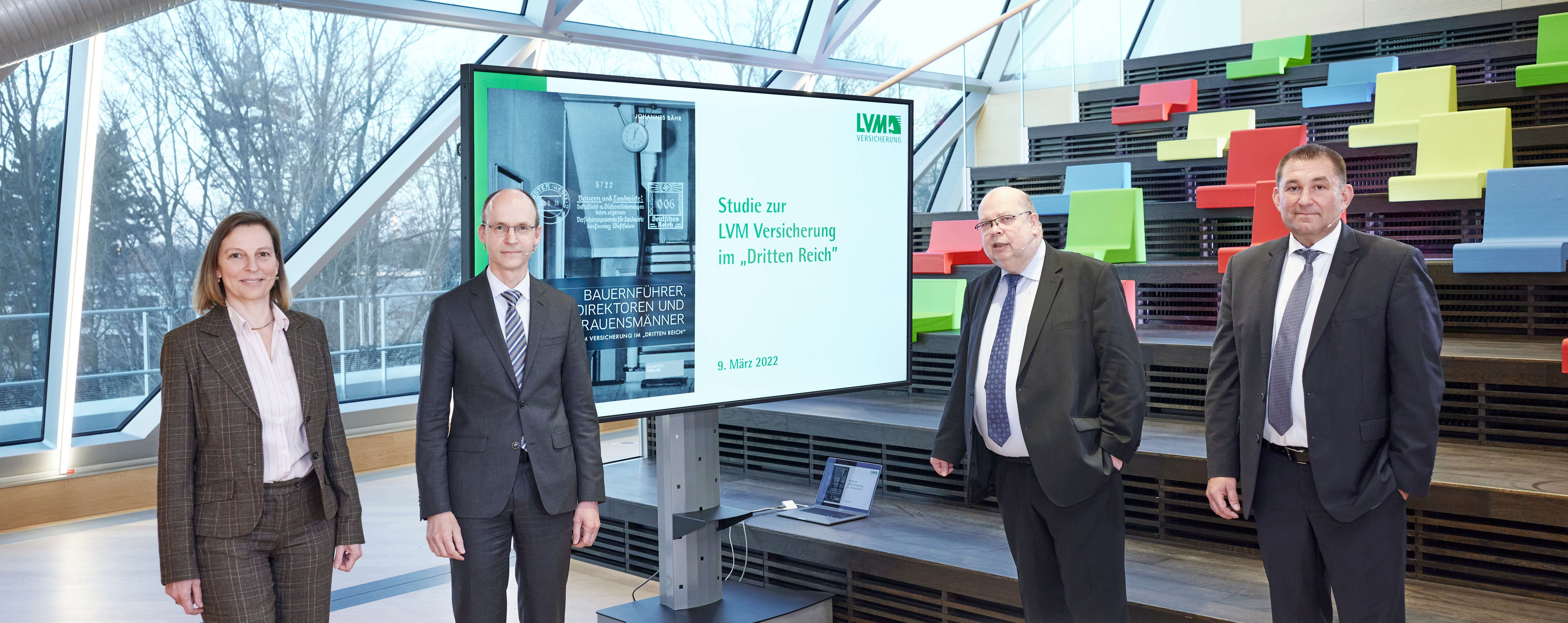
During the online event, they discussed the key findings of the study (from left to right): Dr. Andrea Schneider-Braunberger, Executive Director of the Society for Business History; Dr. Mathias Kleuker, CEO of LVM; historian Prof. Dr. Johannes Bähr; and moderator Marko Feldbaum. (Photo: LVM Insurance/Bernd Schwabedissen)
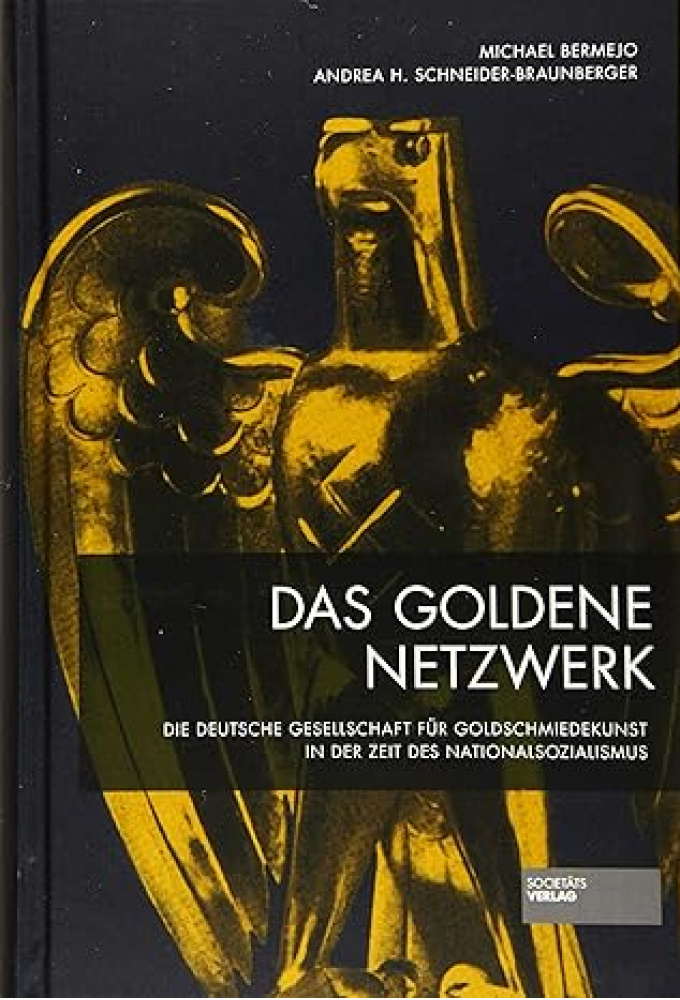
On 1 October 2019, Andrea H. Schneider-Braunberger and Michael Bermejo-Wenzel presented their book ‘Das Goldene Netzwerk, Die Deutsche Gesellschaft für Goldschmiedekunst in der Zeit des Nationalsozialismus’ (The Golden Network, The German Society for Goldsmithing during the Nazi Era), which was commissioned by the Society for Goldsmithing, to the public. In interviews with the Hanauer Anzeiger, the Frankfurter Allgemeine Zeitung and the Frankfurter Rundschau, they presented new findings from their research on the involvement of the Society for Goldsmithing with the Nazi regime and its central protagonists. Following on from this, the Frankfurter Rundschau reported that, based on the findings, the German Society for Goldsmithing had decided to discontinue the ‘Golden Ring of Honour’ award and instead find a new way of recognising exceptional gold and silversmithing.
Links:
Hanauer Anzeiger
Frankfurter Rundschau vom 03.10.2019
Frankfurter Rundschau vom 04.10.2019
Frankfurter Allgemeine Zeitung
Frankfurter Rundschau vom 29.08.2021
Impressions
.jpg)
.jpg)
Wintershall under National Socialism
Conference in September 2019
As part of its 125th anniversary celebrations, Wintershall organised a conference in September 2019 in collaboration with the Society for Business History to examine its own past during the Nazi era. Important topics such as the handling of forced labour were at the forefront of the conference. Following the event, GUG Managing Director Andrea H. Schneider-Braunberger answered questions about the conference's main topics and findings in an interview with Lars Hofmann from hr.
In addition, Hessenschau and Hessenschau kompakt reported on the company's anniversary and its efforts to come to terms with its past.
On 7 January 2020, the Frankfurter Rundschau also reported on the book project that GUG is carrying out on behalf of Wintershall to reappraise the company's history.
Impressions
.jpg)
.jpg)
.jpg)
.jpg)
Book presentation in October 2020
On 22 October 2020, the study ‘Expansion at any price – Studies on Wintershall AG. Between crisis and war, 1929–1945’, supervised by the GUG, was presented. It deals with the Wintershall company during the Nazi era. It was written by Manfred Grieger, Rainer Karlsch and Ingo Köhler. An article in the Frankfurter Allgemeine Zeitung and two articles in industry-specific portals discuss the book presentation and the findings of the study:
Frankfurter Allgemeine Zeitung, 22.10.2020
Energy Voice, 23.10.2020
Rigzone, 25.10.2020