Mathias Kleuker, Versicherungswirtschaft-heute, March 10, 2022
What sets our research apart?
For over 40 years, GUG has been managing a wide variety of business histories, enabling it to offer a comprehensive range of services from a single source. GUG develops the concept for such a project: from source research and the formulation of research questions to the communication of the results. At the heart of this process is the scholarly examination of history, which may be followed by a manuscript ready for publication, a press conference, a conference, or a book presentation.

The projects are diverse: The Nazi era is very often the focus of historical reappraisal. Anniversaries also frequently serve as occasions for examining a company’s own history—for this purpose, the GUG conducts so-called comprehensive studies. In these studies, historians demonstrate how and why a company acted and developed within a specific historical context. Other specific interests in a company’s own history, such as its relations with the GDR, economic crime, etc., can also serve as the basis for a historical study. A deeper understanding of a company’s own history can be applied in many ways, whether to guide strategic considerations, establish a corporate culture, strengthen the brand, or foster employee loyalty. Research into business history can thus provide significant added value for the present.
No matter where the journey in historical communication leads, it must begin with a scientifically sound study. GUG therefore conducts preliminary research and feasibility studies to assess the availability of sources for such a study and, based on this, to develop a concept grounded in substantive content, including plans for time and costs.
GUG’s studies are typically authored by university-trained or professionally trained business historians. With our global network, we are able to find qualified, experienced, and competent historians for the various research questions and industries covered by a historical study. Based on this expertise, the results of our studies provide long-term value for the company that can be drawn upon time and again.
To present the results, we engage a suitable, experienced, and renowned publisher for each project and seek out the right agencies for social media components or video production. GUG ensures the development of historically sound content and is responsible for its accurate translation into the respective medium. This process yields fact-based knowledge that surprises, demonstrates accountability, is educational, and can be utilized in many ways.
Current Projects

Studie (2024): Prof. Dr. Stephan Lindner
Die Schenker AG hat die Gesellschaft für Unternehmensgeschichte mit einer Vorrecherche und folgend einer Studie zu ihrer Geschichte im Nationalsozialismus beauftragt. Dazu wurde der vorhandene Forschungsstand zunächst evaluiert. Die Vorrecherche sucht nun nach weiterem relevantem Quellenmaterial, um auf Basis der neuen Quellen eine umfassende Studie zur Rolle Schenkers in der Zeit des Nationalsozialismus zu verfassen.

Der 1856 gegründete Verein der Deutschen Ingenieure (VDI) ist ein prägender Akteur der deutschen Technikgeschichte. Das Ziel des Projektes ist es, diese Rolle des VDI in den letzten 50 Jahren anhand von vereinsinternen und externen Archivquellen, Zeitzeugeninterviews (Oral History), Vereins-publikationen und weiterer Veröffentlichungen zu rekonstruieren. Das Projekt wird in Kooperation mit der TU Berlin (Heike Weber), dem Interdisziplinären Gremium für Technikgeschichte (IGTG) und dem VDI durchgeführt.

Geschichte (2026): Dr. Raphael Hennecke, Dr. Jörg Lesczenski
Die in Mönchengladbach beheimatete NEW AG ist einer der wichtigsten Regionalversorger am Niederrhein. Die Keimzelle des heutigen Unternehmens lag in der 1998 als Fusion aus den Stadtwerken Mönchengladbach, den Niederrheinischen Licht- und Kraftwerken und der Regionalversorgung des RWE entstandenen NVV AG (Niederrheinische Versorgung und Verkehr AG).
Ein besonderes Augenmerk der historischen Studie soll dementsprechend auf den richtungsweisenden Jahren seit dem Gründungsprozess, über die fortschreitende Konzernkonsolidierung bis zu den aktuellen Herausforderungen der NEW liegen. Dieser Zeitraum war nicht zuletzt durch die Dichotomie aus regionaler Expansion und Integration des Unternehmens einerseits, bei gleichzeitiger, gesetzlich vorgeschriebener Entflechtung der Geschäftsbereiche andererseits geprägt.
Vorrecherche (2023): Michael Bermejo, Kai Balazs-Bartesch
Gutachten (2024): Dr. Andrea Schneider-Braunberger
Studie (2025-2027): Dr. Andrea Schneider-Braunberger, Dr. Martin Münzel
Die Weleda AG, Weltmarktführerin für zertifizierte Naturkosmetik und anthroposophische Arzneimittel, hat bei der Gesellschaft für Unternehmensgeschichte (GUG) eine unabhängige und umfassende Studie zur Geschichte des Unternehmens in der NS-Zeit in Auftrag gegeben. Im Fokus stehen die Entwicklung des Unternehmens und das Handeln seiner zentralen Mitarbeitenden.
Bereits 2024 hatte die GUG für Weleda ein wissenschaftliches Kurzgutachten zu Teilen der Unternehmensgeschichte während des Nationalsozialismus verfasst, das jedoch nicht auf eine Untersuchung sämtlicher Detailaspekte ausgerichtet war.

Studie (2025-2030): Prof. Christopher Kopper, Dr. Stephanie Tilly, Prof. Sharon Murphy, PhD
Die Münchener Rückversicherungs-Aktiengesellschaft, die seit 2009 mit der Marke Munich Re weltweit einheitlich auftritt, wurde 1880 in München gegründet, erschloss sich rasch internationale Märkte und avancierte bald zum weltweit führenden Rückversicherungsunternehmen.
Zum 150-jährigen Jubiläum des Unternehmens erarbeitet die Gesellschaft für Unternehmensgeschichte eine Studie, die vor allem die jüngere Unternehmensgeschichte seit den 1980er Jahren in den Blick nimmt und sich mit der Transformation des Konzerns hin zu einem integrierten Anbieter von Rück- und Erstversicherungen auseinandersetzt. Die Geschichte der Tochtergesellschaft Ergo und ihren operativen Gesellschaften ist ein zentraler Pfad in diesem Entwicklungsprozess. Auch die Eingliederung der US-amerikanischen Tochtergesellschaften bildet einen wichtigen Baustein der Darstellung.

Studie (2024-2026): Prof. Dr. Manfred Grieger, Prof. Dr. Heiko Kleve, PD Dr. Christian Marx, Prof. Dr. Louis Pahlow, Prof. Dr. Eva-Maria Roelevink, Martina Rupp, Prof. Dr. Joachim Scholtyseck und Prof. Dr. Dieter Ziegler
Der multidisziplinäre Band fragt nach der Rolle des Großindustriellen Alfried Krupp von Bohlen und Halbach (1907-1967) im Nationalsozialismus. Dabei gehen die Autor:innen in ihren Beiträgen aus unterschiedlichen Perspektiven der Frage nach, welche Motive dem Handeln Alfried Krupps zugrunde lagen, welche Handlungsspielräume er hatte und was ihn in seinen Entscheidungen geprägt hat. Die Zeit vor 1933 und nach 1945 wird in die Betrachtung mit einbezogen. Die Unternehmerfamilie sowie der Krupp-Konzern werden mit in den Blick genommen, wo sich daraus weitere Rückschlüsse auf das Handeln Alfried Krupps ergeben.
Herausgegeben wird der Band von Dr. Andrea H. Schneider-Braunberger, welche das Publikationsprojekt konzipierte und koordinierte.

Vorrecherche (2024): Dr. Andrea H. Schneider-Braunberger, Saskia Heinz
Studie (2026): Dr. Andrea H. Schneider-Braunberger
Das für Stahlbau und Verzinkung bekannte Siegener Unternehmen SAG (Heute: Coatinc Company Holding GmbH) ging 1933 nach den Krisen der zwanziger Jahre mit zwei Eigentümerfamilien in die Zeit des Nationalsozialismus. Die Studie schildert, wie Hans Dresler den Versuch einer vollständigen Übernahme durch die Familie Weiss, die familiär mit Friedrich Flick verbunden war, abwehrte.
Zugleich zeigt sie, wie das Unternehmen die durch die Besetzung des Aufsichtsrats entstandenen Netzwerke nutzte und sich an die politischen und wirtschaftlichen Verhältnisse anpasste, um innerhalb des NS-Systems wirtschaftlich erfolgreich zu sein. Mit einem klaren Fokus auf die handelnden Akteure fragt die Studie nach der ideologischen Ausrichtung der Eigentümer und leitenden Beschäftigten und richtet abschließend den Blick auf die Nachkriegszeit.
Publications
Here you will find a list of all publications on business history produced by the GUG, divided into comprehensive accounts of business histories and research on business history during the Nazi era.
Comprehensive Overviews of Company Histories
For the first time, this study comprehensively traces the development of Lufthansa since its founding in 1926—from its pioneering days through its role during the Nazi era to its postwar revival and rise to become a global player in aviation. This comprehensive account of the company’s eventful history is based on sources analyzed for the first time and sheds light not only on political, economic, and technical contexts but also on the brand identity, which was shaped not least by consistently innovative design. The volume is supplemented by numerous illustrations, rare photographs from the company archives, iconic vintage advertising materials, and internal documents.
The study is also available in English.
Press reviews:
https://journals.sagepub.com/doi/abs/10.1177/00225266261487103
Interview on Herder.de from March 24, 2026
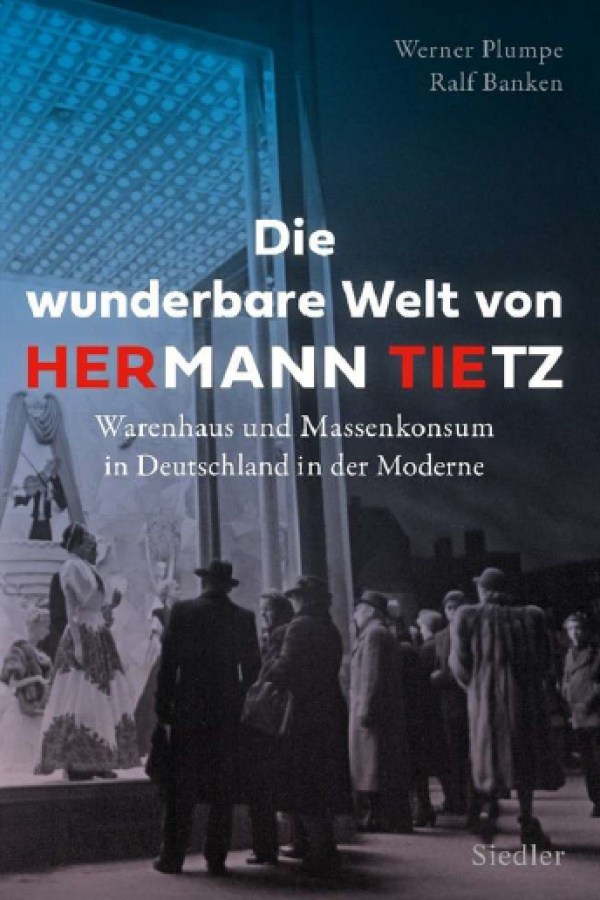
Department stores fundamentally transformed the nature of retail starting in the late 19th century. Their shopping palaces were monumental symbols of the modern mass-consumption society, which they both enabled and embodied. A few, mostly Jewish names stood out: Abraham Wertheim, Rudolf Karstadt, Hermann Wronker, Salman Schocken, Helmut Horten, and of course Hermann Tietz and Leonhard Tietz. The stores named after their founders were for a long time the undisputed focal points of the flow of goods and customers; their storefronts gave the major cities a distinctive character, and they attracted admirers and critics alike with an almost magical allure. It was not until the 1980s that their image began to fade, as they almost universally fell victim to structural change. New forms of shopping took their place, yet the memory of the heyday of these consumer temples has not been lost. Hermann Tietz/Hertie, whose history is reconstructed in this book, was one of their most outstanding examples. It stands equally for grandeur and success as it does for persecution, crisis, and decline: from “Aryanization” during the Nazi era, through its phoenix-like resurgence after 1945, to the loss of significance of department stores around the turn of the millennium.
The book is available as a free eBook on the publisher's website. You can download it as a PDF here: Die wunderbare Welt von HERmann TIEtz
Press coverage:
Download FAZ-Artikel Wie Hertie einst nach Frankfurt kam
Download Buchtipp der Immobilienzeitung zur Hertie-Studie
Das Warenhaus – ein deutscher Traum, WELT, 26.5.2026
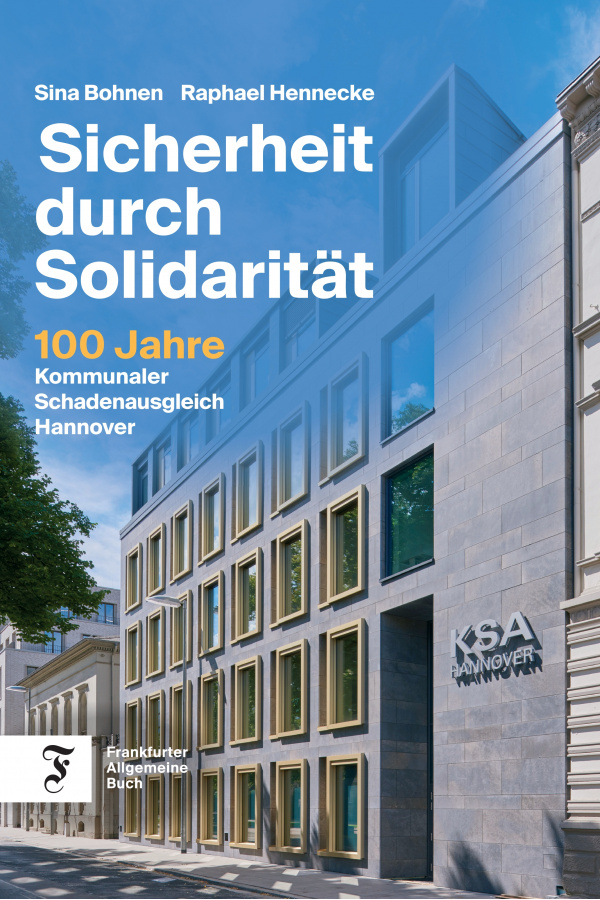
Kommunaler Schadenausgleich Hannover looks back on a century of mutual support and responsible insurance coverage. This comprehensive, carefully researched publication not only traces the development of this unique solidarity-based community but also examines the evolution of its business model in light of social, legal, and economic responsibilities.
A central component of the volume are real-life claims as they occur in municipal practice, including train accidents, fire department operations, and liability claims in hospitals. They vividly demonstrate the risks to which cities and municipalities are exposed on a daily basis and how municipal liability insurance helps to cover these risks through solidarity.
The book not only draws on concrete examples but also explains in accessible terms how municipal claims settlement works. Set against the backdrop of the Federal Republic’s insurance history and supported by historical sources, it becomes clear how the self-image of municipal insurance has evolved over time, from pure claims settlement to that of a modern service provider with corporate responsibility.

The Calenberger Kreditverein is one of Germany’s smallest mortgage banks. Since its founding 200 years ago, it has operated as a chivalric credit institution. Based on extensive archival research, the team of authors has examined the long history of this unique bank in Hanover for the first time. The focus is on its long-term lending activities in the Lower Saxony region, prominent figures from each era, and the political context.
As a mortgage bank in the form of a knightly credit institution, the Calenberger Kreditverein is unique. While upholding tradition, it has successfully developed through long-term financing in its region of Lower Saxony. The team of authors paints a detailed picture of the 200-year history of the Calenberger Kreditverein and explores the question of why this bank has been able to remain so stable for so long. At the same time, the book describes the little-known form of knightly credit institutions, of which only two remain today. The book spans the arc from its beginnings as an association of knightly estate owners to the challenges facing today’s mortgage bond and mortgage business. This academically grounded account also examines in detail the role of the Calenberger Kreditverein during the “Third Reich.”
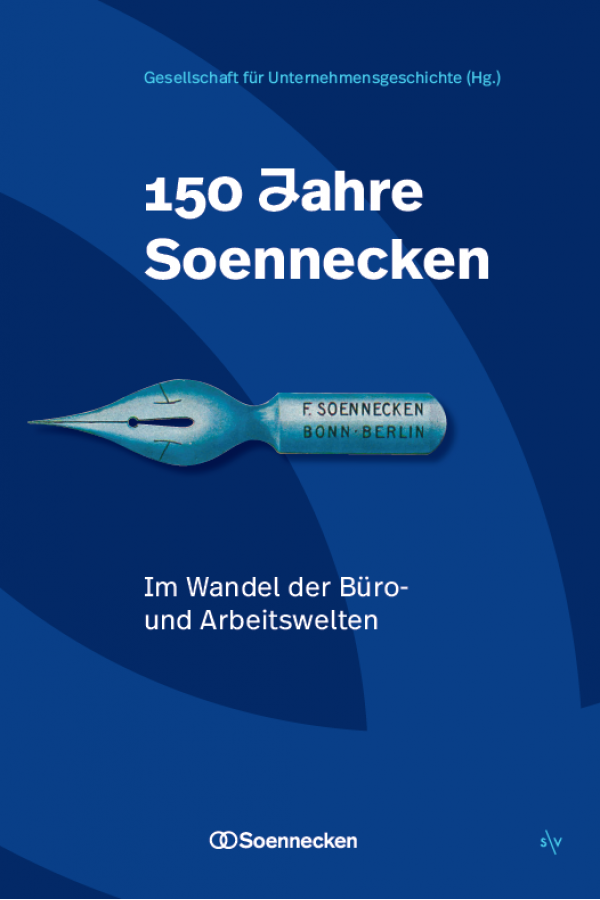
Today, Soennecken eG is the go-to source for products and services related to knowledge work. As such, it carries on the tradition of Friedrich Soennecken, whose company developed into one of the leading manufacturers of office supplies starting in 1875. Then as now, solutions for the world of work are at the heart of the company’s philosophy. Therefore, this book not only traces the eventful history of the Soennecken family business as it evolved into a modern cooperative, but also situates this history within the constant transformation of the world of work—from the historic merchant’s office to the digital home office.
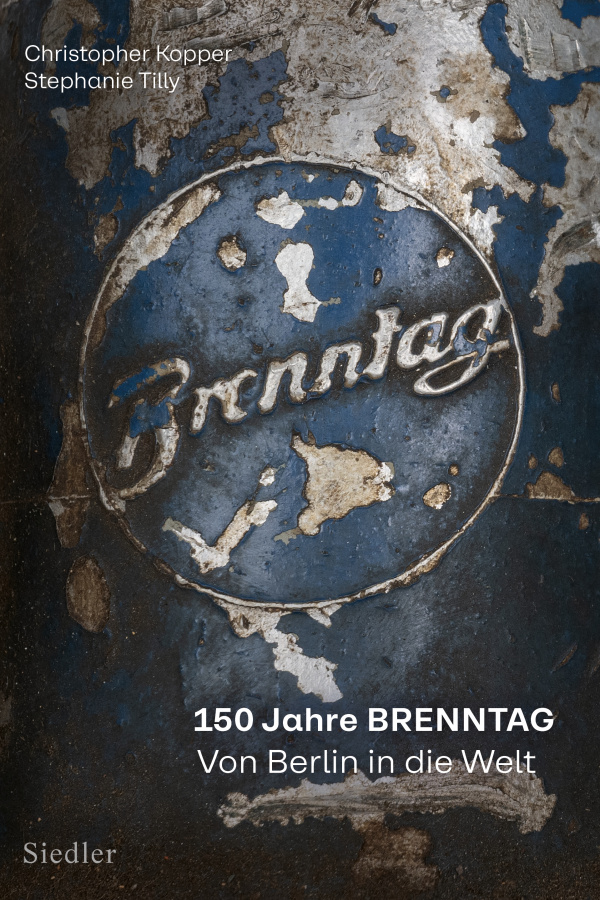
“From Berlin to the World” – The extraordinary story of Brenntag, today’s global leader in the trade of chemicals and ingredients, began in 1874. Founded as an egg wholesaler by Jewish entrepreneur Philipp Mühsam, it evolved into a global corporation over the course of an eventful 150 years. A defining moment was the takeover and renaming of the company by the Stinnes family of entrepreneurs in Nazi Germany. The chemicalization of the world and the internationalization of the business were also fundamental to Brenntag’s development and positioning.
Drawing on a variety of sources, the authors describe the journey of a domestic-market-oriented family business to a publicly traded “global player.” This business study offers a glimpse into the largely unexplored history of chemical distribution and serves as a journey through various phases of German economic history.
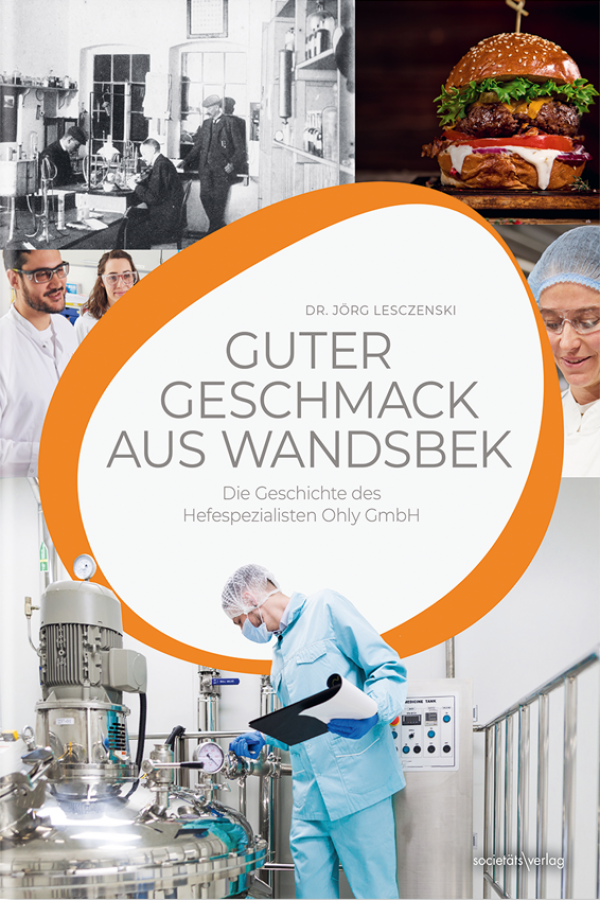
Ohly GmbH, based in Hamburg-Wandsbek, and its predecessor companies are among those enterprises that have significantly shaped the history of the yeast industry in Germany, about which little is known to date. This study traces the journey of what was once a small business, which began producing spirits and yeast in 1836, into a modern enterprise that has remained a fixture in Wandsbek’s economic life throughout its long history, even though it had to fight to retain its Hamburg location on several occasions. Today, Ohly GmbH, a subsidiary of the British company Associated British Foods plc., ranks among the global market leaders in the production of yeast extracts and
specialties.

BIRKENSTOCK is a global brand—that is, a brand with universal relevance that fulfills a deeply human need: to walk as nature intended (“natural walking”). This makes it what is now also referred to as a “purpose brand”—a brand that makes a social contribution that extends far beyond the realm of business. For two and a half centuries, the family has been dedicated to foot health, thereby writing a chapter in brand history. The perception of Original Birkenstock footbed sandals has fundamentally changed over the past decades: from an insider tip for health enthusiasts, to a subcultural style item and symbol of the anti-mainstream, to a brand that epitomizes an entire category. And having finally found its place at the heart of a society that is increasingly embracing the very values that have always been important to the brand, BIRKENSTOCK bridges the gap between generations and the most diverse lifestyles.
Although the brand only came into the international spotlight in the 1970s, the history of Birkenstock’s shoemaking tradition is much older and dates back to 1774. For the first time, this remarkable history is now being scientifically examined in all its facets in recent years. Beginning with the establishment of a shoemaking dynasty, through the opening of a workshop in Frankfurt and the construction of the first small factory in Friedberg; the era in which groundbreaking innovations by Konrad and Carl Birkenstock emerged, which would permanently transform our modern understanding of footwear. All the way to the creation of the iconic Madrid by Karl Birkenstock in 1963, which marked the first step toward becoming a global brand that strikes a balance between health and fashion in the spirit of natural walking.
Over a period of nearly seven years, 15 international historians compiled the family, brand, and corporate history of BIRKENSTOCK for the first time, shedding light from a wide variety of perspectives on the unusual connection between foot health and entrepreneurial passion. This scholarly analysis corrects a brand image that had previously been characterized by clichés, places the brand’s history—which had been shaped primarily by oral tradition—on a factual foundation, and simultaneously situates it within a broader context of historical and industrial history.

Founded in Frankfurt am Main, far from the major seaports, Ronnefeldt has stood for excellent tea for 200 years. The book recounts the eventful history of the Ronnefeldt and Holzapfel families, the challenges of the tea trade, and the company’s rise to become the leading tea brand in the upscale hospitality industry. Throughout it all, Ronnefeldt has always remained true to its tradition as a family business and its commitment to the highest quality.

Focusing on the past decade, the book provides insight into the 170-year history of the Munich-based family business Giesecke Devrient (G+D). Founded in 1852 in Leipzig as the Typographic Institute Giesecke & Devrient for book and art printing, G+D received its first contract for banknote printing just two years later. Following its expropriation in Leipzig and reestablishment in Munich in 1948, the printing company for banknotes and securities evolved into a globally active security technology group with nearly 12,000 employees worldwide today.
Over the past decade of the company’s history, the concept of security has undergone profound changes amid rapidly advancing digitalization and global connectivity, as well as the accompanying economic and social transformation. In particular, the COVID-19 pandemic has accelerated digitalization in nearly all areas of life since spring 2020 and has significantly increased the demands on modern security technologies as well as the demand for cybersecurity.
Parallel to the digital transformation of society, the economy, and politics, G+D initiated an internal transformation over the past decade that led to far-reaching strategic changes. Balancing tradition and innovation, the challenge for the family-owned company—now in its fifth and sixth generations of ownership—was to set the course for the digital future while continuing to develop long-standing partnerships and core physical products such as banknotes, payment cards, and identity documents—and to open up more to the outside world in response to rising expectations for responsible corporate governance and sustainable business practices.
This study of the past 75 years of the HessenChemie Employers’ Association is not merely a history of the resilience and success of the industrial relations system in Germany. It also recounts the immense political, social, and economic changes that have taken place during this period, against the backdrop of which HessenChemie representatives have repeatedly had to find new ways to shape the world of work—and continue to do so to this day.
Reviews:
ZUG, 69 (1), 2024, pp. 153-155
It all began with two talers, which Johann Caspar Delius used on September 11, 1722, to obtain a business license in Bielefeld, thereby laying the foundation for a family business that is now one of the oldest in Germany. It is thanks to the entrepreneurial adaptability of eight successive generations of the Delius family—and their strong sense of family—that the history of textiles in Bielefeld continues to be successfully written today.
Stephanie Tilly traces this eventful development in her chronicle “Delius. Since 1722,” thereby making an insightful contribution not only to the history of the textile industry but also to the economic history of Germany.
Reviews:
ZUG, 70 (1), 2025, pp. 126-127

Owner-managed companies from Germany are often among the world leaders, particularly in niche markets. Among producers of artists’ paints, the family-owned company H. Schmincke & Co. has held its ground for nearly 140 years. What began in 1881 with the two company founders, Josef Horadam and Hermann Schmincke, continues to this day: “Meliora cogito” – “I strive for the better.” The commitment to serving both professional and amateur artists with the finest, highest-quality paints connects the past and the present.
Andrea Schneider-Braunberger and Jörg Lesczenski vividly trace Schmincke’s strategies from the late 19th century into the age of globalization and describe the fascinating interplay between family and corporate history. Over four generations, the ever-difficult search for suitable succession plans and protracted family conflicts have repeatedly weighed on Schmincke’s history, yet ultimately did not decisively jeopardize the company’s success.
Reviews:
ZUG, 67 (1), 2022, pp. 137-139

As a leading international life science group and partner to the biopharmaceutical research and industry, Sartorius AG is involved in the development and manufacture of novel drugs. With its innovative solutions, the company—founded in 1870 and initially focused on the production of high-precision balances—has been helping to accelerate research, simplify work processes, and improve the quality of results for more than 150 years.
Throughout the various eras of its history, Sartorius AG has faced numerous challenges. Drawing on their extensive knowledge and with vivid insight, four renowned historians examine Sartorius’s evolution from an owner-managed family business with artisanal roots to a manager-led, globally active high-tech group from various thematic perspectives.
Reviews:
H-Soz-Kult
ZUG, 67 (1), pp. 133-134
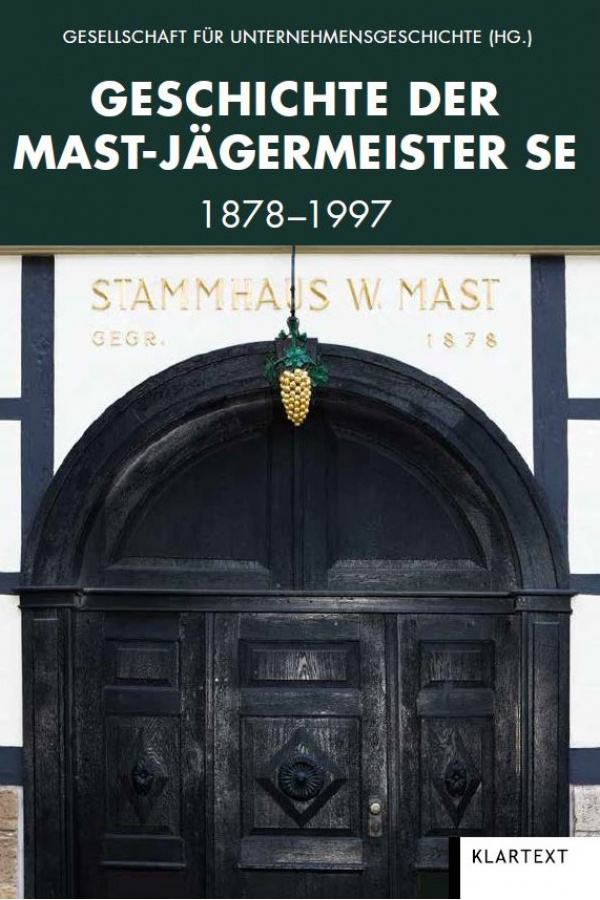
The book looks back on the more than 140-year history of Mast-Jägermeister SE.
The company was founded in July 1878 when Wilhelm Mast purchased the original building in Wolfenbüttel, Lower Saxony, which still stands today. His son, Curt Mast, later took over his father’s business, invented the herbal liqueur and the now world-famous brand, and launched Jägermeister in 1935. Today, the family-owned company is present in over 140 countries with its products and remains committed to its hometown of Wolfenbüttel.
This corporate history examines various phases of business and brand development, structural and organizational changes, as well as the key figures of the family business between 1878 and 1997.
Reviews:
ZUG, 66 (1), 2021, pp. 149-150
In 1794, Heinrich Anton Christoph Seeliger took over his mother-in-law’s small trading firm and achieved his first notable commercial successes through the trade in yarn and wheat. This year is considered the founding of the banking house.
Today, 80 employees serve approximately 8,000 business and private clients, and the bank reports total assets of around 600 million euros. The client base consists of private clients, family associations, foundations, and small and medium-sized enterprises of all sizes. Bankhaus C.L. Seeliger maintains long-standing relationships—some spanning decades—with many businesses in the skilled trades and agriculture. It is the largest and oldest private bank in Lower Saxony.
To mark its 225th anniversary, historians Andrea H.
Schneider-Braunberger and Stephanie Tilly critically examine the challenges faced by the bank’s key figures during the eras of Napoleon, the German Empire, the Weimar Republic, the Nazi dictatorship, and in today’s Federal Republic of Germany, as well as which decisions set which developments in motion.
Hardly any other company has shaped the history of the men’s shirt in Germany as profoundly as Seidensticker of Bielefeld. Walter Seidensticker founded the company as a small business after World War I and gradually developed it into Europe’s largest shirt manufacturer by the mid-1960s. However, structural change and fierce competition in the apparel industry presented the company with numerous challenges beginning in the 1970s. Production was gradually shifted abroad starting in the 1980s, and the company diversified beyond shirts into other areas of clothing manufacturing. Since the turn of the millennium, however, there has been a return to the men’s shirt as the core competency of a family-owned business that continues the tradition of shirt manufacturing in the former lingerie capital of Bielefeld to this day.
Reviews:
ZUG, 65 (2), 2020, pp. 318-320
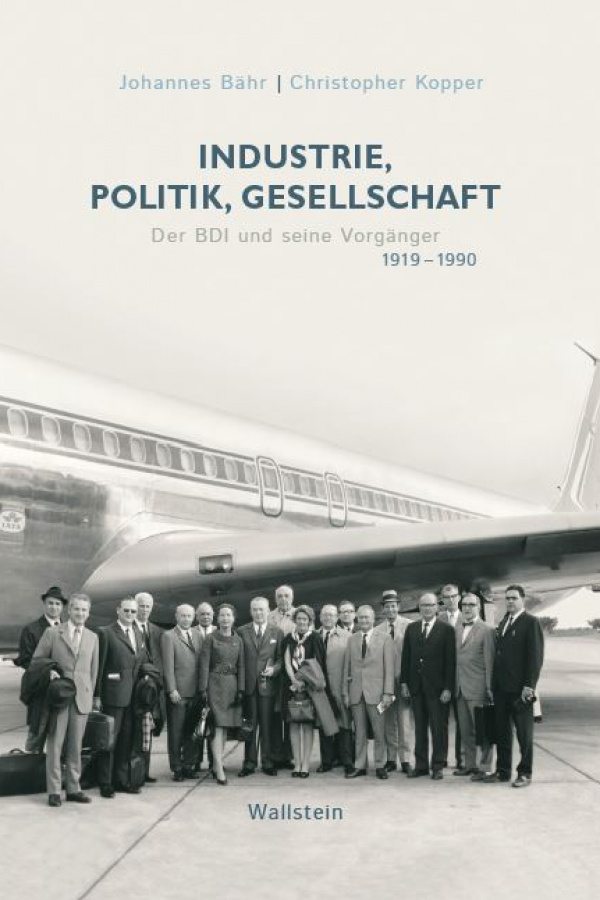
One hundred years after the founding of the first umbrella organization for the entire German industrial sector, a comprehensive history of this leading organization is now available for the first time.
The 100-year history of the umbrella organization of German industry mirrors the history of the country. Thus, the Reich Association of German Industry (RDI) was founded in 1919, just a few months after the establishment of the first German democracy. Johannes Bähr and Christopher Kopper describe this eventful history up to the reunification of Germany in 1990. The authors examine the specific characteristics of the umbrella organization, which has always represented diverse interests, and, for the first time, focus on the role of its executive directors. The narrative spans from the Weimar Republic through the role of the Reichsgruppe Industrie during the Nazi era to the founding of the Federation of German Industries (BDI) in 1949. Furthermore, the book details the BDI’s initiatives and their significance for the history of the Federal Republic of Germany. The BDI participated in the major debates surrounding market regulation. It saw itself as an advocate of a policy of stability and also played a role in shaping a common European economic policy.
Press reviews:
Tagesspiegel
Welt
taz
WAZ
Reviews:
H-Soz-Kult
ZUG, 65 (1), 2020, pp. 130-132
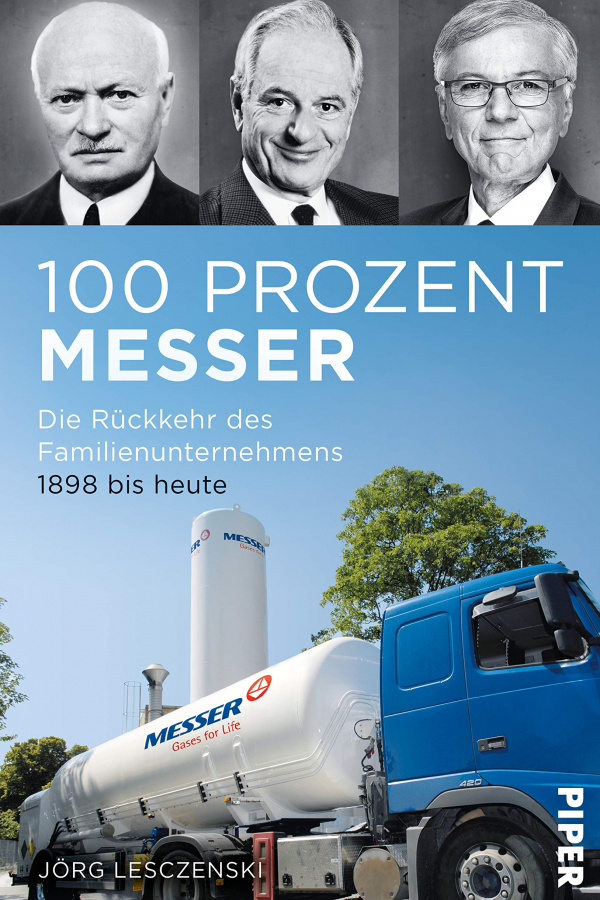
For over 120 years, the name “Messer” has been synonymous with expertise in industrial gases as well as welding and cutting technology. At the same time, the brand name also stands for the close connection and eventful history between the company and the family.
Founded by Adolf Messer in 1898 as a family business, his son Hans merged Adolf Messer & Co. GmbH with parts of Knapsack-Griesheim AG in 1965 to form Messer Griesheim GmbH. Although Hoechst AG held two-thirds of the shares, the family’s influence on corporate policy remained intact. Hans Messer’s withdrawal from management, a shift in the majority shareholder’s corporate policy, and an overheated drive toward globalization brought the company to the brink of ruin in the 1990s.
Stefan Messer’s determination to maintain the family’s position in the operational business into the third generation, along with a successful restructuring strategy aided by financial investors, culminated in the “family’s renaissance” . Since April 2004, the former Messer Griesheim GmbH has once again been an owner-managed company under the name Messer Group GmbH. The group returned to the German market, proved itself in its core markets in Europe and Asia, stayed on course during the financial and economic crisis of 2008 to 2010, and slowly rebuilt its global presence with solid financing.
Reviews:
ZUG, 65 (2), 2020, pp. 322-324

From Herzogenaurach to the World—a fascinating chapter in German economic history.
adidas is a global brand. The company is not only one of the world’s largest sporting goods manufacturers—many legends also surround adidas. Now, for the first time, its nearly 100-year history has been academically examined. Starting with the history of the Dassler brothers’ predecessor company during the Weimar Republic and the Nazi era, this book focuses primarily on the history of the family and the corporate structure since the company’s official founding in 1949. In addition, the authors also examine brand strategies and internationalization since the 1960s, when the company expanded into Eastern Europe and the GDR, among other regions. Last but not least, the history of adidas offers insight into the unique relationship between sports and the economy, as well as the role of sports in politics and society!
Reviews:
ZUG, 64 (2), 2019, pp. 292-312
in: ZUG, 63 (2), 2017, pp. 235–275.
The billion-dollar deal between Hoechst and the GDR chemical industry in 1976 In May 1976, Hoechst AG and its subsidiary Uhde signed a contract with the GDR for the construction of a chlorine and PVC production plant worth more than 1 billion DM. This was the largest intra-German plant construction project in the chemical industry. This deal posed financial risks primarily for the GDR, as only a portion of the sum could be settled through deliveries of products from the new plant to Hoechst. Hoechst was itself a major PVC manufacturer and sought to protect its own markets from competitors in the GDR through contractually agreed exclusion lists. The plants constructed by Uhde GmbH were commissioned in 1980 by VEB Kombinat Chemische Werke Buna in Schkopau. As was customary at the time, they were based on the amalgam process, which utilized mercury. About half of the chlorine and PVC production in Schkopau continued to be manufactured in old, dilapidated facilities, some of which dated back to wartime. In an area where mercury-containing sludge from the chlorine electrolysis of both the old and new plants was processed, only prisoners were employed. The executive board of Hoechst AG was unaware of this. Business dealings with the GDR were discussed exclusively from an economic perspective, not from a moral one.
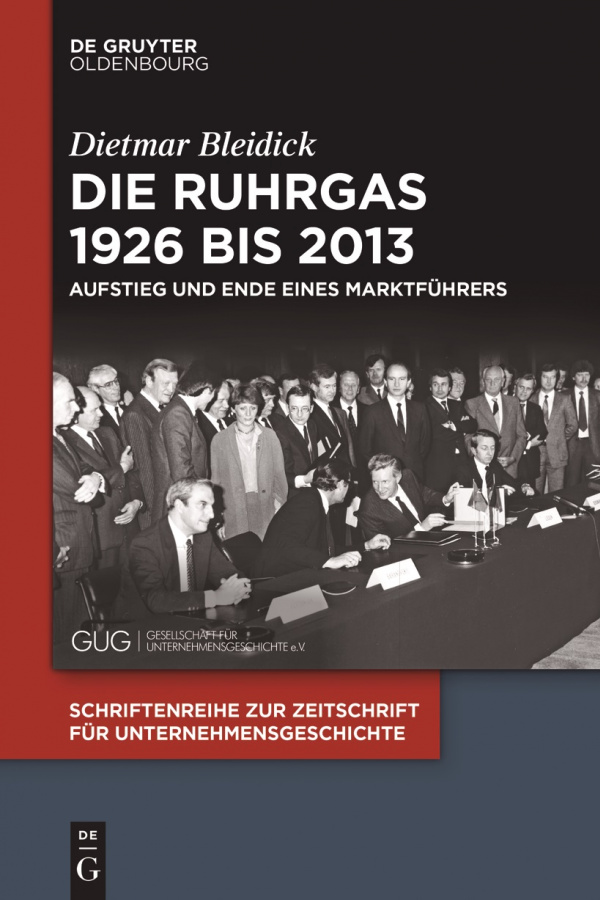
This study examines the history of Ruhrgas AG from its founding in the mid-1920s to its integration into the E.ON Group in 2013. Established during the coke oven gas era to build a Germany-wide long-distance gas supply network, Ruhrgas achieved this goal after the onset of the natural gas era in the 1960s.
After many years as the market leader in Germany, the company became a major European player. It initiated the European natural gas network and, through the import of Soviet natural gas, contributed significantly to the policy of détente in the East-West conflict. As a result, Ruhrgas was regarded as synonymous with the gas industry itself until it systematically lost its significance due to the liberalization of the energy market over the past two decades.
This book provides the first in-depth examination of the history of the company and the industry in the 20th and 21st centuries, thereby filling a significant gap in the literature.
Reviews:
H-Soz-Kult
ZUG, 65 (1), 2020, pp. 132-133
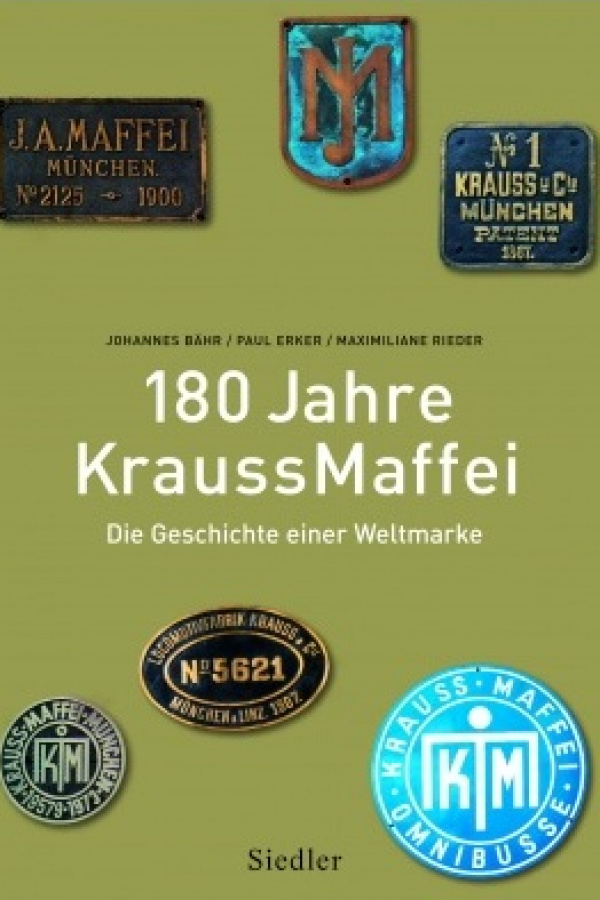
The extraordinary history of KraussMaffei dates back to the early days of German industry. Shaped by continuous change, the Maffei and Krauss locomotive factories evolved into a manufacturer of buses, tracked vehicles, and machinery. After numerous changes in ownership, KraussMaffei is today one of the world’s leading manufacturers of machinery for processing plastics and rubber. The authors have researched the 180-year history of this oldest major Munich-based company for the first time and assess its role in the context of Bavarian and German history. In doing so, they demonstrate that KraussMaffei has managed to preserve its identity to this day despite all the changes.
Within the history of traditional German companies, KraussMaffei occupies a unique position that defies any conventional framework. What is unusual is not so much the shift from locomotive to mechanical engineering—which reflects the technological transformation of the past century—but rather the multitude of twists, crises, and ruptures that have shaped this company over many decades.
At the beginning of the 20th century, Maffei and Krauss were among the major, internationally renowned names in German industry. By the turn of the millennium, however, KraussMaffei no longer existed as an independent company, and hardly anyone at the time could have anticipated that it would one day look back on a 180-year history. Such an anniversary is rare in the business world anyway, but at KraussMaffei it became a reality: one of Munich’s formerly largest companies has evolved into a specialized, globally active high-tech group.
Reviews:
Vierteljahrschrift für Sozial- und Wirtschaftsgeschichte, 107 (1), 2020, 125-127
ZUG, 65 (1), 2020, pp. 128-148

The Carl Zeiss Foundation and its companies in East and West undergoing transformation as a result of reunification and globalization. The development of the Carl Zeiss Foundation and its companies from the late 1980s into the new millennium is a prime example of the transformation in East and West resulting from reunification and globalization. The Zeiss companies, traditionally based in Jena, were part of the radical restructuring of East German enterprises during the transition from a planned economy to a market economy. But the foundation-owned companies established in the Federal Republic also had to contend with long-standing structural problems that played a role in the unification of the Zeiss foundations in East and West. The old foundation constitution increasingly proved to be a stumbling block in this process, offering little resistance to the boom in the stock and technology markets at the end of the 1990s and thus to the promises of stock market law. The reform process not only preserved the foundation as the owner but also provided the companies with the necessary degree of autonomy and restored the unity of the foundation-owned enterprises. This conflict-ridden but ultimately successful process is reconstructed using archival sources, some of which are being examined for the first time, such as those of the Treuhandanstalt.
Reviews:
H-Soz-Kult
VSWG, 106 (1), 2019, 131-133
sehepunkte, 18 (10), 2018

The history of a city is reflected in the establishment and development of its municipal utilities for electricity, water, public transportation, and more. In an impressive panorama, Johannes Bähr and Paul Erker show how, over more than two hundred years, a comprehensive public utility sector emerged in Munich from humble beginnings. It becomes clear that the city’s rise was linked to groundbreaking achievements in water and energy supply as well as in public transportation. For the first time, the two historians also examine the role of Munich’s municipal utilities during the “Third Reich” and, beyond that, the major transformation from a loss-making municipal authority into a successful infrastructure services group. In doing so, Stadtwerke München charted its own course, which not only ensured its independence from the major energy corporations but also enabled it to become Germany’s largest municipal utility provider.
Reviews:
H-Soz-Kult

This commemorative publication aims to contribute to a chronological review of the history of the Hessen Banking Association, to outline its most important milestones and development, and to present the current issues that the banking world must address now and in the future. This is set against the backdrop of the significant development that the financial center of Frankfurt am Main has undergone in recent years, not least due to the establishment of the European Central Bank. Furthermore, the establishment of European banking supervision in Frankfurt, along with other important international financial institutions, represents a strengthening of the financial center, not to mention the large number of international banks.
For 125 years, Deutsche Bank has been an important part of the Bavarian economy. On July 1, 1892, it became the first of the major Berlin banks to venture from Prussia to Bavaria, opening the “Bavarian Branch of Deutsche Bank” in Munich. Competition in the emerging financial hub of Munich was fierce. Yet no other institution had as many strong connections in Europe, America, Asia, Africa, and even Australia. This remains true to this day. Its international network and capital market expertise make it a valuable partner to Bavarian companies.
A richly illustrated publication shows how deeply rooted Deutsche Bank is in Bavaria and how closely it has accompanied the Free State’s rise to become a dynamic industrial and technology hub.
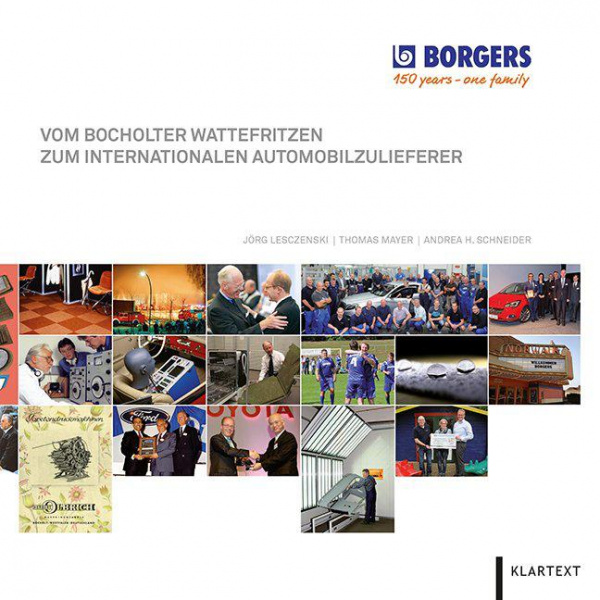
The history of the Borgers Group is extraordinary. Unlike most German companies, Borgers has been in existence for well over 100 years and has been continuously managed by members of the founding family since its establishment in 1866. Over the past 150 years, the Bocholt-based company has had to reinvent itself time and again to avoid being swept away by the maelstrom of economic and political crises in the 19th and 20th centuries. Lesczenski, Mayer, and Schneider trace how Borgers evolved from a small cotton wool factory into an internationally positioned system supplier in the automotive industry. The study describes the complex interplay between family and business and examines in detail the generations of the Borgers family and their disputes, which at times brought the company to the brink of collapse.
Reviews:
ZUG, 63 (2), 2018, pp. 344-345

The penal system for political prisoners in the GDR is one of the most distressing chapters in the history of the SED dictatorship. Not only was the GDR’s prison system considered particularly backward, but prisoner labor was also a fixture of the GDR economy within the socialist planned economy. Many political prisoners found forced labor in prison particularly humiliating. The GDR’s state railway, the Deutsche Reichsbahn, was also involved in the penal system. This was evident, first and foremost, in the fact that the Reichsbahn provided prison transport cars for the transport of prisoners until the end of the GDR. Less well known, however, is that prisoners had been working for the Deutsche Reichsbahn as early as the 1950s. Deutsche Bahn AG has therefore commissioned a study. The authors of the book explore the questions: When, where, and under what conditions was forced labor performed by prisoners for the Deutsche Reichsbahn in the GDR? Eyewitnesses describe their individual experiences with the penal system.
You can find a Deutsche Bahn exhibition on this topic here.
Reviews:
sehepunkte, 16 (11), 2016
ZUG, 62 (1), 2017, pp. 139-164

On March 27, 1890, in Berlin, Deutsche Bank, the Frankfurt-based banking house Jacob S.H. Stern, and attorney Henry Oswalt laid the foundation for what is now a 125-year business history with the establishment of the Deutsch-Amerikanische Treuhand-Gesellschaft. The authors trace the history of Germany’s first trust and auditing firm, offering insights not only into the rise and evolution of services since the late 19th century but also into the ongoing internationalization of a corporate group. The book demonstrates how KPMG, despite all the political upheavals and economic crises of the 20th century, managed to maintain a successful market presence over the long term, continually expand into new business areas, and preserve its prominent position even during periods of increased corporate mergers. The focus has consistently been on clients, their challenges and issues, and the appropriate solutions—and has been so for 125 years now.
Reviews:
H-Soz-Kult
ZUG, 62 (2), 2016, pp. 240-241
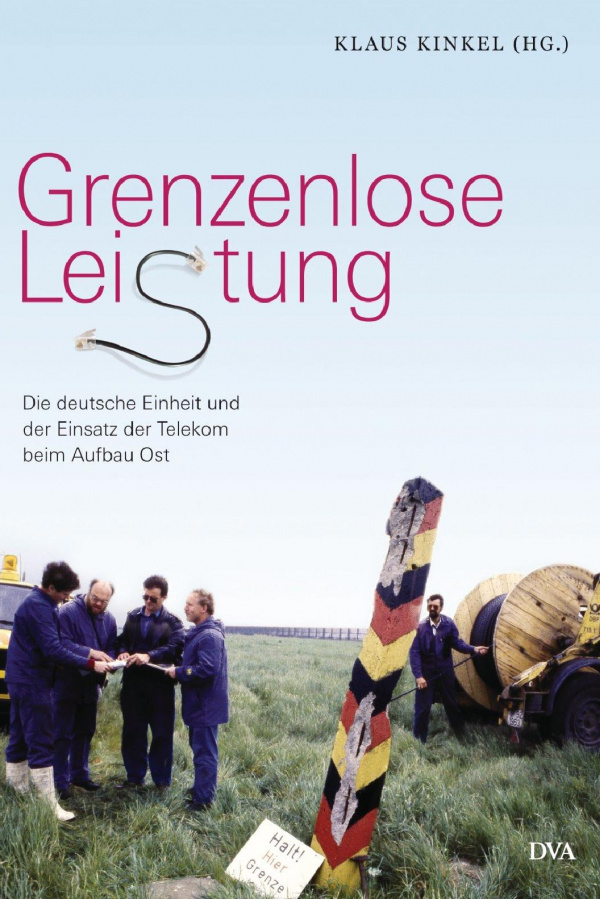
Grenzenlose Lei(s)tung tells the story of how Telekom East and West merged to form the well-known German company Deutsche Telekom. The fall of the Berlin Wall on November 9, 1989, and German reunification presented Telekom with its greatest challenge to date: two companies from different political systems were to be united, and telecommunications in the territory of the former GDR were to be rapidly established and expanded. The lack of communication options before reunification made the Wall and border fences seem even higher than they actually were. The task was to bring the outdated telecommunications infrastructure of the new federal states up to the world’s most modern standards as quickly as possible. In addition to this technical and interpersonal feat, the transition from a state-owned to a private company was also successfully managed. A look at the technological future of Deutsche Telekom, which must tackle complex new challenges even in the Internet age, bridges the gap to the present.
Reviews:
ZUG, 61 (1), 2016, pp. 128-129
At the turn of the 19th to the 20th century, scientists succeeded in breaking down air into its constituent elements and developing commercial applications. A range of previously unimagined applications opened up. There is oxygen, which, in combination with acetylene, revolutionized metalworking, and nitrogen, which enabled the Haber-Bosch process for producing ammonia and, later, also flash freezing and the manufacture of electronic components. Today, the products of this “invisible industry” find applications in all sectors of the manufacturing industry and beyond. This fascinating technical and commercial development is described for the first time in this book. The authors thus not only trace the history of an entire economic sector, but also demonstrate that the most stable structures are precisely those that derive their strength from air.
Reviews:
H-Soz-Kult
Sehepunkte, 15 (9), 2015
ZUG, 60, (2), 2015, pp. 239-240
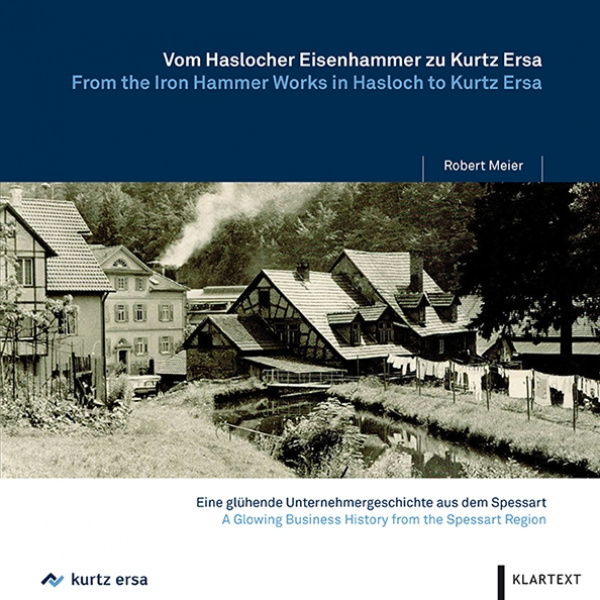
For 235 years, red-hot metal has been shaped using the iron hammer near Hasloch in the Spessart. What began as a forge harnessing the water power of the Haselbach stream has evolved into a globally active corporation. The Kurtz family has led this corporation for six generations. While many comparable ironworks in the region failed to make the transition into the 21st century, the family business succeeded in steadily expanding into new business sectors and markets with new products through bold entrepreneurial action and innovation. The book highlights the unique characteristics of the family business and the entrepreneurial family and introduces the company’s family. In this book, the Kurtz Ersa Group emerges as a “hidden champion” typical of globally active German medium-sized enterprises.
Reviews:
ZUG, 61 (1), 2016, pp. 131-132
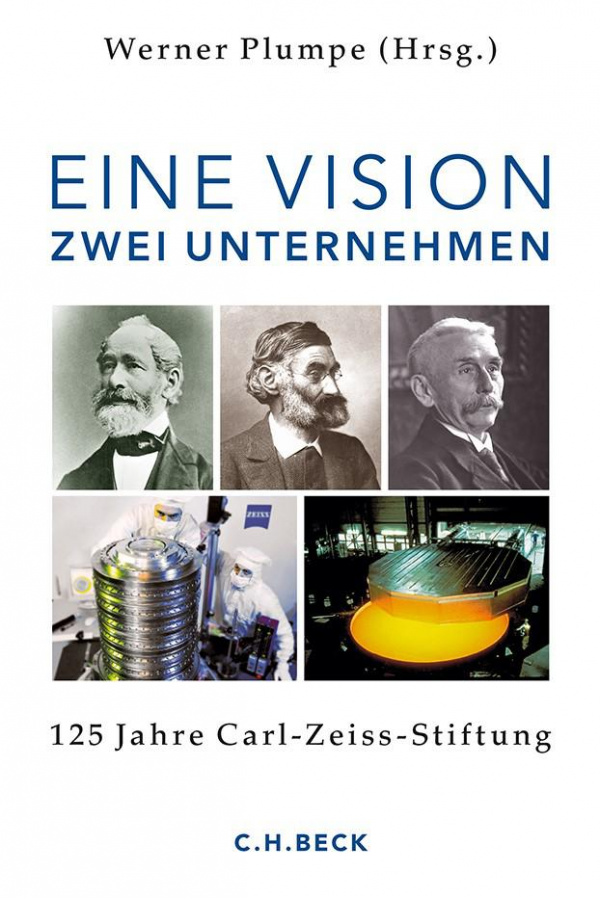
The Carl Zeiss Foundation was established in Jena in 1889. Its founder, Ernst Abbe, contributed his shares in the Carl Zeiss Optical Works and the Schott & Genossen glassworks to the foundation. This book provides the first scholarly account of its 125-year history.
With the revolution of 1918, the foundation became the sole owner of both companies, a status it has retained to this day. According to Abbe’s wishes, the foundation’s companies were to devote themselves entirely to their scientific and technical mission without being beholden to any shareholder. The companies’ profits were also to be used to support the university and the social infrastructure of the city of Jena. After World War II, the foundation was divided; and since then it has existed in Oberkochen and Jena, though the foundation’s purpose—now focused on the states of Baden-Württemberg and Thuringia—remained unchanged. Although the foundation was reformed in the wake of German reunification, its non-profit orientation was not altered. The history of the Carl Zeiss Foundation thus offers unique insights into the potential of the foundation model, the effectiveness of which is currently the subject of intense debate once again.
Reviews:
Vierteljahresschrift für Sozial- und Wirtschaftsgeschichte, 101 (4), 2014, pp. 521

Professor Carl von Linde, a pioneer in refrigeration and industrial gas technology, discovered the Obersalzberg near Berchtesgaden—a place virtually unknown until then—as a summer retreat in the 1870s. For half a century, the family remained loyal to the “Salzberg.” During this time, Carl von Linde purchased and preserved centuries-old mountain farms, had a stately country villa built, developed paths and forests, and shaped the gentle tourist development of the idyllic mountain village into an upscale resort for the bourgeois urban society. From his natural retreat, he occasionally managed his company. Later, von Linde built a small hotel and, with 62 hectares of land, became the largest landowner on the mountain. Above all, however, Carl von Linde, an honorary citizen of Berchtesgaden, was regarded by the locals as a moral authority, a generous lender, and a benefactor. In the late 1920s, Adolf Hitler discovered the Obersalzberg and moved into the immediate vicinity. After seizing power, the NSDAP gradually bought up the Obersalzberg by force and declared it the “Führer’s domain.” Affected and pressured by the cult of the Führer, Carl von Linde’s heirs finally sold their property to the National Socialists in November 1936.
Ensuring the company’s long-term survival was the express wish of the company’s founder, Otto Dunkel, after he had managed, through immense effort, to overcome the challenges of starting anew after the war and the associated financial difficulties. While he was still alive, Otto Dunkel established the corporate and statutory requirements for a succession plan in which the company itself would take center stage—not the shareholders, not the management, and not the employees.
Gerolstein, March 2013. The origins of the Gerolsteiner brand, which celebrates its 125th anniversary in 2013, are the result of a coincidence. While drilling for natural carbon dioxide in 1887, geologist Wilhelm Castendyck struck an artesian spring in Gerolstein. Mineral water shot up in a fountain 30 to 40 meters high. Prof. Dr. Carl Remigius Fresenius, whose name is known today through the Fresenius Group, analyzed a sample and certified the water’s high quality. When Castendyck subsequently founded the Gerolsteiner Sprudel company in 1888, he could hardly have imagined that Gerolsteiner would become Germany’s most sought-after mineral water brand and the world’s most successful carbonated mineral water. As a look back at the past 125 years shows, a focus on quality and a clear brand identity run like a common thread through the brand’s history.

Hydrogen is the most abundant element in our universe and has many interesting properties. As the lightest gas, it has enabled humans to fly in balloons and zeppelins. As a powerful rocket fuel, it has taken humans to the moon. As a reactive chemical element, it is used for efficient electricity generation via fuel cells. And the primary product of this combustion is water. When oil and natural gas are depleted in a few decades, hydrogen could be the energy source of the future. But why aren’t we already living in a “hydrogen economy,” as scientists have been striving for more than 100 years and, above all, calling for since the 1970s? Only a look at the history of hydrogen makes the fascination and fears, the driving forces and obstacles to the use of hydrogen as an energy source understandable.

This book deals with the business activities of K.K. IRISU (C. Illies & Co. Ltd.) in Japan. It focuses primarily on the period from the company’s founding in 1859 to the outbreak of World War I in 1914—that is, the company’s early history. L. Kniffler & Co., the predecessor of today’s C. Illies & Co., was founded in Japan in 1859; in 1880, the company’s headquarters were moved to Germany. Until the outbreak of World War I, Illies was primarily active in Japan.
In parallel with this book, a book covering the company’s entire history has been published in German.
Over the course of its 150-year history, the Hamburg-based trading firm C. Illies & Co. played a decisive role in shaping the development of German-Asian trade. Founded in Nagasaki in 1859 by Louis Kniffler, the company evolved over five generations of the Illies family and their partners from a pioneer in trade with Japan into a globally operating service provider. The authors trace the family business’s journey against the backdrop of the growing interdependence of the global economy since the mid-19th century and identify key factors that contributed to the group’s remarkable long-term success in German-Asian trade: A carefully chosen corporate strategy, the profitable gathering of market intelligence, forward-thinking personnel selection, successful collaboration between the corporate headquarters and its branches, and the specific corporate governance of an owner-managed company enabled the trading house to survive in the global economy even during times of economic setbacks, political upheavals, and global economic crises.
Reviews:
H-Soz-Kult
Sehepunkte, 10 (7/8), 2010

Ferdinand Graf von Zeppelin (1838–1917) initiated the economic revitalization of the city of Friedrichshafen with the Zeppelin Group, with the Zeppelin Foundation initially serving as the parent company of many industrial enterprises. This foundation, unique in Europe, was established in the wake of the Echterdingen disaster, in which the airship LZ 4 was destroyed by a thunderstorm on August 5, 1908. Count Zeppelin’s life’s work was in danger of failing. In a spontaneous fundraising campaign, known as the National or Zeppelin Fund, an entire nation raised 6.25 million gold marks within six weeks. With these funds, the Count established the Zeppelin Foundation with the purpose of building airships and promoting airship travel. In doing so, he laid the foundation for a major conglomerate from which numerous well-known companies have emerged to this day, including Dornier-Werke and MTU, as well as the major foundation-owned companies Zeppelin GmbH and ZF Friedrichshafen AG. By contrast, the impact and significance of the Zeppelin Foundation—both for the corporate group and for the post-World War II revival of the city of Friedrichshafen—have remained largely unknown until now. This is because the Zeppelin Foundation played key roles, initially as an independent corporate foundation with legal capacity, and later as a municipal foundation without legal capacity. Twelve essays shed light on the continuities and discontinuities of an institution that is also significant on a regional level: For instance, the foundation’s ties to the arms industry during the two world wars are critically examined, and the dissolution of the corporate foundation and its transfer to the city of Friedrichshafen in 1947 are also presented in detail. For the first time since its founding a century ago, this publication provides a scholarly account of the history of the Zeppelin Foundation. Numerous illustrations and display panels illustrate the development of the Zeppelin Foundation.
Reviews:
ZUG, 55 (1), 2004, pp. 103-104
It was a bold move that the founders of “Kreditanstalt für Verkehrsmittel AG” undertook in 1924. Following the model of sales financing in the United States, they sought to establish this new form of financing in Germany as well—and their courage was rewarded. The company became not only the first but also the leading sales financing company in Germany at that time. This previously unknown story—from its beginnings to the reestablishment of Diskont und Kredit AG in 1951—is described in this book in rich detail and with captivating narrative, covering all its twists and turns.
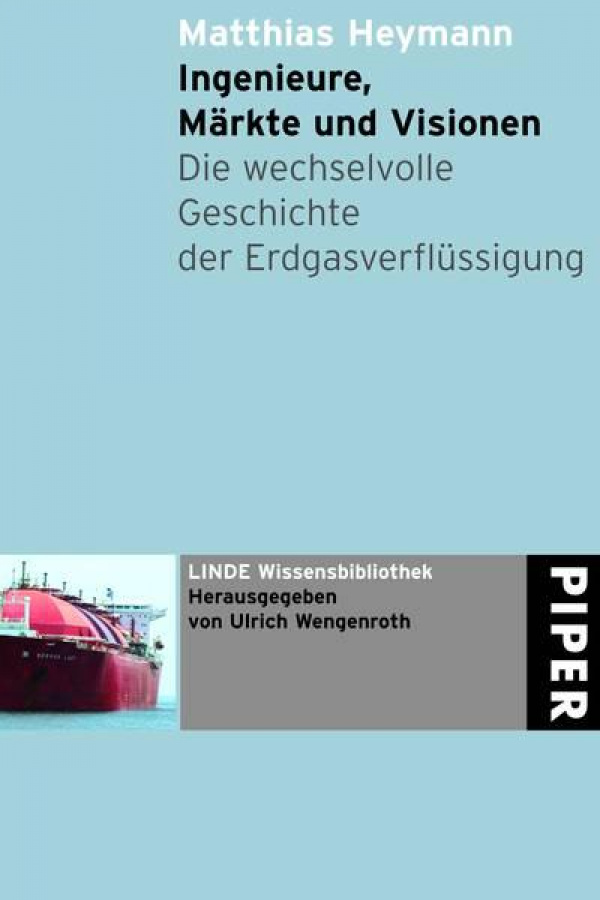
Natural gas is the highest-quality fossil fuel and is considered one of the most important energy sources of the future. It will be available longer than oil, is more environmentally friendly, and is almost as universally applicable. The biggest problem for natural gas use is its transport from the source to the centers of consumption, which is still largely carried out via pipelines today. However, pipelines are not a viable option for very long distances or for transport across the oceans. One solution to this increasingly critical transport problem is the liquefaction of natural gas at a temperature of 162°C and the shipment of the liquid gas via specialized tankers. Already, about a quarter of the natural gas consumed worldwide each year is transported over long distances in this manner. Matthias Heymann describes the fascinating and eventful history of this complex, not risk-free technology, which will be a key technology in future energy supply.
Reviews:
ZUG, 52 (2), 2002, pp. 237-238

Technical development does not depend on speed, as is often claimed, but on the ability to slow down when necessary and to do so with precision. Nothing illustrates this better than the hundred-year history of KNORR-BREMSE AG. Toward the end of the 19th century, railway technology had reached a dead end: Trains could have gone faster and faster with increasingly powerful locomotives—but every car still had to be braked “by hand.” Georg Knorr filled this gap with the (further) development of the air brake, thus beginning a success story that continues to this day. On rail and road—with the development of increasingly powerful brakes for heavy trucks—braking systems from KNORR-BREMSE AG ensure safety. And globally from an early stage: Globalization has been a reality in this market since the 1920s. Manfred Pohl recounts the eventful history of a key German company, its ups and downs as a lesson in how innovative technology and entrepreneurial daring can be used to conquer the global market from Germany.
To mark its 100th anniversary in 2003, Sparda-Bank Frankfurt am Main presents its corporate history. It is closely linked to the history of the city of Frankfurt and its rise as a center for railways and banking. “Im Zug der Zeit” vividly and informatively illustrates the success story of a bank, from the founding of the Eisenbahnspar- und Darlehenskasse in 1903 to its evolution into a modern service provider of today.
Complementing the illustrated book “Heraeus: A Family Business Writes Industrial History” by Ralf Schrank, Walter Kaiser and Norbert Gilson present the history of technology. The breathtaking development from a small manufactory to a high-tech center of excellence, characterized by innovations in ever-new fields, is described precisely and comprehensively. Anyone who wants to know how platinum was smelted in the 19th century, how ceramics were further developed for high-tech industrial applications in the 20th century, or what opportunities medical technology has seized will find comprehensive information in this work.
Reviews:
ZUG, 47 (2), 2002, pp. 225-226
This section outlines Frankfurt’s development into Germany’s leading financial center and one of Europe’s most important financial hubs. Finally, Friedrich von Metzler, general partner of the banking house B. Metzler seel. Sohn & Co., outlines the future of Frankfurt as a financial center.
Reviews:
ZUG, 45 (2), 2000, pp. 249-250
A Unique Bank at the Intersection of Credit and Agriculture: The Landwirtschaftliche Rentenbank
The Deutsche Rentenbank-Kreditanstalt in the Weimar Republic
Agricultural Credit and National Socialism
Twenty Years of Agricultural Structural Improvement
Reorientation 1969–1985
Internationalization 1986–1999
Investments, Personnel Development, and Equity
This book traces the history of the German railway from its beginnings to the present day. It impressively demonstrates the close connection between the railway and Germany’s economic, political, social, and cultural—as well as military—development. Furthermore, it radically transformed people’s daily lives and contributed significantly, to an unprecedented extent, to the expansion of their “experienced” and “experiencable” living space. Thanks to newly discovered sources and a multifaceted presentation, this book successfully opens up new perspectives on more than a century and a half of railway history.
Reviews:
ZUG, 45 (2), 2000, pp. 253-255
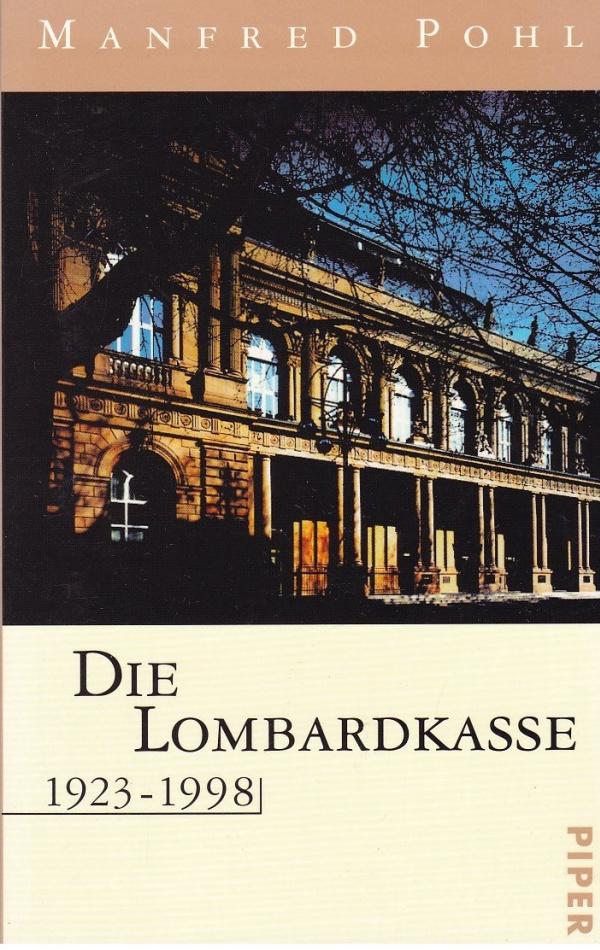
Stock exchanges have always had an air of mystery, even something almost dubious about them. What really goes on there is largely incomprehensible to the layman. Manfred Pohl, a proven expert on banking and stock market history, uses the example of Lombardkasse Aktiengesellschaft to show how the stock market works. The Lombardkasse grants loans to brokers against collateral, thereby safeguarding the creditworthiness of stock market participants and ensuring rapid trading. Drawing on the history of this company from 1923 to 1998, Professor Pohl takes readers inside the stock market, exploring its futures transactions, its risks, and its eminent importance for the entire economy.
This history of VIAG traces its journey from a state-owned enterprise to an international corporation. Emerging at the intersection of government and business, the company underwent a series of developments over the seventy-five years of its existence that were always closely linked to German and European history.
Studies on the History of Nazi-Era Companies
One of the GUG’s areas of specialization is the study of corporate history during the “Third Reich.” The goal is to provide a scholarly analysis of corporate responsibility within its historical context. You can find a detailed FAQ on this topic here: NS-Research
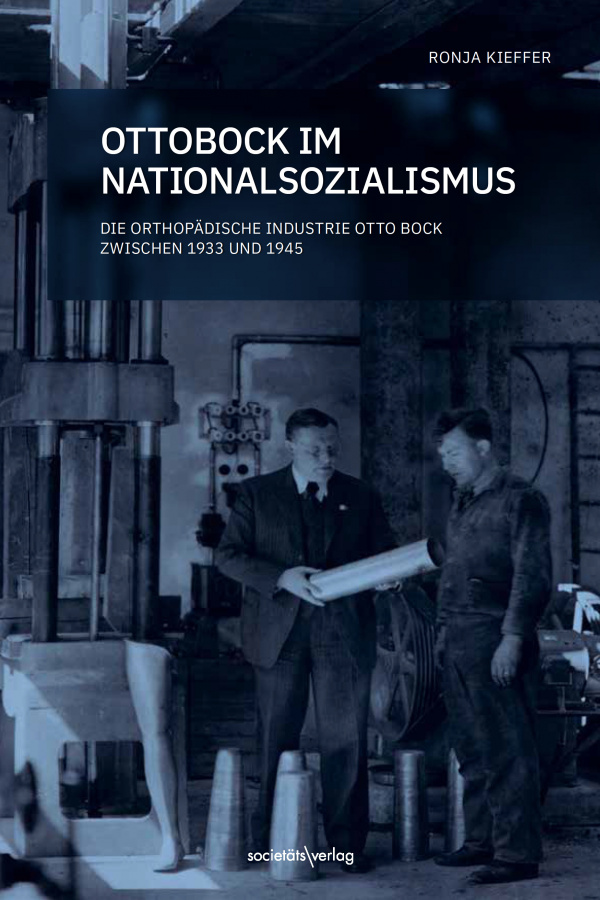
Today, Ottobock is the global market leader in the field of prosthetics. The company was founded in Berlin in 1919 under the name Orthopädische Industrie and moved to Königsee in Thuringia shortly thereafter. In 1935, the company name was expanded to include the name of its director and sole owner, Otto Bock.
During World War II, Orthopädische Industrie manufactured prosthetic components for the Wehrmacht under Otto Bock, employing forced laborers at its facility in Königsee. Based on historical source material, this study examines the role of Otto Bock and his company during the Nazi era, and particularly during World War II.
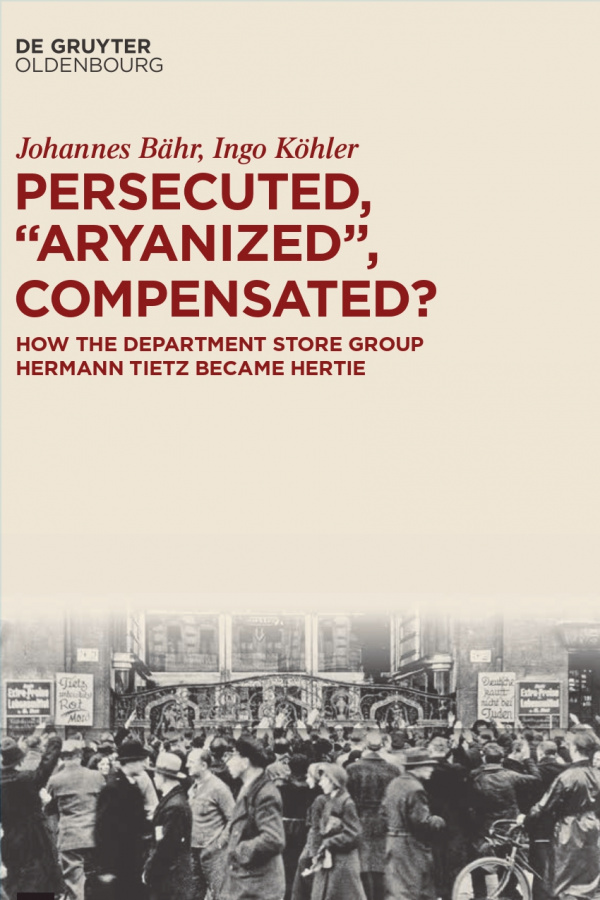
The Hermann Tietz family business was one of the pioneers of the German department store industry. After the National Socialist takeover, the Jewish owners were forced to give up their company. Hermann Tietz became Hertie.
The troubled past of this major department store brand of the West German "Economic Miracle" lay in the dark for a long time. In this study, Johannes Bähr and Ingo Köhler shed light on the anti-Semitic agitation against the owners of the Hermann Tietz Group, the "Aryanization" of their company assets, the fate of the Tietz family after their ousting from the company and the development of the Hertie Group up to the disputes over restitution and compensation in the immediate post-war years. Drawing on a wide range of sources, including previously inaccessible documents, a detailed picture emerges of a department store history caught between the poles of persecution, loss and responsibility.
The eBook is available as open access on the publisher's website: eBook
You can download it as a PDF here: eBook
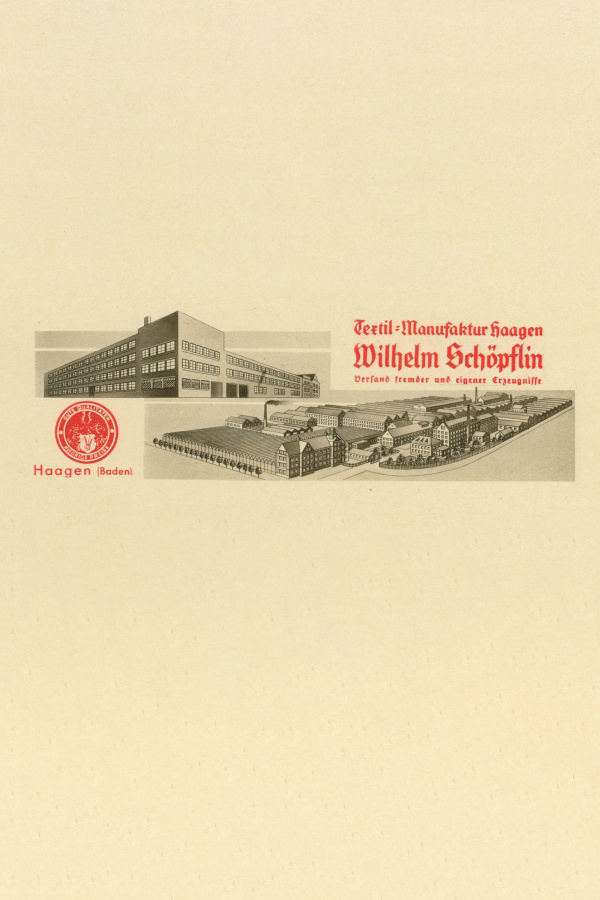
The Schöpflin mail-order company from Lörrach was sold in two stages between 1964 and 1967 to the Schickedanz family, owners of the Quelle mail-order company. The Schöpflin brand name remained in use until the large-scale mail-order company Schöpflin GmbH was closed by Quelle in 1999.
The third generation of the Schöpflin family never joined the company and pursued their own professional paths. In 2001, siblings Heidi Junghanss, Hans Wilhelm, and Albert Schöpflin jointly founded the Schöpflin Foundation. In the fall of 2023, the Schöpflin family and the foundation’s advisory board commissioned the Gesellschaft für Unternehmensgeschichte (GUG) mbH to search for relevant source material in order to investigate the role of the Schöpflin family and the Schöpflin company during the Nazi era. In doing so, the study’s author, Dr. Andrea H. Schneider-Braunberger, examined the following topics:
Schöpflin’s integration into the local political landscape, as well as family members’ membership in the NSDAP and their political proximity to National Socialism;
the company’s business development and economic profits during the Nazi era;
the company’s and the family’s involvement in the “Aryanization” of Jewish property and the use of forced laborers
; and finally, the denazification of family members.
The study was presented in September 2025 and has been published on the Schöpflin Foundation's website. You can download the study {Studie Schneider-Braunberger_Schöpflin_EN_2025}.
Press coverage:
Badische Zeitung “The Schöpflin family of Lörrach has courageously confronted its own history,” Oct. 16, 2025
Badische Zeitung “The Schöpflin family of entrepreneurs from Lörrach held a prominent position during the Nazi era,” October 16, 2025
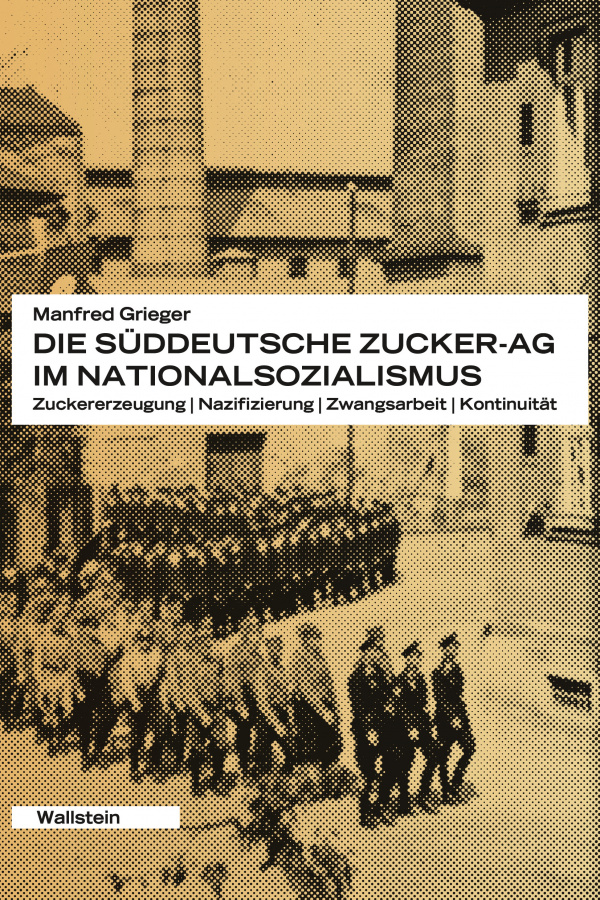
Food was a key component of Nazi policy, which, following 1933 and the economic upswing, also aimed to prepare German society for the coming war. The food industry, and thus also the Süddeutsche Zucker-AG, founded in 1926, played a significant role in these plans. The company was well aware of this. Consequently, by 1937, the Mannheim-based sugar conglomerate had successively removed Jewish shareholders, board members, and supervisory board members from its governing bodies without significant resistance, thereby complying with the policies of the Nazi regime. The decentralized sugar factories capitalized on the growth momentum of the Nazi era and recruited large numbers of foreign forced laborers. German Jews, Sinti, and Roma were also exploited at individual locations. Manfred Grieger traces how the company navigated the transition into the Nazi dictatorship and the war amid the constantly recurring rhythm of the sugar campaigns—the annual period of sugar beet harvest and processing. Sugar remained in high demand even immediately after the war’s end, and so some of those involved prepared for the first postwar campaign almost seamlessly, even while the war was still raging.
Press reviews:
{Sdzucker in the Nazi State: Historian Manfred Grieger sheds light on a dark chapter}
Reviews:
sehepunkte, 26 (4), 2026
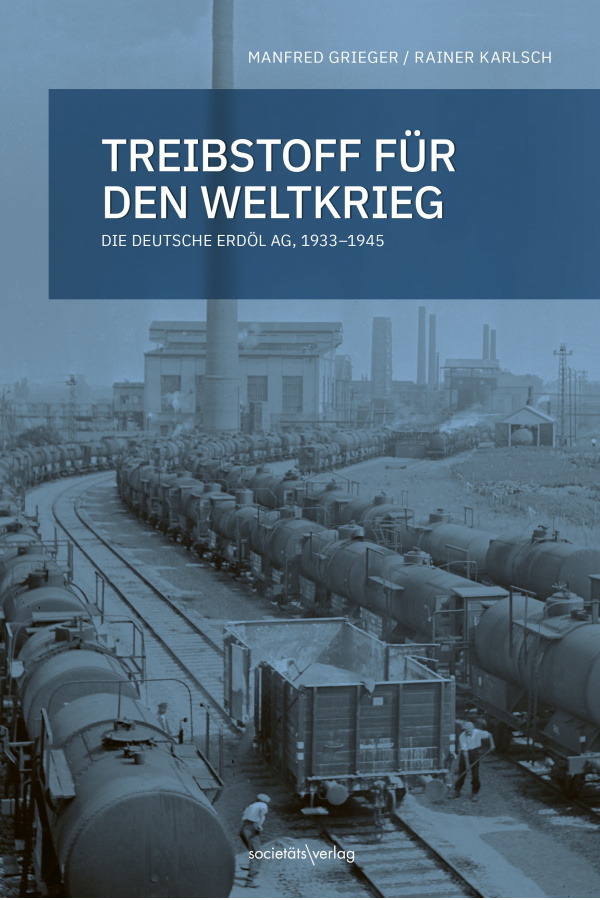
The DEA, Germany’s leading petroleum company before World War I, evolved into a lignite and hard coal conglomerate after losing all its foreign holdings and oil concessions. Beginning in 1933, the company invested in petroleum production from lignite on behalf of the Navy. The DEA participated in the policies of the National Socialist regime through its involvement in “Aryanization” and self-sufficiency projects. In the course of rearmament, the “Anschluss” of Austria, and participation in the exploitation of deposits in occupied countries, the DEA once again rose to become Germany’s largest oil company. During the war, the company exploited thousands of forced laborers both at home and abroad. This volume is a follow-up project to the analysis “Expansion at Any Price: Studies on Wintershall AG between Crisis and War, 1929–45,” which the two authors published in 2020 with Assoc. Prof. Dr. Ingo Köhler.
Reviews:
sehepunkte, 26 (4), 2026
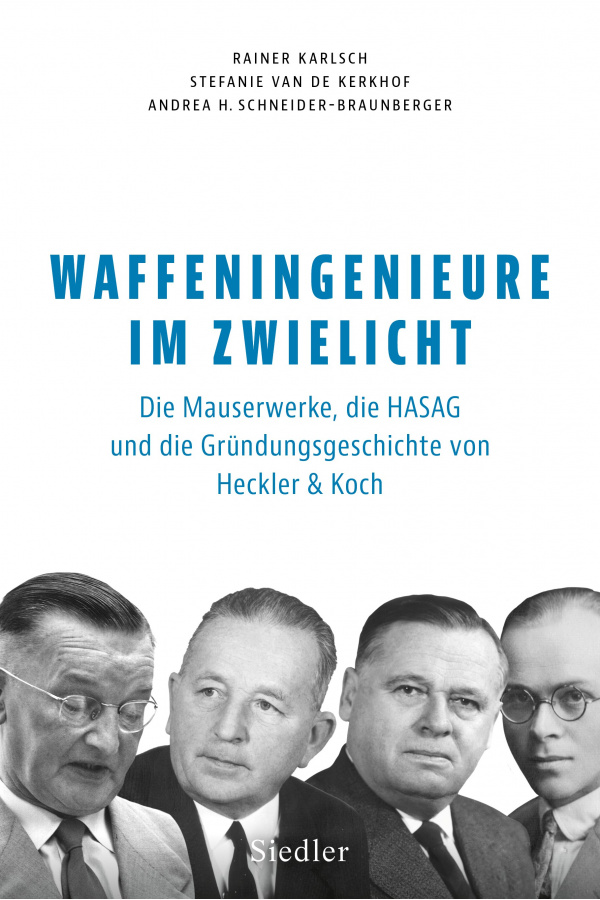
Heckler & Koch GmbH was founded in 1949 by engineers Edmund Heckler, Theodor Koch, and Alex Seidel in Oberndorf am Neckar. The founders had begun their careers at Mauser-Werke AG, a long-established arms manufacturer. While Heckler moved to HASAG in Leipzig in 1934, Koch and Seidel remained employed at Mauser in Oberndorf.
This study examines the roles of the three engineers in the arms industry and, for the first time, explores the historical context and the responsibility they bore within their companies for ammunition and weapons production. In this context, the corporate histories of Mauser Werke AG and HASAG are also examined in depth. How Heckler & Koch GmbH developed into the manufacturer of the Bundeswehr’s first assault rifle within a decade, and whether this was linked to its activities during the Nazi era, is the book’s third main focus.
Press reviews:
ntv.de “The Past of the Arms Manufacturers. Were the Founders of Heckler & Koch Nazi Profiteers?”, March 9, 2024
RNZ “Nazi Shadow Over Heckler & Koch,” September 19, 2023
Spiegel “Historian sees no exoneration for Heckler & Koch founder,” September 26, 2023
Reviews:
sehepunkte, 26 (4), 2026
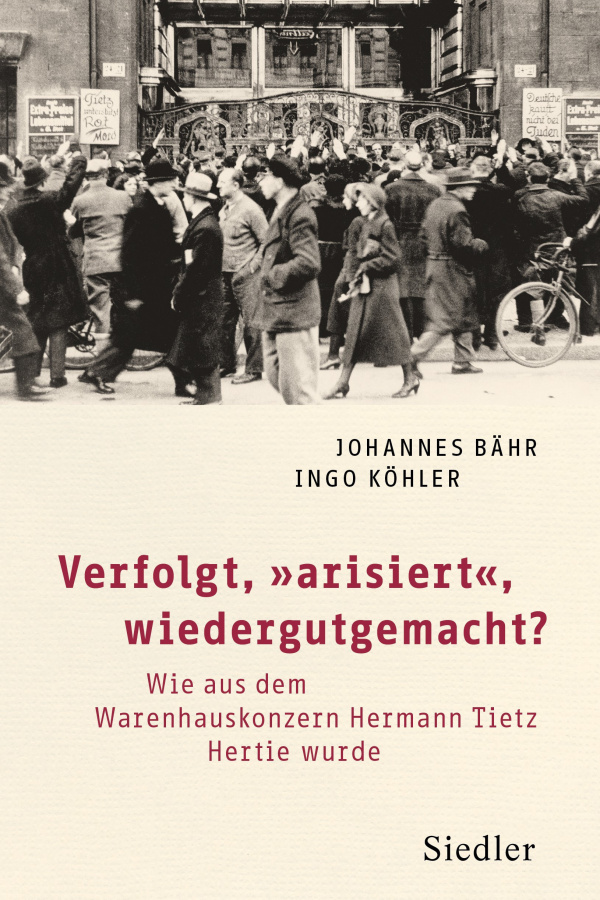
In the 1920s, the Hermann Tietz department store group epitomized modern department store culture like no other. After the National Socialists seized power, the company was taken from its Jewish owners. Hermann Tietz OHG became Hertie GmbH under the leadership of former employee Georg Karg, who later took over the group. The authors reconstruct the circumstances of this early “Aryanization.” The study also sheds light on the fate of the Tietz family after the loss of their business and the history of the Hertie Group up to the disputes over restitution and compensation in the immediate postwar years. Drawing on a wide range of sources, including previously inaccessible documents, it thus provides, for the first time, a detailed picture of the “Aryanization process” and its consequences.
Press reviews:
FAZ “Hertie in the Third Reich”, January 15, 2024
FAZ “Blackmailed and Plundered”, February 7, 2023
Deutschlandfunk “Hertie Department Stores During the Nazi Era. It’s About Keeping the Memory of the Tietz Family Alive,” November 30, 2020
Reviews:
ZUG, 69 (2), 2024: pp. 377-402
sehepunkte, 26 (4), 2026

Founded in 1899 and family-owned for four generations, Miele is known worldwide primarily as a manufacturer of household appliances. However, in the first half of the 20th century, the company was also active in bicycle and even automobile manufacturing. Due to the increasingly difficult economic conditions during the Nazi era, the decision was made in 1937—two years before the outbreak of World War II—to enter the arms industry by manufacturing artillery fuses. This marked the beginning of a development that, in the years that followed, led Miele—like countless other companies—into complete dependence on the Nazi war economy—including the use of forced laborers and prisoners of war.
Initiated and supported by the owner families, this study traces for the first time the role of the entrepreneurs and the company during the Nazi era. It also reveals how those in charge, within the context of their time, sought to reconcile economic necessity with what was morally right. Yet they could not avoid contradictions, such as the dutiful fulfillment of armaments quotas on the one hand and ideological distance from the dictatorship on the other. However, it was precisely this rejection of the regime that made a hopeful future possible for the owners personally, as well as for Miele as a company, after the end of the war.
Press reviews:
Handelsblatt "Mines Instead of Washing Machines: Miele’s Role in World War II," Nov. 24, 2023
Reviews:
ZUG, 70 (1), 2025, pp. 128-130
sehepunkte, 26 (4), 2026
Handel und Verwertung in der Zeit des Nationalsozialismus
in: ZUG, 66 (2), 2021, pp. 219-254.
The essay explores the role of gemstone merchants, jewelers and goldsmiths in the expropriation of diamonds, jewellery and precious stones from the Jewish population of Germany as well as German-occupied countries in the Nazi era. Their participation along with the possibility for them to profit from these efforts will be highlighted, and it will be shown in how far there is proof for the involvement of specific persons. Due to their changeable nature, many of the stolen pieces of jewellery are nigh impossible to trace. For this reason, the essay narrows its focus on individual gemstone merchants, jewellers and goldsmiths to gain insight into their involvement in the robbery.
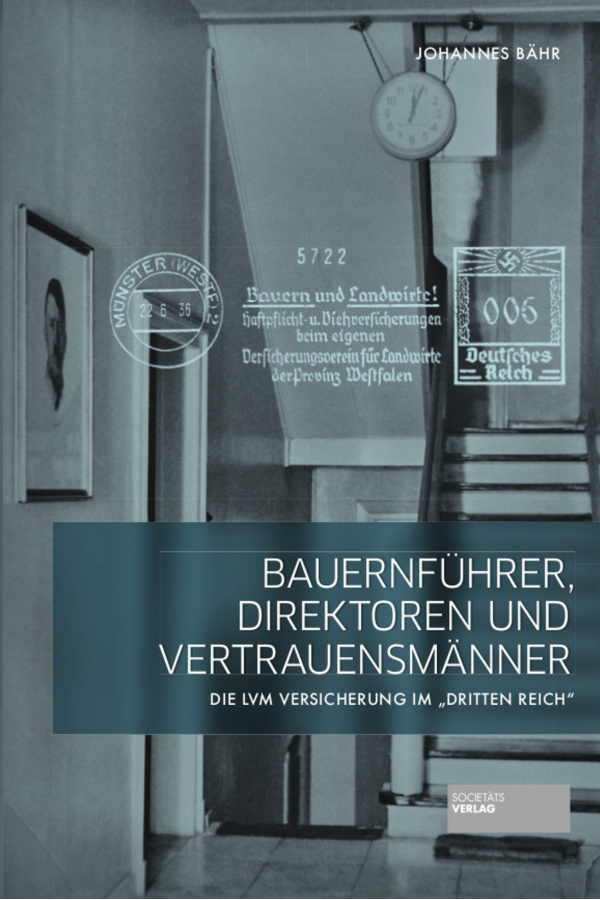
For the first time, this book examines the history of LVM Insurance during the Third Reich, revealing its close ties to the Reichsnährstand, one of the most significant mass organizations of the Nazi dictatorship. The company, which at the time provided liability and livestock insurance for farmers in Westphalia, was predominantly led by National Socialists following the “Gleichschaltung” of 1933.
Based on surviving documents, historian Johannes Bähr paints a comprehensive picture of the role of LVM during the Nazi era. It becomes clear that political influences were shifting. The focus also extends to local representatives in the region and changes in the business. Furthermore, the consequences for the postwar period and the new beginning after 1945 are included.
Press reviews:
Insurance Industry Today “Study clarifies: How involved was the LVM in the crimes of the Nazi dictatorship?”, March 1, 2022
Reviews:
ZUG, 69 (2), 2024, pp. 382-383
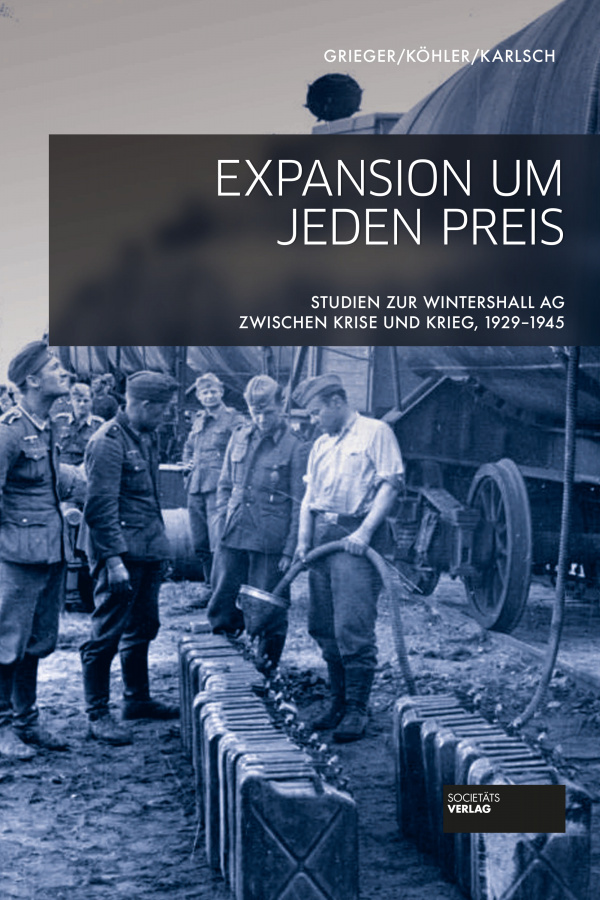
In early 2019, Wintershall Holding GmbH commissioned a team of experts from the Society for Business History to professionally document the company’s history during the Nazi era. The impetus for this came not only from Wintershall’s 125th anniversary but also from the corporate merger, taking place almost simultaneously, with the equally historic DEA (Deutsche Erdöl AG). Both events gave rise to a new awareness of the significance of the company’s own history.
The resulting publication approaches the history of the company during the Nazi era through three distinct areas of activity in which Wintershall was entangled with the Nazi regime. Rainer Karlsch first examines the economic rise of Wintershall AG since the late 1920s. Central to this were not only the company’s integration into the dirigiste economic system and the autarky and war economy, but also the economic policy objectives of the company’s director at the time, August Rosterg. In the second essay, Ingo Köhler adopts an actor-oriented perspective to focus on the figure of August Rosterg, outlining the ambivalence of proximity and distance with which Rosterg navigated the network of relationships within the Nazi regime. In this context, Köhler examines, among other things, the possible motives behind Rosterg’s personal entanglement with the regime. The third essay addresses the topic of forced labor at Wintershall. In it, Manfred Grieger traces the racist discrimination against forced laborers and also describes how the entire workforce—with the exception of a few small resistance groups—tolerated and, in some cases, actively supported the unscrupulous treatment of the forced laborers.
Reviews:
ZUG, 66 (2), 2021, pp. 293-324
Founded in 1870 by Florenz Sartorius as a precision engineering workshop, the Sartorius Group is today a leading partner to the biopharmaceutical research and industry. The roots of the two current divisions date back to the early years and to the founding of the Membranfiltergesellschaft in 1927, respectively. Manfred Grieger examines for the first time the corporate and entrepreneurial activities at Sartorius during the Nazi era. He highlights the relationship between the company and the state, as well as the actions of the family business’s key figures within the Nazi system. In doing so, the question of succession within the entrepreneurial family also comes into focus, as the transition from the second to the third generation occurred during this period.
The changing role of the company within the war economy, the decline in civilian production, and the increasing importance of products manufactured by Sartorius for the arms industry are described, and the use of forced laborers is addressed. The author also examines the influence that the key figures had on these developments. Manfred Grieger also addresses the denazification proceedings involving the management, which shed light on how economic elites—who experienced the economic miracle in the Federal Republic of Germany—individually came to terms with their past.
Reviews:
VSWG, 107 (4), 2020, 521-522
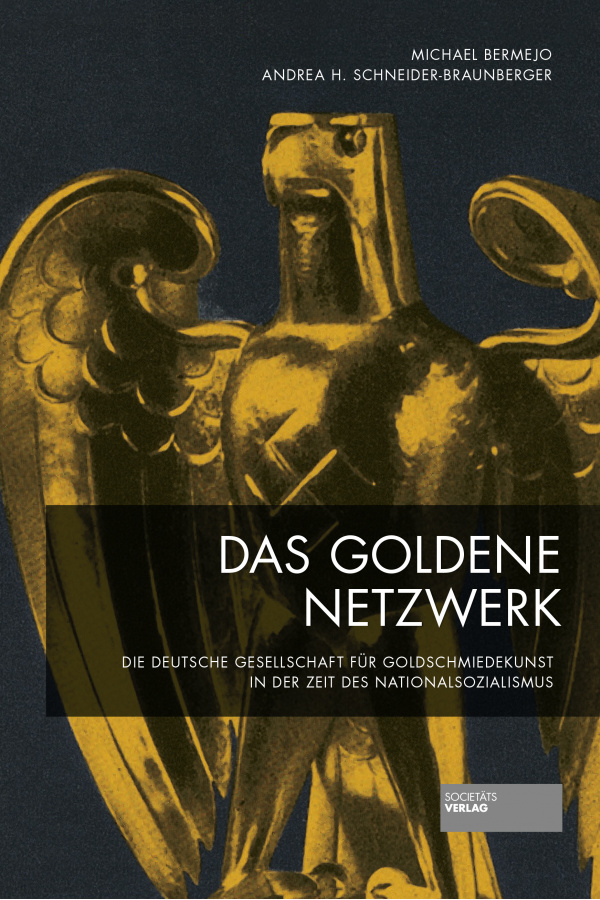
This study examines the role played by the “German Society for Goldsmithing” during the Nazi era. The impetus for the association—now known as the “Society for Goldsmithing”—to confront its Nazi history came from the refusal of an internationally renowned goldsmith in 2016 to accept an honorary ring, citing the fact that some of the previous recipients had maintained close ties with the Nazi leadership during the Nazi era. Until that point, the association’s own rudimentary historical records, its mistaken assumption that it had been re-founded after World War II, as well as a lack of financial resources on the one hand and insufficient scholarly interest on the other, had consistently prevented a professional examination of the association’s history. As a result, essential information about the association had also fallen into oblivion. Now, however, the “Society for Goldsmithing” was called upon to confront its “Nazi past” and come to terms with it, so that the gaps can now be filled. For the historian, the resulting study serves as a case study that highlights the intertwining of particular, association, and party interests in a particularly striking manner.
Press coverage:
Hanauer Anzeiger“Goldsmiths’ Society Commissioned Research into Its Nazi Past,” 12/18/2019
Frankfurter Rundschau “Hanau: Entanglement and Glorification,” Oct. 3, 2019
Frankfurter Rundschau “Society for Goldsmithing: Ties to the Highest Nazi Circles”, October 4, 2019
Frankfurter Allgemeine Zeitung “An Honorary Ring for Hitler, Göring, and Mussolini”, October 4, 2019
Reviews:
Jewellery History Today Autumn 2020
ZUG, 65 (2), 2020, pp. 324-325
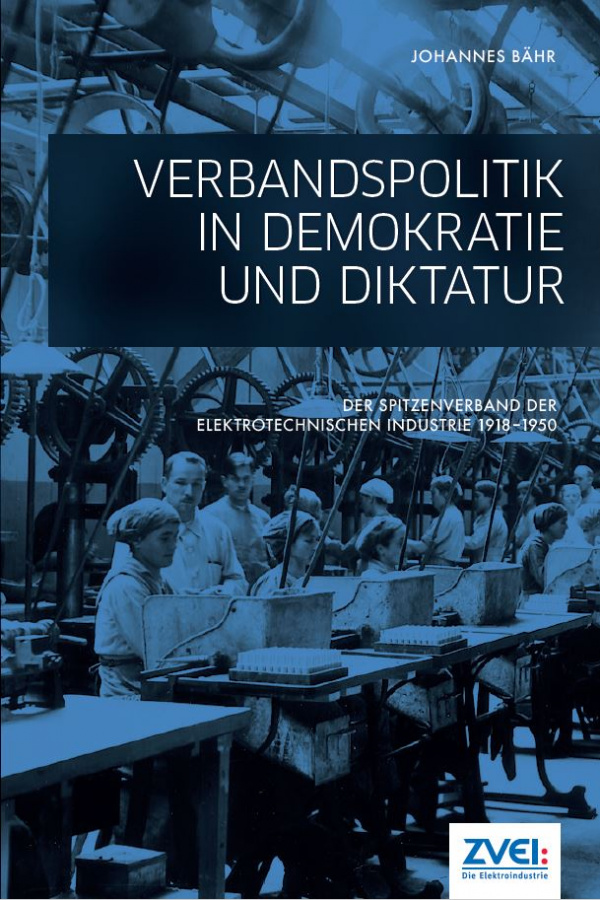
On the occasion of the 100th anniversary of the German Electrical and Electronic Manufacturers’ Association (ZVEI), historian Johannes Bähr has, for the first time, researched its history from its beginnings through the postwar years. His research shows how, after its founding in March 1918, the ZVEI struck a balance between the differing interests of its members and advocated for international understanding. After the National Socialists seized power, this development came to an abrupt halt, and the ZVEI was replaced by a state-controlled industry association. When the ZVEI was reestablished in Frankfurt am Main in February 1949, it marked a new beginning and a return to its original principles.
In his book, Johannes Bähr vividly traces the association’s developments over the decades, from its first to its second founding. A particular focus of the research is on the association’s political stances as they evolved over time.
Reviews:
ZUG, 6 (2), 2020, pp. 317-338

This account of the Metzingen-based company Hugo Boss during the Weimar Republic and the “Third Reich” is primarily due to the fact that, because of its current significance, this major global manufacturer and exporter has been confronted by the public with critical questions regarding its role during the Nazi era.
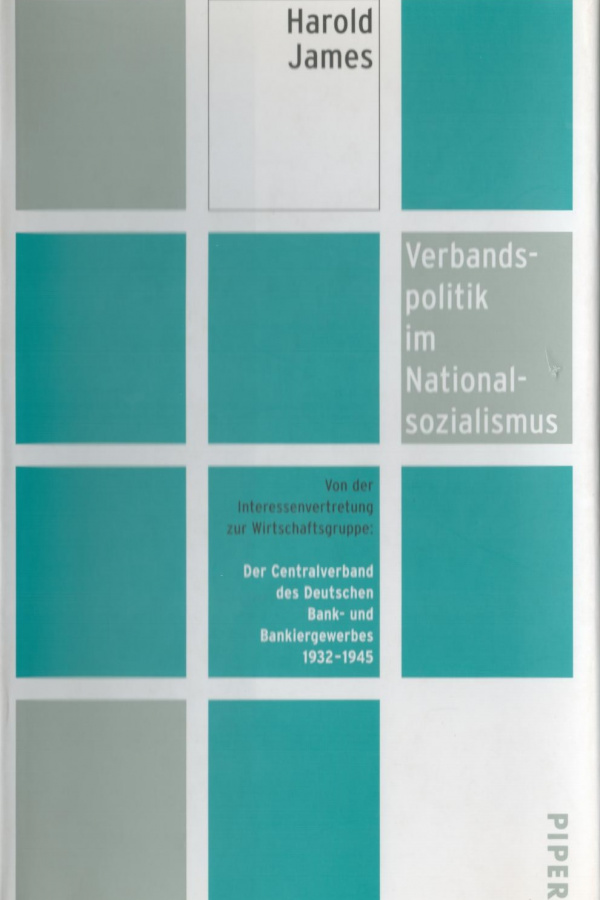
The major German banks have taken a leading role in researching their own history between 1933 and 1945. What was still missing was the history of their umbrella organization during that period. Harold James now fills this gap. Starting with the banking crisis of the early 1930s, he describes how the “Centralverband” was very quickly transformed into an effective instrument of Nazi financial and economic policy. James examines the crucial question of how much autonomy the “Centralverband” had and what opportunities thus existed to resist—or at least delay—meeting the expectations of the Nazi rulers. Using these questions as a framework, James describes the development of the entire banking sector under the dictatorship.