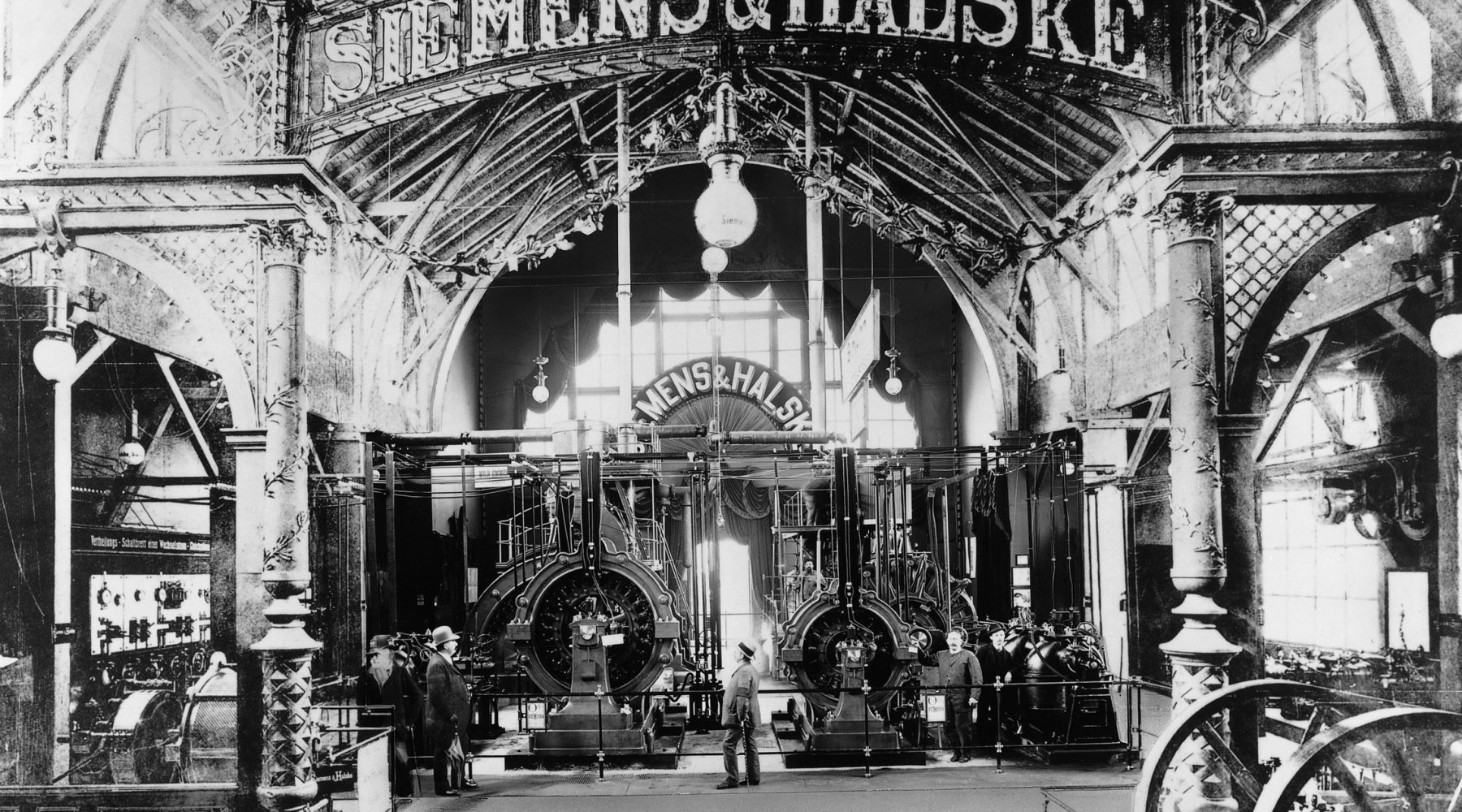
Sybille Schwarz, Frankfurter Allgemeine Zeitung, 7th July, 2010
GUG's Goals
The GUG provides a forum for academic exchange to all interested researchers.
To this end, it organizes events such as lectures, symposia, and working groups.
Partner to Businesses
The GUG and GUG mbH assist businesses with all matters related to the research, communication, and presentation of their history.
In collaboration with the Association of German Business Archivists (Vereinigung der deutschen Wirtschaftsarchivare e.V.), the GUG offers support in establishing corporate archives as well as in researching, documenting, and publishing business histories.
Bridge between academia and practice
Business history research is a process of gaining new insights that thrives on the participation and support of a broad spectrum of companies and researchers. Accordingly, the GUG sees itself as a network for promoting dialogue between companies and researchers. Through this network, companies can bring current issues into the academic discussion.
Support historical research
The GUG fills research gaps through funded non-profit projects, e.g., through studies on companies that no longer exist, such as Ruhrgas and the Hertie department store group (Karg Foundation), or through the search for cultural assets (provenance research).
We thank our sponsors.

Our Business Partners





The History of GUG e.V.
The Founding
On June 10, 1976, the Society for Business History (Gesellschaft für Unternehmensgeschichte e.V.) was founded in Cologne. The founding members were August Thyssen-Hütte AG, Christian Adalbert Kupferberg AG, Daimler Benz AG, Deilmann AG, Deutsche Bank AG, Kamax AG, Hamburg-Mannheimer Versicherung AG, Henkel AG, Hoesch Werke AG, Karstadt AG, Klöckner-Humboldt-Deutz AG, Mannesmann AG, Robert Bosch GmbH, Siemens AG, and Taylorix. The founding meeting elected Prof. Wilhelm Treue as the first chairman of the board and Prof. Hans Pohl as the first chairman of the Scientific Advisory Board.
From the very beginning, there was close cooperation between business and academia within the GUG. Two motives drove the founders: first, it was necessary to take over the “Tradition. Journal of Business History and Entrepreneurial Biography,” as the publisher threatened to discontinue it. In its 22nd volume, the journal changed its name and publisher and was published in 1977 by Franz Steiner Verlag under the title “Zeitschrift für Unternehmensgeschichte.” After another 20 years, the ZUG moved to C.H. Beck Verlag, and from there to Walter DeGryuter in 2017. Along with the journal, the supplements and the series also changed publishers.
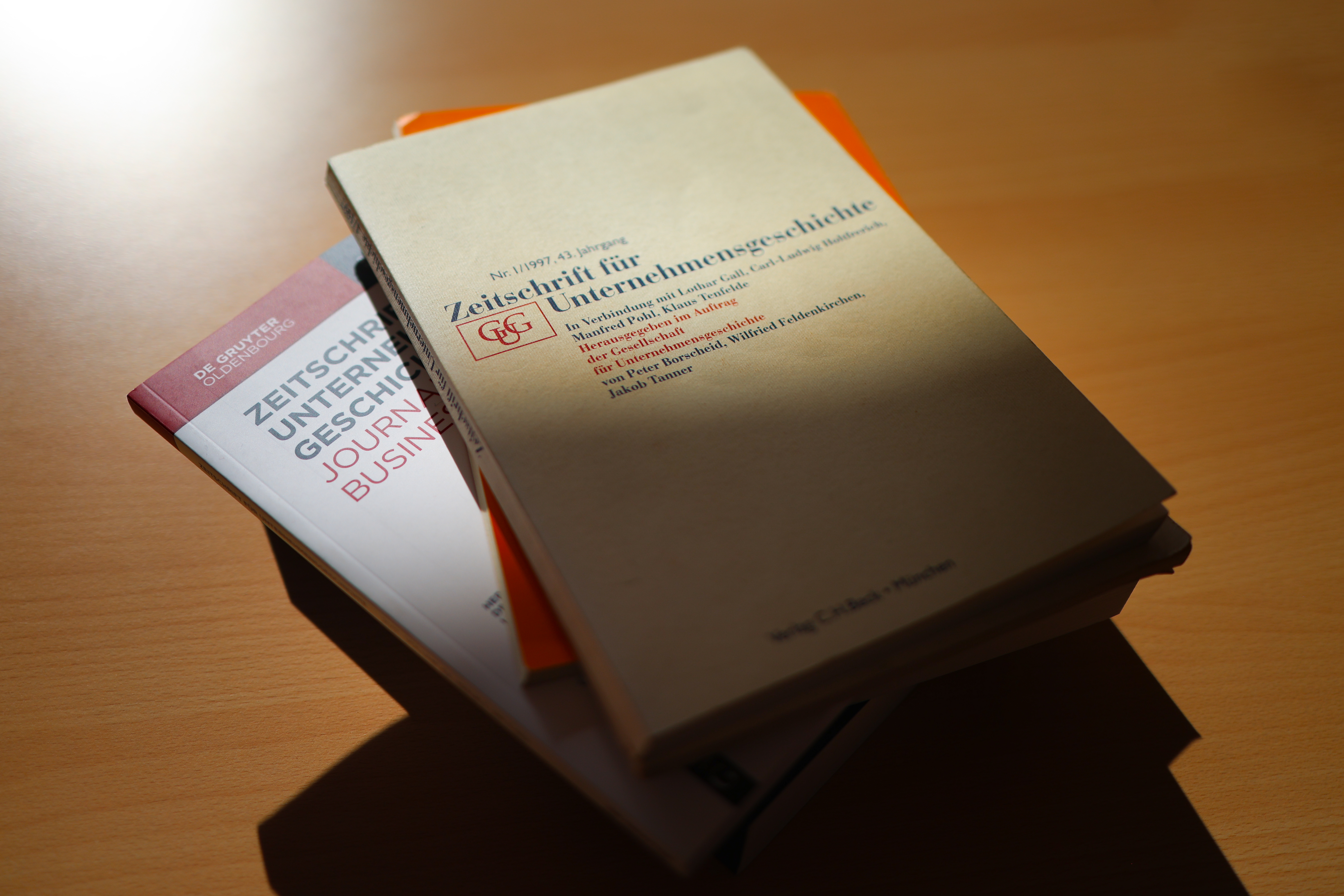
This was the wish of the academic community. Entrepreneurs, in turn, hoped that proper research could correct the negative image of the entrepreneur. To this end, the GUG’s public lecture series and the annual scientific symposium were launched.
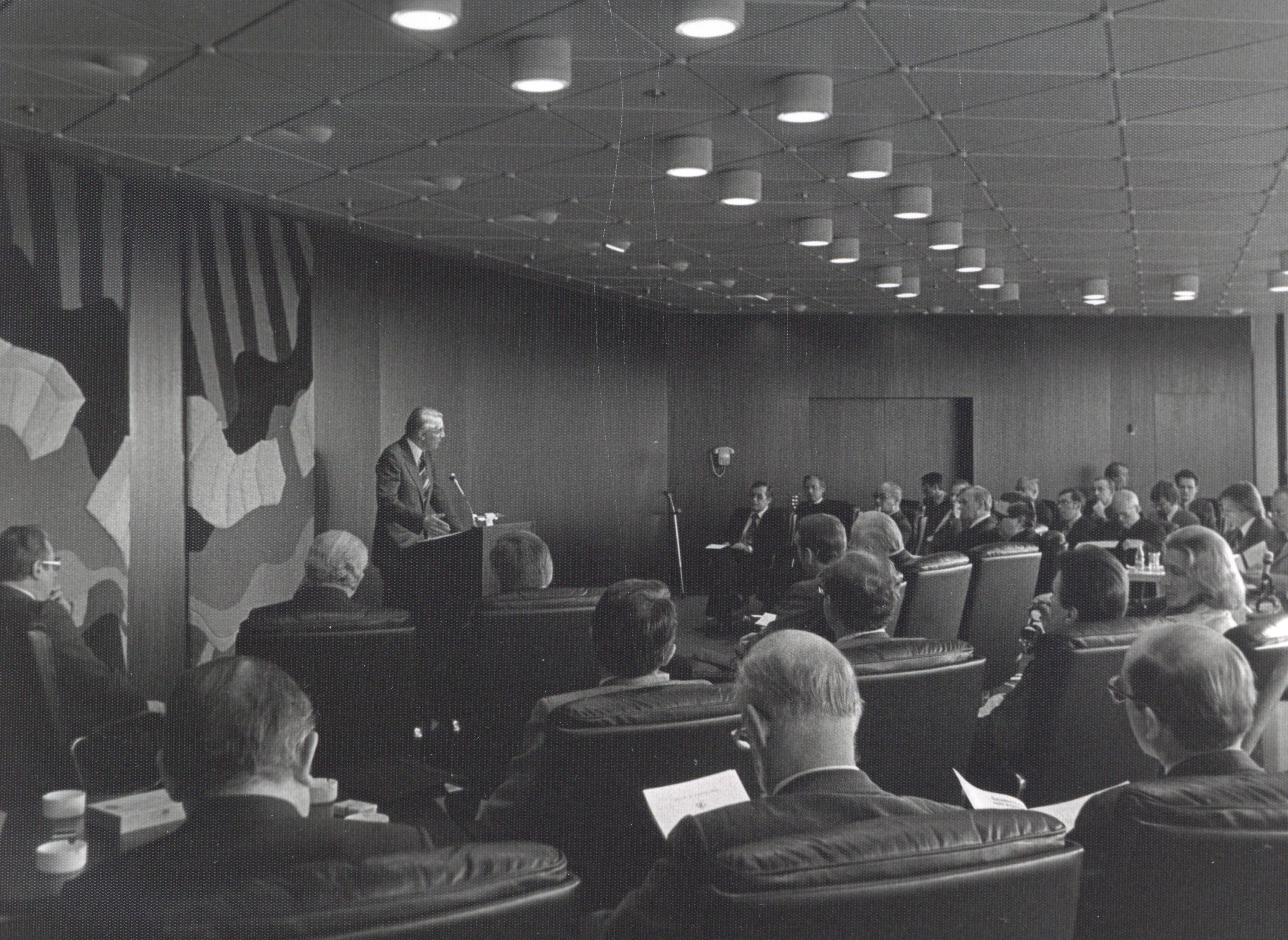
After a decade, the GUG launched its first projects—a study on forced labor at Daimler Benz—as well as the establishment of three archives (Oetker, Opel, and R & V).
Change and New Beginnings
However, the GUG’s breakthrough came in the 1990s, when membership was first opened to private individuals. Subsequently, the scope was expanded to include academia with the launch of the GUG’s first working group (Working Group on Banking History). This was followed by additional working groups (Transportation History, Media Companies, The Role of Companies under National Socialism, Insurance History, Marketing History, and Family Businesses). These were increasingly supplemented by smaller workshops that facilitated discussion on specific topics.
The GUG launched an initiative to expand its network internationally. After several attempts, it succeeded in being admitted to the International Association for Economic History (IAEH). Since 2005, the GUG’s executive board has maintained close cooperation with the European Business History Association (EBHA). The GUG gained international recognition by hosting various international conferences—the 2005 EBHA Annual Conference in Frankfurt, the 2014 Business History Conference (BHC) Annual Conference, and the first World Conference for Business History. A joint conference with the British Association for Business History (ABH) followed in Berlin in 2016. In 2018, a joint conference with the Japanese Society for Business History was held in Frankfurt.
In the field of contract research, the 1990s marked a decisive breakthrough. In addition to the traditional, mostly anniversary-driven corporate histories, special studies on the Third Reich now emerged.
The GUG itself organized a major symposium at the outset of this development in 1997 at the former IG Farben building in Frankfurt am Main. The conference proceedings were published as Volume 1 of our series by C.H. Beck Verlag in 1998. With this surge in research, the commissioning practices of many companies also changed. A professional reappraisal of history increasingly became the standard. On the other hand, commissioned research was also seen as an opportunity for historical research. Even though tensions persist in the field of commissioned research to this day, it has proven useful for various parties. The GUG advocates for active cooperation in this area.
Into the 21st Century
Since the second half of the 1990s, the GUG has carried out a wide variety of research commissions. Since the mid-2010s, archives have also returned to the GUG’s sphere of activity. Further information on both areas can be found under the heading GUG mbH. Since the turn of the millennium, the GUG has also seen growing interest in its history from family businesses. Through the “Family Businesses” working group and its cooperation with WIFU, the GUG is responding to these trends.
Finally, in 2015, GUG further expanded its activities and is now also active in the field of education. On the one hand, through the workshop “Introduction to Corporate History” in collaboration with the German Business Foundation. On the other hand, it is working on a school project titled “HistoryEnterprises.” The GUG is also becoming more involved in applied history by cooperating with the Network of Corporate Museums, for which it developed the “UMO – Corporate Museums Online” portal and launched it in 2012. With the “History Communication” workshop, the GUG is dedicated to historical corporate communication.
With its model of close cooperation between academia and business—still rare today—the GUG found an imitator last year, as a historical society (Canadian Business History Association) was founded in Canada based on its model and with its support.
Further information on the history of the GUG
The History of the GUG mbH
In June 2012, GUG e.V. established a wholly owned subsidiary—GUG mbH. This allowed the association’s commercial activities to be clearly separated from its nonprofit work. Within the GmbH, interested companies have access to the same contact persons and expert advisors as those available through the association. Through its Scientific Advisory Board, GUG ensures the highest level of professional quality control in the field of science as well as professional project management based on extensive experience.

GUG does not produce chronicles. Our studies answer questions. Our researchers analyze core issues for client companies and present the results in a scientifically sound yet engaging and accessible format.
In addition, the GUG offers a comprehensive range of services from a single source. It develops historical concepts and feasibility studies, identifies and supervises authors, researches sources, drafts contracts, prepares cost estimates and timelines for its clients, selects suitable publishers, and supports book presentations and events. Furthermore, GUG provides consulting on all matters related to corporate history, archives, and historical exhibitions and/or museums.

According to modern research, the definition of “companies” is broad. In addition to traditional companies in the form of publicly traded corporations or family businesses, we also consider other organizations such as associations, cooperatives, and institutes to be part of our field of research.
The corporate archive forms the basis of all historical research and historical communication. GUG supports the development of the archive through to its ongoing operation. We employ a highly competent team of staff who are selected and trained in collaboration with the Association of German Business Archivists (VdW). Core corporate records are secured to ensure legal certainty and preserve the historical legacy. Unsorted files are professionally archived, and plans are developed for handling today’s digital communications to make them available for tomorrow’s history. Sustainable and future-proof archiving is a fundamental principle in this process.
The company began in 2012 with the marketing history of Gerolsteiner Brunnen GmbH & Co. KG, historical studies on Stadtwerke München, Krauss-Maffei AG, the Carl Zeiss Foundation, and Deutsche Telekom AG. Furthermore, GUG mbH supports the establishment and expansion of archives at companies including Gerolsteiner Brunnen GmbH & Co. KG and Linde AG. It also advised the Kurtz Ersa Group on the establishment of the “Hammer Museum.” An overview of completed projects can be found here. Currently, numerous companies are being supported by GUG in ongoing projects.

History as Strategic Added Value: GUG and SIERC Combine Their Expertise
Corporate history is more than just a retrospective—it can serve as a strategic compass.
GUG mbH is entering into a strategic partnership with the Canadian consulting firm SIERC (Signal Influence Executive Research & Communications) to open up new avenues of future-oriented decision-making for companies. At the heart of the collaboration are management workshops in which historical research is systematically translated into strategic reflection and concrete courses of action.
Based on in-depth analyses of a company’s long-term development, key lessons learned, recurring patterns, and structural turning points are brought to light.
These historically grounded insights enable executives to place current challenges in a broader context and develop sustainable strategies for the future.
The partnership combines GUG’s long-standing expertise in researching and analyzing corporate history with SIERC’s strategic consulting expertise in an international context. The goal is to link scientifically grounded findings with practice-oriented strategic work, thereby creating added value for companies in Germany and Europe.
Download the official press release on the strategic collaboration between GUG and SIERC as a PDF here:
Presseerklärung zur strategischen Allianz zwischen GUG und SIERC
Membership
{Sparkasse der Stadt Berlin, Cashier's Office, 1894}
Individual Member
By joining
- you promote research
- you support corporate history
- you become part of a network and revitalize the discipline.
Corporate Member
With your commitment
- you support the expansion and further development of a historical discipline that is important to the business world
- you continue the special tradition of German companies to actively participate in scholarship
- you make a decisive contribution to orienting the GUG’s offerings toward the future and to
providing corporate history with a professional foundation.
Your benefits of membership
- Free print and online subscription to the ZUG
- Discounted purchase of the current ZUG publication series (10-euro discount)
- Discounted purchase of the Business History Review ($40)
- discounted rates for using the FAZ media archive
- free delivery of the annual GUG newsletter
- free participation in all GUG events
- participation in the biannual History Communication workshop exclusively for members
- free access to the WAP business archive portal
- free access to UMO – Corporate Museums Online
- Listing on our website with a hyperlink to your company
- Consulting and support for all questions regarding company anniversaries, corporate history, archives, exhibitions, and museums
The GUG offers its members
- a forum of internationally recognized scholars in the field of corporate history
- events as a platform for exchange with high-ranking figures from business, academia, politics, and the media
- a competent partner for all questions regarding corporate history.
The bylaws and a membership application can be downloaded in PDF format.
The membership fee is at least €50.00 for individual members (€35.00 for students) and at least €500.00 for corporate members.
The Executive Director of the GUG, Dr. Andrea H. Schneider-Braunberger,
is available to provide further information.
Committees
- Julia Sabine Falke, Geschäftsführerin, RUD. IBACH SOHN GmbH & Co. KG (Vorsitzende)
- Dr. Joachim Seeler, Geschäftsführer, HSP Hamburg Invest GmbH (stellvertr. Vorsitzender)
- Dr. rer. pol. Alexander Tesche, Head of Corporate Responsibility Office/Chief Compliance Officer STRABAG SE, STRABAG SE (Schatzmeister)
- Prof. Dr. Andreas Fahrmeir, Professor für Neuere Geschichte, Goethe-Universität Frankfurt
- Prof. Dr. Jan-Otmar Hesse, Professor für Wirtschafts- und Sozialgeschichte, Universität Bayreuth
- Dr. Joachim Lang, Hauptgeschäftsführer, Bundesverband der Deutschen Luftverkehrswirtschaft e.V.
- Mario Mattera, Mitglied des Vorstands, B. Metzler seel. Sohn & Co. AG
Scientific Advisory Board
- Prof. Dr. Jan-Otmar Hesse, Professor für Wirtschafts- und Sozialgeschichte, Universität Bayreuth (Vorsitzender)
- Apl. Prof. Dr. Ingo Köhler, Geschäftsführer, Hessisches Wirtschaftsarchiv e.V. (stellvertr. Vorsitzender)
- Prof. Dr. Hartmut Berghoff, Professor für Wirtschafts- und Sozialgeschichte, Georg-August-Universität Göttingen
- Dr. Sabine Bernschneider-Reif, Head of Corporate History, Merck KGaA
- Prof. Dr. Carsten Burhop, Professor für Verfassungs-, Sozial-und Wirtschaftsgeschichte, Rheinische Friedrich-Wilhelms-Universität Bonn
- Prof. Dr. Boris Gehlen, Leiter der Abteilung Unternehmensgeschichte, Universität Stuttgart Historisches Institut Abt. Unternehmensgeschichte
- Priv.-Doz. Mag. Dr. phil. Walter M. Iber, Vorsitzender des Vorstands, Österreichische Gesellschaft für Unternehmensgeschichte (ÖGU)
- Prof. Dr. Christian Kleinschmidt, Professor für Wirtschafts- und Sozialgeschichte, Philipps-Universität Marburg
- JProf. Dr. Nina Kleinöder, Juniorprofessorin für Wirtschafts- und Sozialgeschichte, Otto-Friedrich-Universität Bamberg
- Prof. Dr. Christina Lubinski, Professorin für Management, Politics und Philosophy, Copenhagen Business School
- Prof. Dr. Alexander Nützenadel, Professor für Sozial- und Wirtschaftsgeschichte, Humboldt-Universität zu Berlin
- Prof. Dr. Katja Patzel-Mattern, Professorin für Wirtschafts- und Sozialgeschichte, Ruprecht-Karls-Universität Heidelberg
- Prof. Dr. Julia Laura Rischbieter, Professorin für Geschichte des Kapitalismus, Universität Basel
- Prof. Dr. Tobias Straumann, Leiter des MAS Applied History, Universität Zürich
Board of Trustees
- Dr. Joachim Lang, Hauptgeschäftsführer, Bundesverband der Deutschen Luftverkehrswirtschaft e.V. (Vorsitzender)
- Matthias Georg Madelung, Mitglied des Aufsichtsrats, Robert Bosch GmbH (stellvertr. Vorsitzender)
- Gregor Berghausen, Hauptgeschäftsführer, Industrie- und Handelskammer zu Düsseldorf
- Axel Dahm
- Dr. Vera-Carina Elter, Vorständin für Personal und Familienunternehmen, KPMG AG Wirtschaftsprüfungsgesellschaft
- Carl Glauner, Geschäftsführer, Alpirsbacher Klosterbräu Glauner GmbH
- Prof. Dr. Rüdiger Grube, Geschäftsführer, International Business Leadership GmbH
- Prof. Dr. Michael Hüther, Direktor und Mitglied des Präsidiums, Institut der deutschen Wirtschaft Köln e.V.
- Dipl.-Ing. Rainer Kurtz, Vorsitzender des Beirats, Kurtz Holding GmbH & Co. Beteiligungs KG
- Dr. Birgit Lorenz-Meyer, Behn Meyer Deutschland Holding AG & Co. KG
- Paul Niederstein, Geschäftsführender Gesellschafter, The Coatinc Company Holding GmbH
- Prof. Dr. Rolf Nonnenmacher, Wirtschaftsprüfer
- Dr. Heinz-Peter Roß
- Peter Tamm, Tamm-Media GmbH
- Dr. Ulrich Wacker, Stiftungsvorstand, EQUA-Stiftung
- Dipl.-Kfm. Berndt-Michael Winter, Stellv. Vorsitzender des Aufsichtsrates, Mast-Jägermeister SE
- Johanna von Eben-Worlée, Mitglied der Geschäftsleitung, E.H. Worlée & Co. (GmbH & Co.) KG
- Prof. Dr. Bolko von Oetinger, Mitglied des Beirats, Center for Future Design
Honorary Chair of GUG e.V.
Dr. Otmar Franz , Mülheim/Ruhr, Chair of the Board of Trustees of RKW e.V.
Corporate members and institutional members
- adidas AG
- Adolf Würth GmbH & Co. KG
- Alfred Kärcher SE & Co. KG
- Allianz SE
- Alpirsbacher Klosterbräu Glauner GmbH
- Augustinum Stiftung
- AUTO UNION GmbH
- AXA Konzern AG
- B. Braun Melsungen AG
- B. Metzler seel. Sohn & Co. AG
- Baden-Badener Unternehmergespräche
- BASF SE
- Bayer AG
- Bayerischer Sparkassen- und Giroverband
- Bayerisches Wirtschaftsarchiv
- Behn Meyer Deutschland Holding AG & Co. KG
- Berlin-Brandenburgisches Wirtschaftsarchiv e.V.
- Bertelsmann SE & Co. KGaA
- Birke und Partner GmbH Kommunikationsagentur
- Bitburger Braugruppe GmbH
- BMW AG
- Boehringer Ingelheim GmbH
- BPW Bergische Achsen KG
- Brenntag SE
- Bundesverband der Deutschen Industrie e.V.
- Canadian Business History Association
- Centre for Business History in Stockholm
- Deutsche Bahn AG
- Deutsche Bank AG
- Deutsche Börse AG
- Deutsche Lufthansa AG
- DIE FAMILIENUNTERNEHMER e.V.
- Dr. Anna Bálint
- Draiflessen Collection gGmbH
- Dürr Aktiengesellschaft
- Eisenbibliothek - Stiftung der Georg Fischer AG
- Engelhard Arzneimittel GmbH & Co. KG
- Eugen-Gutmann-Gesellschaft e.V. / c/o Commerzbank AG, GM-C
- European Association for Banking and Financial History e.V. (eabh)
- Evonik Industries AG
- EWE Aktiengesellschaft
- Facts & Files Historians GmbH
- Falke KGaA
- FC Bayern München AG
- Franz Haniel & Cie. GmbH
- Fraport AG
- Freudenberg SE
- Georg von Holtzbrinck GmbH & Co. KG
- Gerolsteiner Brunnen GmbH & Co. KG
- Geschichtsbüro Reder / Köln
- Gesellschaft für Westfälische Wirtschaftsgeschichte e.V.
- Giesecke Devrient GmbH
- GSWG - Gesellschaft für Sozial- und Wirtschaftsgeschichte e.V.
- H&C Stader GmbH
- Heckler & Koch GmbH
- Hessisches Wirtschaftsarchiv e.V.
- HSP Hamburg Invest GmbH
- Hugo Boss AG
- Institut der deutschen Wirtschaft Köln e.V.
- Institut für Bank- und Finanzgeschichte e.V. Goethe-Universität Frankfurt
- Institut für Zeitgeschichte München - Berlin
- IWC Schaffhausen, Branch of Richemont International S.A.
- KPMG AG Wirtschaftsprüfungsgesellschaft
- Kurtz Holding GmbH & Co. Beteiligungs KG
- Landwirtschaftliche Rentenbank
- Liebherr-International Deutschland GmbH
- Ludwig-Erhard-Stiftung e.V.
- LVM Versicherung
- Marquardt GmbH
- Mast-Jägermeister SE
- Merck KGaA
- Messe Frankfurt GmbH
- Messer SE & Co. KGaA
- Miele & Cie. KG
- Montblanc Simplo GmbH
- Münchener Rückversicherungs-Gesellschaft Aktiengesellschaft in München
- ODU GmbH & Co. KG
- Österreichische Gesellschaft für Unternehmensgeschichte (ÖGU)
- Penguin Random House Verlagsgruppe GmbH
- Piper Verlag GmbH
- Robert Bosch GmbH
- RWE Aktiengesellschaft
- Sächsisches Wirtschaftsarchiv e.V.
- Salzgitter AG
- Sartorius Corporate Administration GmbH
- Schwarz Corporate Affairs GmbH & Co. KG
- Schweizerisches Wirtschaftsarchiv
- Siemens AG
- Siemens Healthineers AG
- Sparkasse KölnBonn
- startext GmbH
- Startrack GmbH
- Stiftung für die Wissenschaft
- Stiftung Wirtschaftsarchiv Baden-Württemberg
- STRABAG AG
- Südzucker Aktiengesellschaft
- TECHNOSEUM Landesmuseum für Technik und Arbeit in Mannheim
- ThyssenKrupp AG
- TRUMPF SE Co. KG
- TÜV Süd AG
Unternehmensredaktion Elena Brenk-Lücke - vbw - Vereinigung der bayerischen Wirtschaft e.V.
- Vereinigung der Wirtschaftsarchivarinnen und Wirtschaftsarchivare e.V. (VdW)
- Verlag C.H.Beck OHG
- Villiger Söhne GmbH
- Volkswagen AG
- ZEISS AG
International Network
The GUG is part of an extensive international network dedicated to business and economic history. Working closely with leading professional organizations and academic partners worldwide, it promotes the exchange of research and expertise, initiates collaborations, and actively contributes to the international visibility of the discipline. The following partnerships demonstrate the breadth of this international network.


World Business History Conference 2014 in Frankfurt am Main
On March 16 and 17, 2014, the Society for Business History (GUG) hosted the World Business History Conference 2014 at Goethe University Frankfurt. The conference was deliberately scheduled close to the annual meeting of the Business History Conference to promote exchange among researchers from different regions of the world and to strengthen international networking in the field of business history research.
The conference was an important step toward establishing a permanent World Congress of Business History. Since 2012, representatives of leading professional organizations from Europe, the Americas, Asia, and Africa had been discussing the creation of a global congress format. The goal was to establish an international forum that would strengthen collaboration within the discipline and promote global comparative perspectives.
With around 180 participants from numerous countries, the event confirmed the great interest in such a format. In addition to the academic sessions, the initiative group and the international Academic Committee also met in Frankfurt to lay the organizational groundwork for the future World Congress of Business History, which took place for the first time in Bergen in 2016.
Academic Profile
Under the guiding theme “State of the Art in World Business History – A First Review,” the conference offered an overview of current research priorities in international business history. The presentations addressed, among other topics, corporate groups and different models of capitalism, colonial economies and global economic relations, family businesses and entrepreneurial networks, banking and financial history, knowledge and technology transfer, as well as issues of market regulation and competition.
The program was complemented by methodological and theoretical discussions on the further development of business history research. Renowned scholars from Europe, North and South America, Asia, and Africa presented their latest research findings and discussed new approaches to international collaboration.
Significance
The World Business History Conference 2014 marked an important milestone for international business history research. It contributed significantly to the institutionalization of a global conference format and strengthened international cooperation within the discipline in the long term. By hosting the conference, the GUG underscored its role as an active partner in international research and as a driving force for the further globalization of business history.
You can access the homepage of the World Congress of Business History here

Canadian Business History Association (CBHA)
The CBHA is dedicated to advancing the study, preservation, and public understanding of business history in Canada. We believe that the history of business is integral to understanding Canada's economic, political, social, and cultural development, and that historical scholarship provides valuable insight into the challenges and opportunities facing businesses, governments, and communities today.
As a national organization, the CBHA brings together scholars, archivists, students, business leaders, museum professionals, and others with an interest in Canada's business heritage. We foster collaboration across disciplines and sectors, creating opportunities for research, dialogue, and knowledge exchange while supporting a vibrant and inclusive community of business historians.
The Association promotes excellence in research through student funding at the undergraduate and graduate level - supporting emerging scholars - as well as running conferences and engaging in professional development initiatives. We are committed to encouraging new, innovative research, and increasing access to archival collections and historical resources that document Canada's business heritage.
The CBHA also works to strengthen public engagement with business history by building partnerships with archives, museums, corporations, and cultural organizations. Through public programming, educational initiatives, and collaborative projects, we seek to demonstrate the enduring relevance of business history and to ensure that Canada's commercial legacy is preserved and shared with future generations.
By connecting academic research with broader public audiences, the CBHA serves as a national hub for the study and promotion of Canadian business history, fostering a deeper appreciation of the individuals, organizations, and enterprises that have shaped Canada's past and continue to influence its future.

European Business History Association (EBHA)
The GUG works closely with the European Business History Association (EBHA), the leading European professional association for business and economic historians.
The GUG supports the EBHA’s work in a variety of ways, both organizationally and administratively. This includes, among other things, hosting the website and the member database, as well as the technical organization of the annual conferences. After the EBHA required a new institutional base within the European Union following Brexit, the GUG’s office also serves as the association’s headquarters. Since then, it has also handled ongoing correspondence with the Frankfurt City Registry, where the EBHA is registered.
Through this close collaboration, the GUG actively contributes to strengthening the European and international networking of business history research and to further expanding the EBHA as a leading network for academic exchange, cooperation, and the promotion of young scholars.
The EBHA was founded in 1993 and has since developed into an internationally recognized academic network with over 250 members from around 29 countries today. It has played a key role in raising the profile of business history worldwide and in fostering sustained exchange within the discipline.
The EBHA aims to promote research and teaching on the history of businesses, management, and economic organizations, as well as to deepen public understanding of economic-historical developments. It explicitly sees itself as a platform for international cooperation: In addition to strengthening ties within Europe, it is also committed to networking with researchers and institutions outside Europe and supports cross-border research projects as well as the academic exchange of early-career researchers.
Among the EBHA’s most important activities is its annual international conference, which takes place at various universities in Europe and beyond and brings together researchers from around the world. These conferences provide a central forum for current research, methodological discussions, and international collaboration, reflecting the multidisciplinary nature of business history.
The EBHA places special emphasis on supporting early-career researchers. With the regularly held Franco Amatori EBHA Doctoral Summer School, it organizes one of the most important European training programs in the field. The summer school provides advanced doctoral students with insights into current research trends, theoretical and methodological approaches, as well as practical guidance on publication strategies and academic career paths, while simultaneously fostering an international network for young researchers.
In addition, the EBHA supports workshops, research networks, and collaborations between universities and business schools, thereby making a significant contribution to the further development of business history research as an international and interdisciplinary field.
You can access the EBHA website here.

Business History Conference (BHC)
The GUG is closely affiliated with the Business History Conference (BHC), one of the world’s leading academic organizations dedicated to business history. The BHC was founded in the United States in 1954 and is now one of the most important international networks in the discipline. It promotes research, teaching, and scholarly exchange on the history of business, management, and economic institutions, and regularly organizes international conferences as well as support programs for early-career scholars. It also publishes Enterprise & Society, one of the field’s leading international journals.
The collaboration between the GUG and the BHC is particularly evident in the joint organization of international conferences. A major milestone was the 2014 Business History Conference annual meeting in Frankfurt am Main, which took place in cooperation with the GUG. The GUG handled the local organizational tasks and supported the planning and execution of the conference at Goethe University Frankfurt.
This cooperation was also part of a broader international networking strategy by the GUG. Hosting the BHC conference in Frankfurt—along with other international conferences that same year—played a key role in integrating Germany more closely into the global business history community and intensifying academic exchange among North American, European, and international researchers.
Through its collaboration with the Business History Conference, the GUG strengthens its role as an internationally networked partner in business history research and supports the ongoing exchange between German-speaking researchers and the global academic community.
You can access the Business History Conference homepage here.

International Economic History Association (IEHA)
The Society for Business History (GUG) is a member of the International Economic History Association (IEHA) and thus part of a globally networked forum for economic history research. The IEHA is the international umbrella organization for economic history associations and currently unites around 45 national, regional, and international member organizations from nearly 40 countries. Its goal is to promote research in economic and social history worldwide, strengthen international cooperation, and facilitate scholarly exchange across national and disciplinary boundaries.
The IEHA’s most important platform is the regularly held World Economic History Congress, which ranks among the largest international gatherings in the discipline and brings together more than a thousand researchers from around the world at each event. These congresses offer a global forum for current research, methodological debates, and international collaboration, and play a key role in opening up new fields of study and perspectives in economic and business history.
Through its membership in the IEHA, the GUG is integrated into the international scholarly community and participates in global developments in economic and business history research. Admission to the international association was part of the GUG’s strategy to systematically expand its network and intensify exchange with international professional associations.
Collaboration within the IEHA enhances the visibility of German-language corporate history research in an international context and enables the GUG to draw on insights from global research debates and actively contribute to the further development of the field.
You can access the homepage of the International Economic History Association here.

Austrian Society for Business History (ÖGU)
The Society for Business History (GUG) works closely with the Austrian Society for Business History (ÖGU), the leading academic organization for business history in Austria. Both institutions share the common goal of promoting research into business and economic history in the German-speaking world, incorporating international perspectives, and strengthening academic exchange between research, business, and the public.
The cooperation between GUG and ÖGU encompasses, in particular, professional exchange regarding research projects, publications, and events, as well as mutual involvement in academic networks and committees. Through this collaboration, research traditions in German-speaking regions are more closely linked, and common thematic areas—such as corporate development in a European context, economic culture, or historical corporate strategies—are further developed through comparative analysis.
There are also close personal ties between the two organizations, which support ongoing dialogue and the coordination of joint activities. The collaboration helps to raise the international profile of business history research in the German-speaking world and to contribute shared insights to the European and global academic discourse.
Through its collaboration with the ÖGU, the GUG strengthens its role as a central hub for business history research in the German-speaking world while simultaneously promoting the international networking of the discipline.
You can access the homepage of the Austrian Society for Business History here.

ASSI – Italian Association for Business History
Founded in 1983, is Italy's leading scholarly association dedicated to the study of business and enterprise. While the firm lies at the heart of its interests, ASSI approaches business within its broader economic, institutional, and social context. Studying business therefore means examining technological change, markets, competition and regulation, the role of public policy in the economy, and the relationships between different regions of the world.
ASSI is an independent association of scholars committed to fostering an open and inclusive intellectual environment. It welcomes diverse methodological and cultural perspectives, guided by the principles of academic integrity, mutual respect, and constructive scholarly dialogue.
The Association promotes a vibrant research community through its annual conferences and scientific meetings and supports scholarly publishing through the Annali di storia dell'impresa, Imprese e storia, and other editorial initiatives. It is supported by voluntary contributions from its members and actively participates in research projects funded by national and international institutions.
Please find the ASSI homepage here