
News
Prize for Business History 2026
A dissertation on the GDR’s foreign trade won over the jury: Lena Senoner has been awarded the “2026 Prize for Corporate History.”
Senoner had applied for the prize with her dissertation, “The Business Practices and Scope of Action of GDR Foreign Trade Enterprises.” Thanks to the high quality of her study, she prevailed over the other applicants, whose work had been evaluated by the independent jury consisting of the renowned economic historians Prof. Dr. Monika Poettinger, Prof. Dr. Mark Spoerer, and Prof. Dr. Dieter Ziegler.
Lena Senoner earned her Ph.D. from the University of Potsdam. Prior to that, she had earned a bachelor’s and a master’s degree in history from Goethe University Frankfurt and a B.Sc. in economics from the University of Mainz. She currently works as a research associate at the Leibniz Center for Contemporary History.
The award ceremony for the Business History Prize will take place in March 2027 as part of the GUG’s public lecture series. Senoner’s dissertation will be published by DeGruyter as part of the series accompanying the Journal of Business History (ZUG).


We would like to cordially invite you to participate in the conference on “Business History and Geopolitical Challenges,” organized by the GUG in collaboration with the European Business History Association, the European association of business historians. The conference will take place from September 26 to 28, 2027, at Humboldt University in Berlin.
For more information, please visit the conference website:https://unternehmensgeschichte.de/EBHA2027
Call for Paper: ASSI 2026 CONFERENCE. Tourism, Business and Territories: Historical trajectories and local development
In tourism, economic value is co-produced by businesses and their local environments through tangible and intangible resources such as landscapes, cultural heritage, infrastructure, skills, reputations, networks and destination governance. Competitiveness therefore depends on a territorial ecosystem that includes accommodation, catering, transport, intermediaries, cultural and creative services, destination management organisations, public bodies, digital firms, associations and residents. Classical ideas of external economies and territorial proximity remain useful, while concepts like embeddedness, social capital and ecosystems highlight how cooperation and competition, local roots and global markets are intertwined. Recent transformations—digitalisation, platforms, data-driven management, AI, new hospitality models, shifting mobility, reconfigured value chains, climate crises, overtourism and rising demands for sustainability, authenticity, accessibility and inclusion, call for a rethinking of relations between tourism firms, communities and regional policies.
The ASSI 2026 conference at the University of Palermo (13–14 November) addresses the role of tourism in territorial growth, transformation and competitiveness, with a focus on businesses and destination ecosystems. Contributions from historical, economic, managerial, sociological, geographical and interdisciplinary perspectives are welcome, analysing tourism as an industry rooted in place yet connected to global markets, flows and platforms.
You can find the call for paper here
Workshop on Historical Corporate Responsibility
On October 6, 2026, the Jewish Museum Berlin will host a workshop titled “How Can Historical Reflection Be Initiated Within Your Own Company?” The event is aimed at employees who wish to highlight historical responsibility within their own organizations.
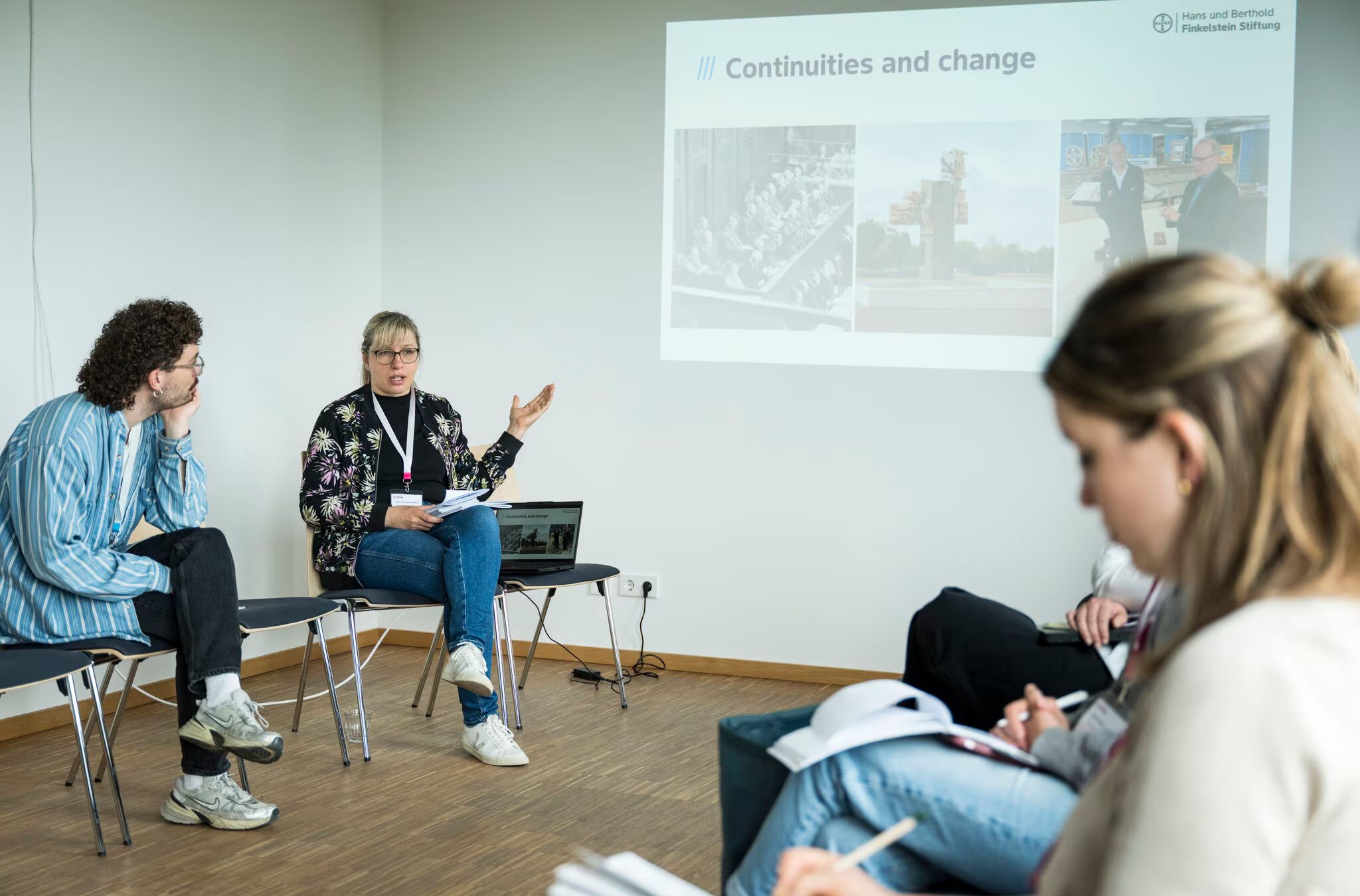
The Society for Corporate History, the Foundation “Erinnerung, Verantwortung und Zukunft” and the Hans and Berthold Finkelstein Foundation are jointly organizing a workshop on historical corporate responsibility. The event will take place on October 6, 2026, at the Jewish Museum Berlin and is aimed at representatives from the fields of communications, public affairs, and corporate social (or political) responsibility.
The workshop will focus on the question of how companies can initiate a substantive examination of their own history—particularly in the context of National Socialism. Thematically, this year’s workshop will examine the persecution of Jewish employees and the expropriation of Jewish businesses.
Against the backdrop of current social developments, engaging with historical responsibility is understood as an important component of value-oriented corporate governance. Companies that transparently address their past and draw conclusions for their present actions contribute to a discrimination-sensitive. Companies that transparently address their past and draw lessons from it to inform their current actions contribute to a workplace environment that is sensitive to discrimination and strengthen democratic values.
The workshop creates a safe space for professional exchange and offers practical insights into different approaches. In addition to presentations by experts and contributions from descendants, concrete projects and best-practice examples will be presented. A guided tour of the Jewish Museum’s permanent exhibition rounds out the program.
The event picks up where the workshops held in previous years in Frankfurt am Main (2024) and Weimar (2025) left off and is aimed both at companies with initial experience in historical reappraisal and at organizations that wish to approach the topic for the first time.
A follow-up online session approximately three months after the workshop gives participants the opportunity to further explore the processes initiated and discuss recent developments.
You can view the program here.
Registration is available on the EVZ Foundation website: Workshop „Wie kann eine historische Aufarbeitung im eigenen Unternehmen angestoßen werden?
Press Release: “50 Years of the Society for business History (GUG)”
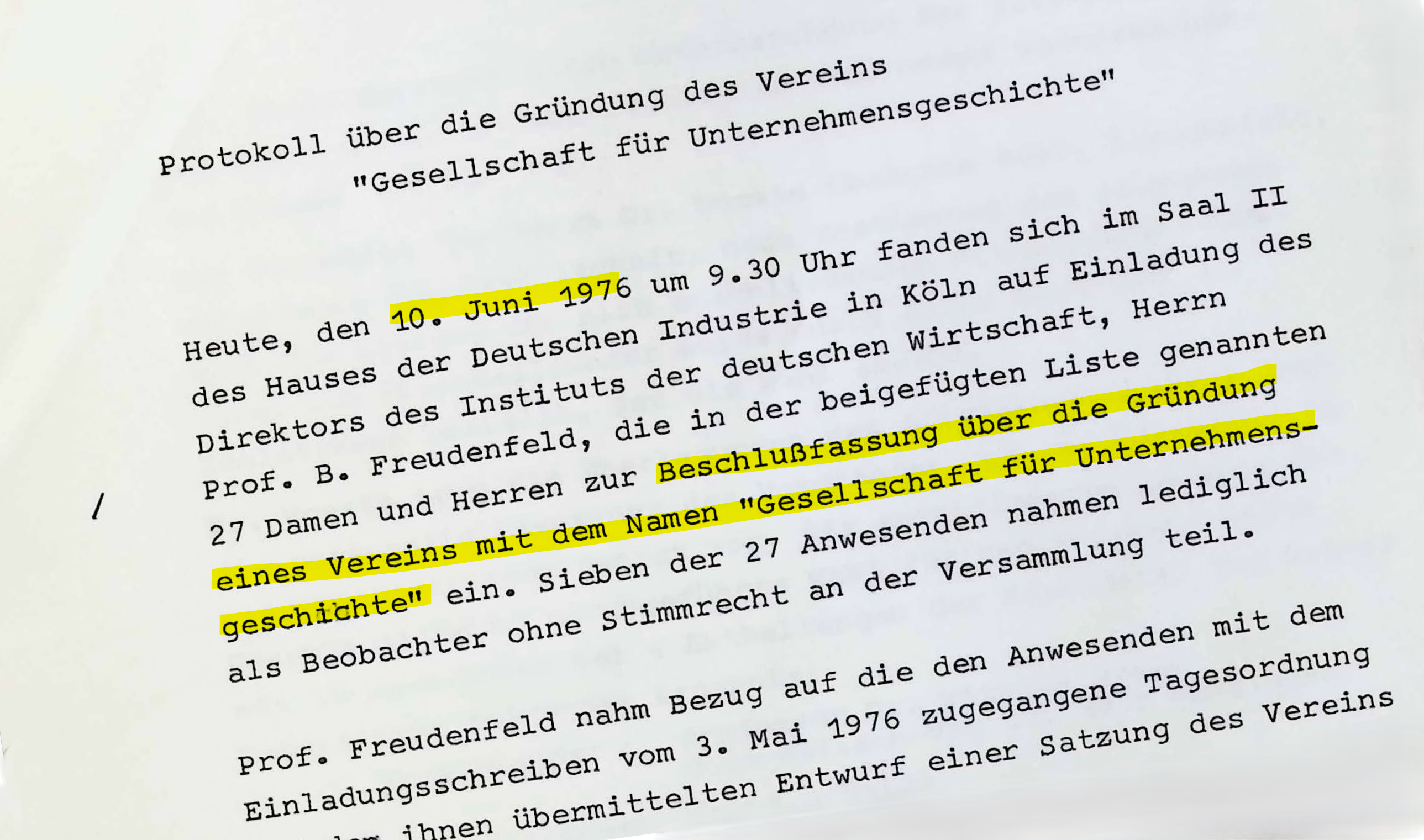
It has been 50 years since the Society for business History (GUG) was founded: On June 10, 1976, scholars, corporate representatives,
and the Cologne Institute for Economic Research decided to establish an association dedicated to promoting business history. The goal was to establish an independent academic institute dedicated to the field of business history, one that would underpin socio-political trends and challenges with historical expertise.
In 1976, business history was viewed by many as commissioned work aimed at preserving a company’s reputation—a chronicle lacking a critical perspective on the companies in question. Yet, at that time, there had already been efforts for quite some time to approach business history in a serious, independent manner. The first scholarly approaches dated back to the early 20th century, and in the German-speaking world, serious academic efforts had been underway since the 1950s with the founding of the journal Tradition. “What was missing was an institutional home,” says Julia Sabine Falke, chair of the GUG. “The founding of the Society for Business History closed this gap, driven by a firm commitment to independent research and to engaging with the present through historical expertise.
Read the full press release here: Pressemitteilung 50 Jahre GUG
Seeking Companies to Partner with the “Lost Books Lab”
The Society for Business History draws attention to a current call for participation from the Leo Baeck Institute: Companies in Baden-Württemberg are sought as partners for the educational project “Lost Books Lab”. The aim of the project is to raise awareness among trainees and employees regarding the history of Nazi-looted property and the effects of antisemitism.
The focus is on half-day, academically guided workshops in which participants use historical books looted during the Nazi era to understand the mechanisms of exclusion, disenfranchisement, and cultural dispossession. In doing so, they work with concrete provenance records and examine the fates of the individuals and institutions affected.
The workshops can be flexibly held either at the company’s premises or at a partner library. The project team handles all aspects of organization, materials, implementation, and evaluation. There are no costs for participating companies, as the project is funded by the Baden-Württemberg Foundation.
The “Lost Books Lab” is a joint project of the Leo Baeck Institute and the Heidelberg College of Jewish Studies. It builds on the multi-award-winning predecessor project “Library of Lost Books” and aims to strengthen historical literacy, critical thinking, and dialogue between companies, libraries, and academia.
Companies interested in participating or seeking further information can contact the Leo Baeck Institute’s project team directly. The contact person is Ticha Matting (Programs and Strategic Partnerships):
Tel. 030/ 20 60 4998
...
https://fuf-leobaeck.de
New publication opportunity for dissertations on family businesses in the WIFU series
Since its establishment in 2009, the WIFU Foundation has been promoting research in the field of family entrepreneurship and actively committed to the practical application of scientific findings. The focus is on current issues that continuously expand knowledge about family businesses and entrepreneurial families. The foundation supports research projects, awards scholarships to young scientists, and establishes chairs. The focus of this funding is on the Witten Institute for Family Business (WIFU) at the University of Witten/Herdecke.
As part of its series of publications “Schriften zu Familienunternehmen” (Writings on Family Businesses), published by V&R unipress in Göttingen, the WIFU Foundation now also offers authors from other research institutes the opportunity to publish their dissertations in this series. This initiative aims to make outstanding research results accessible to a wider audience.
We would like to draw attention to this valuable publication opportunity and encourage interested doctoral students to submit their work for publication.
The most important requirements:
Dissertation: Graded at least “magna cum laude”
Form: Monographs preferred; cumulative works are possible in exceptional cases
Relevance to practice: The results should have clear practical relevance
Review: The editors of the series decide on acceptance without giving reasons
Cost coverage: The WIFU Foundation covers publication costs of approximately €5,000
Author copies: Authors receive five author copies and can purchase additional copies at preferential rates
Open access: All publications are freely accessible
Further details: The publisher handles distribution to bookstores; authors make their works available as open files and support the foundation in its marketing activities
Further information on the WIFU Foundation's publication series can be found at: https://www.vandenhoeck-ruprecht-verlage.com/reihe/wifu
We hope that this offer will be of interest to researchers in the field of business history and welcome feedback or suggestions for potential publications.
Press Clippings
Interview on Deutschlandfunk Kultur with Andrea Schneider-Braunberger: “How Companies Are Confronting Their Nazi Past”
Only 8 percent of all long-established German companies have conducted a scholarly examination of their history between 1933 and 1945. This is the finding of a recent study by the Society for Business History. In it, Andrea Schneider-Braunberger and Philip Meder examined how 1,250 German companies founded before 1945 deal with their Nazi past. The sample primarily included DAX-listed companies and large family-owned businesses, but also smaller companies whose Nazi history had already been academically researched. The results at a glance:
- 57 percent mention their activities during the Nazi era on their website but do not address the issue further
- 20 percent completely omit their Nazi history
- 8 percent have had their Nazi history professionally examined
- Another 10 percent have a general study of their entire company history that includes a chapter on the Nazi era
Andrea Schneider recently spoke with journalist Isabel Fannrich-Lautenschläger for a feature on Deutschlandfunk Kultur about the background of the study and the motivation of companies to engage with their history 80 years after the end of World War II. Her observation: While many company websites do present product ranges or employee numbers from the years between 1933 and 1945, or show photos of bombed industrial facilities, the use of forced laborers or profits derived from the appropriation of Jewish property are rarely mentioned.
You can listen to the DLF Kultur report here:
Coming to Terms with Nazi Forced Labor: Companies Break New Ground
You can find the study here (in German):
GUG Studie Aufarbeitung der NS-Zeit
Interview with Andrea Schneider-Braunberger in the Berliner Zeitung – Researching business histories during the Third Reich: “It has to be done”
In November 2023, the Berliner Zeitung published an interview with Dr. Andrea Schneider-Braunberger, Executive Director of the Society for Business History. She highlights the importance of examining business histories during the Third Reich and emphasizes the increased awareness and the need for companies to confront their past, noting that this is particularly demanded by younger generations. Despite challenges such as missing archives, she underscores the importance of critical academic research to promote transparency and a sense of responsibility.
Click here for the full article:
Berliner Zeitung - Researching business histories during the Third Reich: “It has to be done”
The 45th Public Lecture Series of the Society for Business History took place on March 24, 2022, at the Frankfurt am Main Historical Museum, focusing on the topic “The Importance of Price and Monetary Stability for Businesses.”
The event did not merely address, in the traditional sense, how inflation arose and what consequences it had, what lessons we can draw from the inflation of the 1920s for today, and what options this presents for the present. Particular attention was paid to companies, examining the role that price and currency stability plays in their long-term viability—or, conversely, the consequences of its absence for corporate planning. It is precisely on this topic that historical experiences can be leveraged to address the challenges of the present day.
You can find the recording of the event here:
Book Presentation: LVM Insurance in the ‘Third Reich’
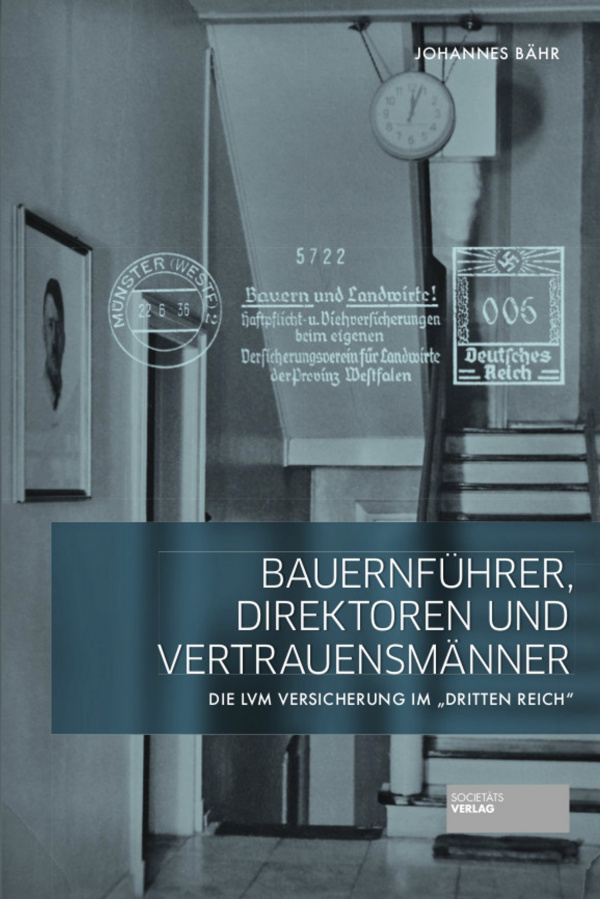
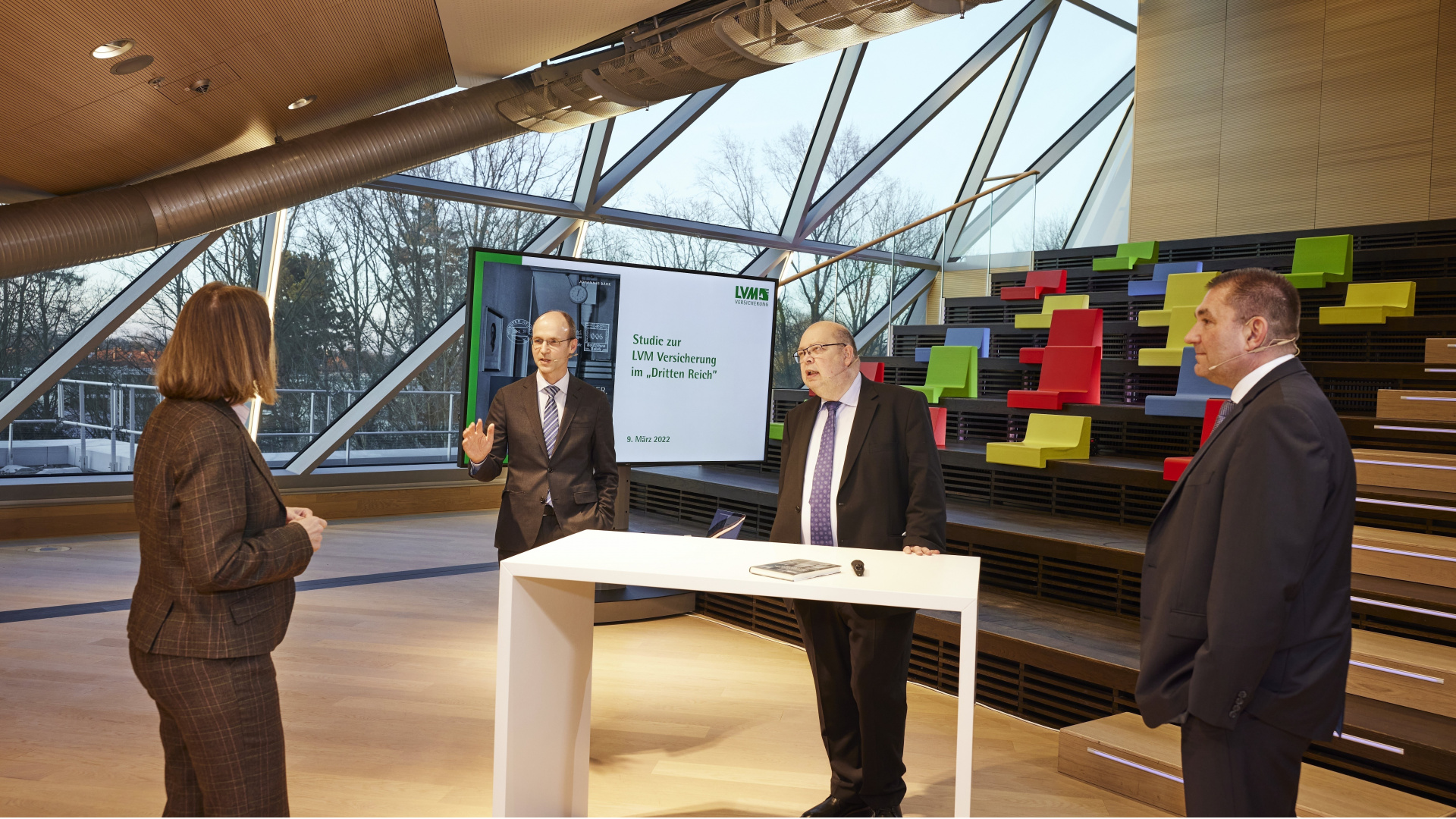
To mark its 125th anniversary, LVM Insurance commissioned the Society for Business History to conduct a study examining the company’s personnel structure and business developments during the Nazi regime. In a digital lecture on March 9, 2022, Assoc. Prof. Dr. Johannes Bähr presented the key findings of his research, “Farmers’ Leaders, Directors, and Representatives: LVM Insurance in the ‘Third Reich,’” which reveal the company’s proximity to the Nazi regime due to its agricultural focus, its associated ties to the Reichsnährstand, and the ideological alignment of its governing bodies. Adjunct Prof. Dr. Bähr concludes that LVM Versicherung did not itself participate in Nazi crimes, but rather benefited from significant growth in membership and premium income. Nevertheless, the company must be aware of its historical responsibility, particularly with regard to the political baggage of its leaders. This was followed by a discussion among the participants and the speakers regarding the findings and their significance for the company today, concluding with remarks by the CEO of LVM Insurance, Dr. Mathias Kleuker, on the importance of coming to terms with one’s own past.

Coming to terms with the past is also important for family businesses
The business magazine “Wir” reports that an increasing number of family businesses are confronting their Nazi past. The article highlights the particular challenges involved in this research, as those involved often come from within the family itself and few family businesses maintain archives. Among other things, Dr. Andrea Schneider-Braunberger explains ways for family businesses to come to terms with their history and why this can also have a healing effect on the companies and the families.
The Early History and Founding of Heckler & Koch
Heckler & Koch commissioned Gesellschaft für Unternehmensgeschichte mbH to conduct a preliminary study on the company’s early history and founding in order to identify sources for reconstructing the history of the three founders and the circumstances surrounding the company’s establishment. The project’s objectives and background are also detailed in an article in the Schwarzwälder Bote:
Schwarzwälder Bote, December 17, 2020
Further information on the preliminary study can be found here.
The Role of Georg Karg and the Aryanization of Hermann Tietz OHG During the Nazi Era
In an interview with Deutschlandfunk, Adjunct Professor Dr. Johannes Bähr explains the objectives and research questions of the GUG study on the Tietz family during the Nazi era, which he is conducting together with PD Dr. Ingo Köhler. An article in the Süddeutsche Zeitung also addresses the study.
The project examines the circumstances under which the Aryanization of Hermann Tietz OHG (Hertie) took place in 1934 and how this event should be historically contextualized. It will shed light on Georg Karg’s role during those years and take into account the postwar restitution lawsuits and the subsequent out-of-court settlement between the Tietz and Karg families. You can find the interview and the SZ article at the links below:
SZ-Online, January 12, 2021
Deutschlandfunk, November 30, 2020
The German Society for Goldsmithing during the Nazi Era
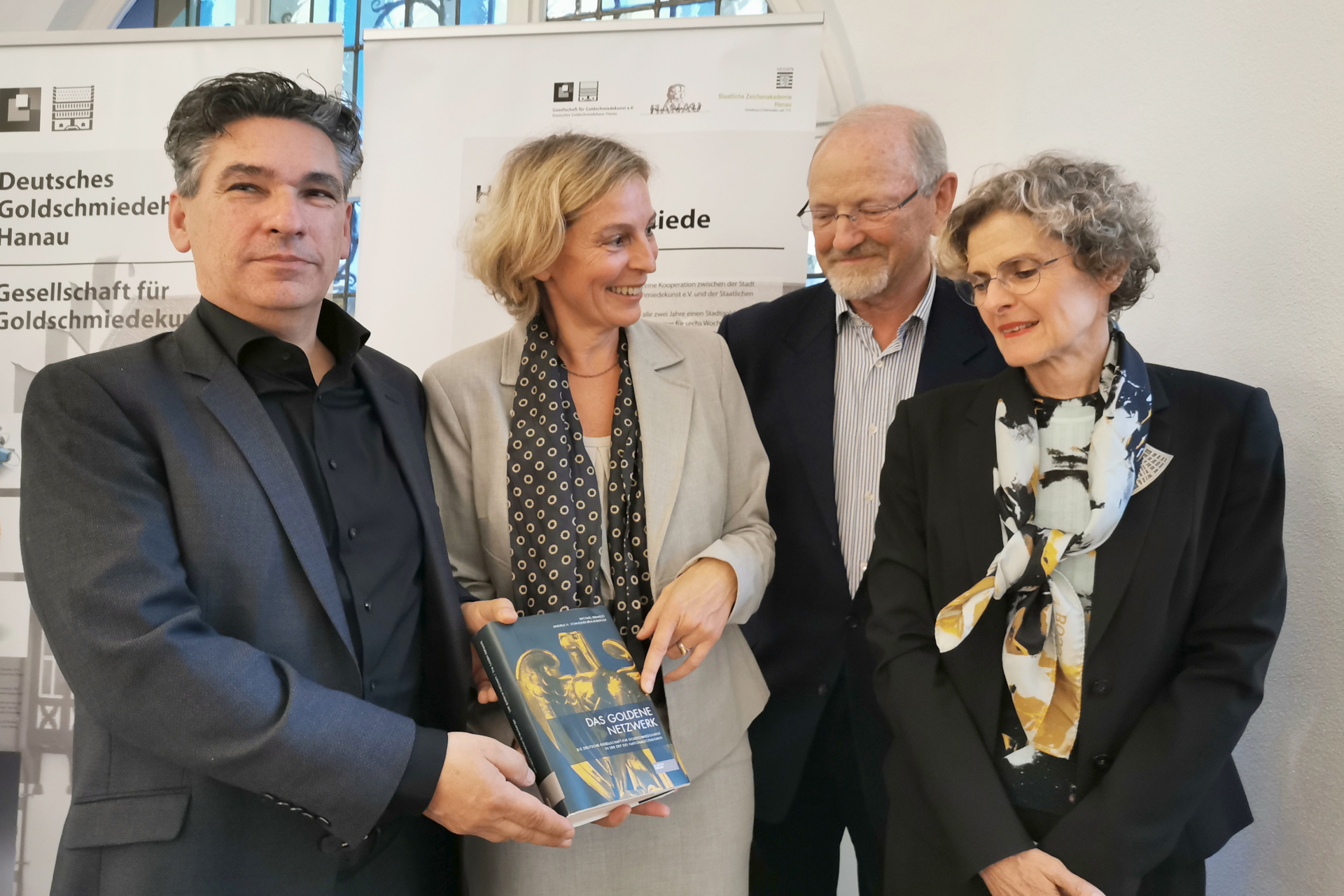
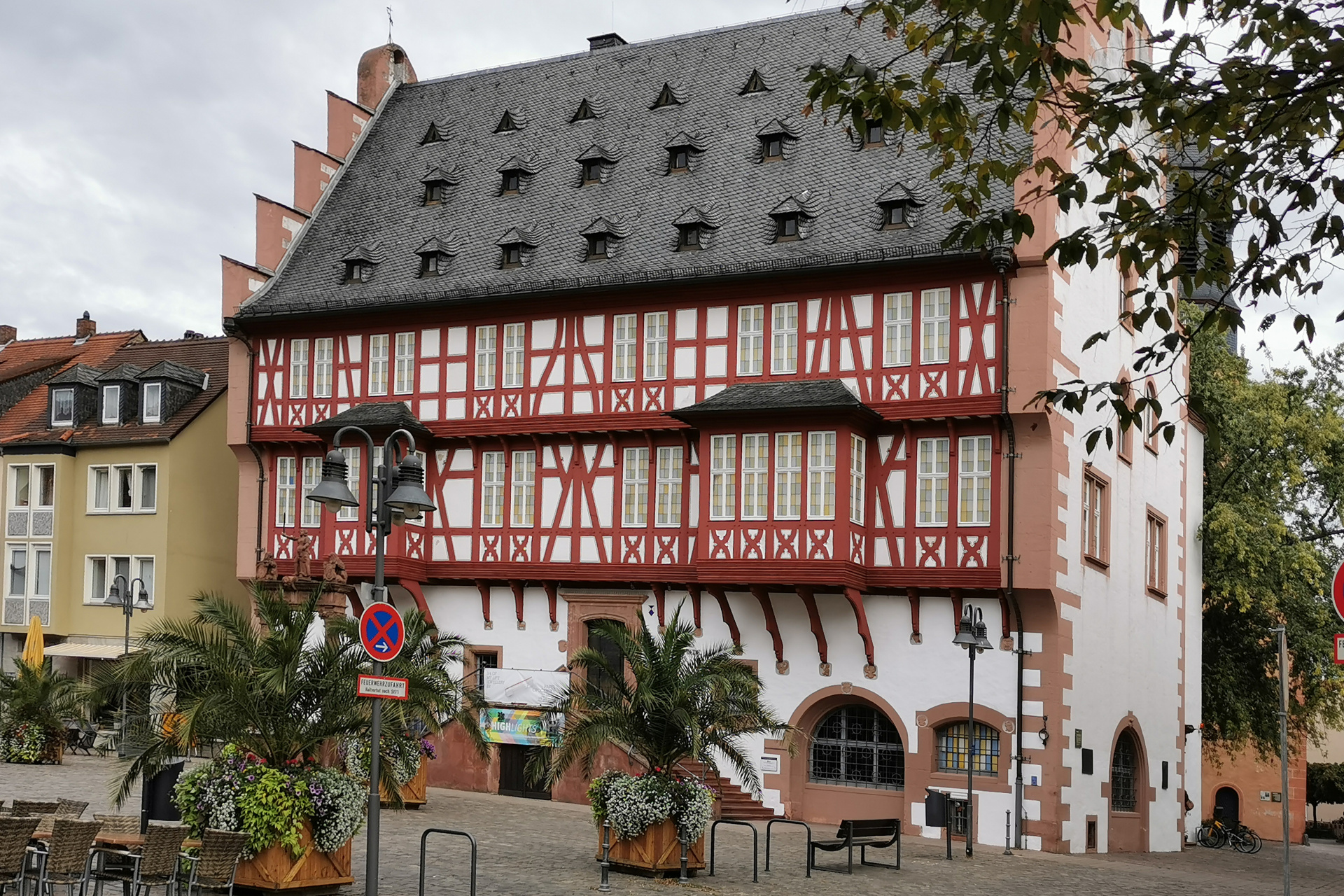
On October 1, 2019, Andrea H. Schneider-Braunberger and Michael Bermejo-Wenzel presented their book *The Golden Network: The German Society for Goldsmithing during the Nazi Era*, commissioned by the Society for Goldsmithing, to the public. In interviews with the Hanauer Anzeiger, the Frankfurter Allgemeine Zeitung, and the Frankfurter Rundschau, they presented new findings from their research regarding the Society for Goldsmithing’s entanglement with the Nazi regime and its key figures. Following up on this, the Frankfurter Rundschau reports that, based on these findings, the German Society for Goldsmithing has decided to discontinue the “Golden Ring of Honor” award and instead establish a new form of recognition for exceptional gold and silversmithing.
Links:
Hanauer Anzeiger
Frankfurter Rundschau, October 3, 2019
Frankfurter Rundschau, October 4, 2019
https://www.faz.net/aktuell/rhein-main/region-und-hessen/gesellschaft-fuer-goldschmiedekunst-zur-nazizeit-16415493.html: Frankfurter Allgemeine Zeitung
Wintershall During the Nazi Era
Conference in September 2019
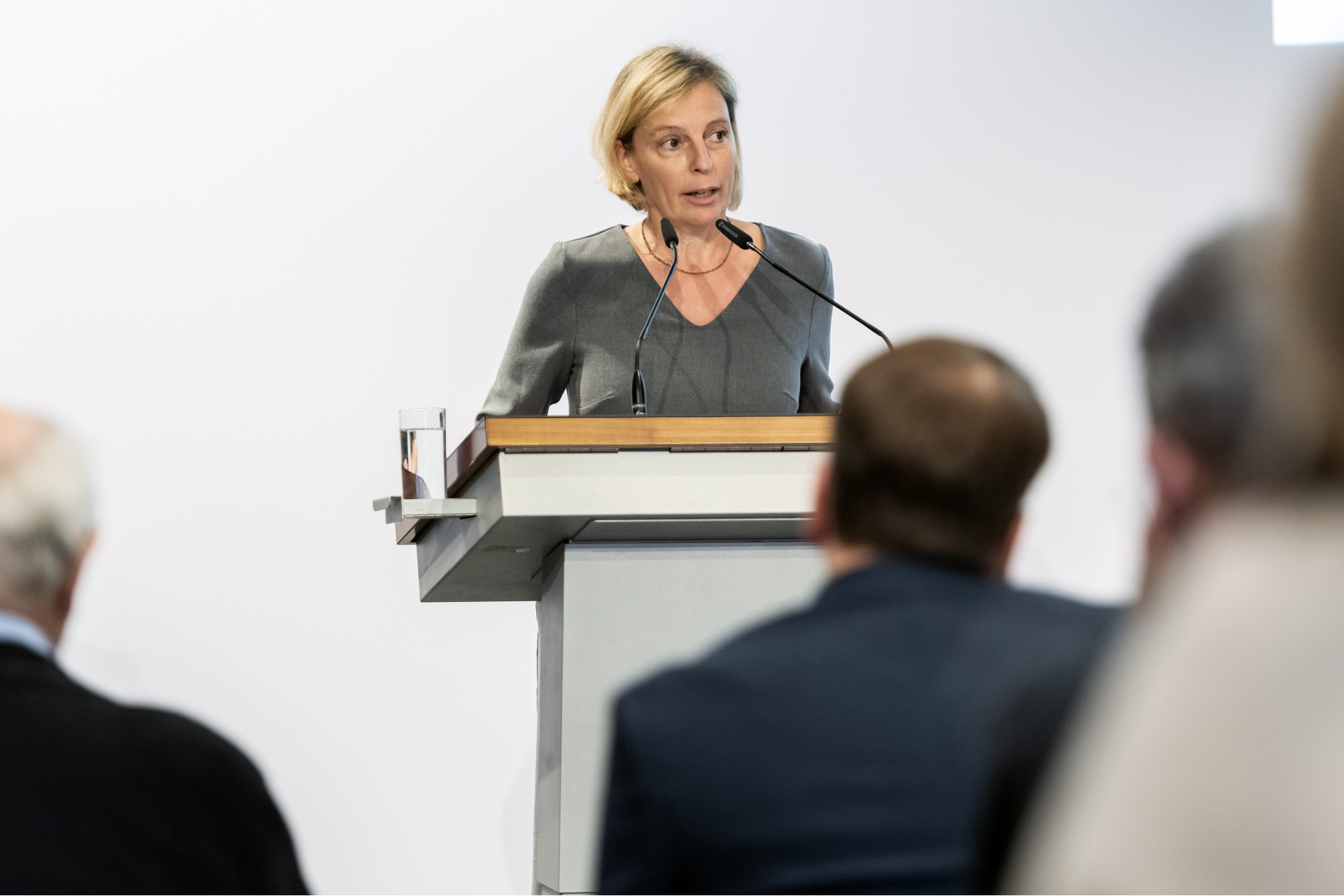
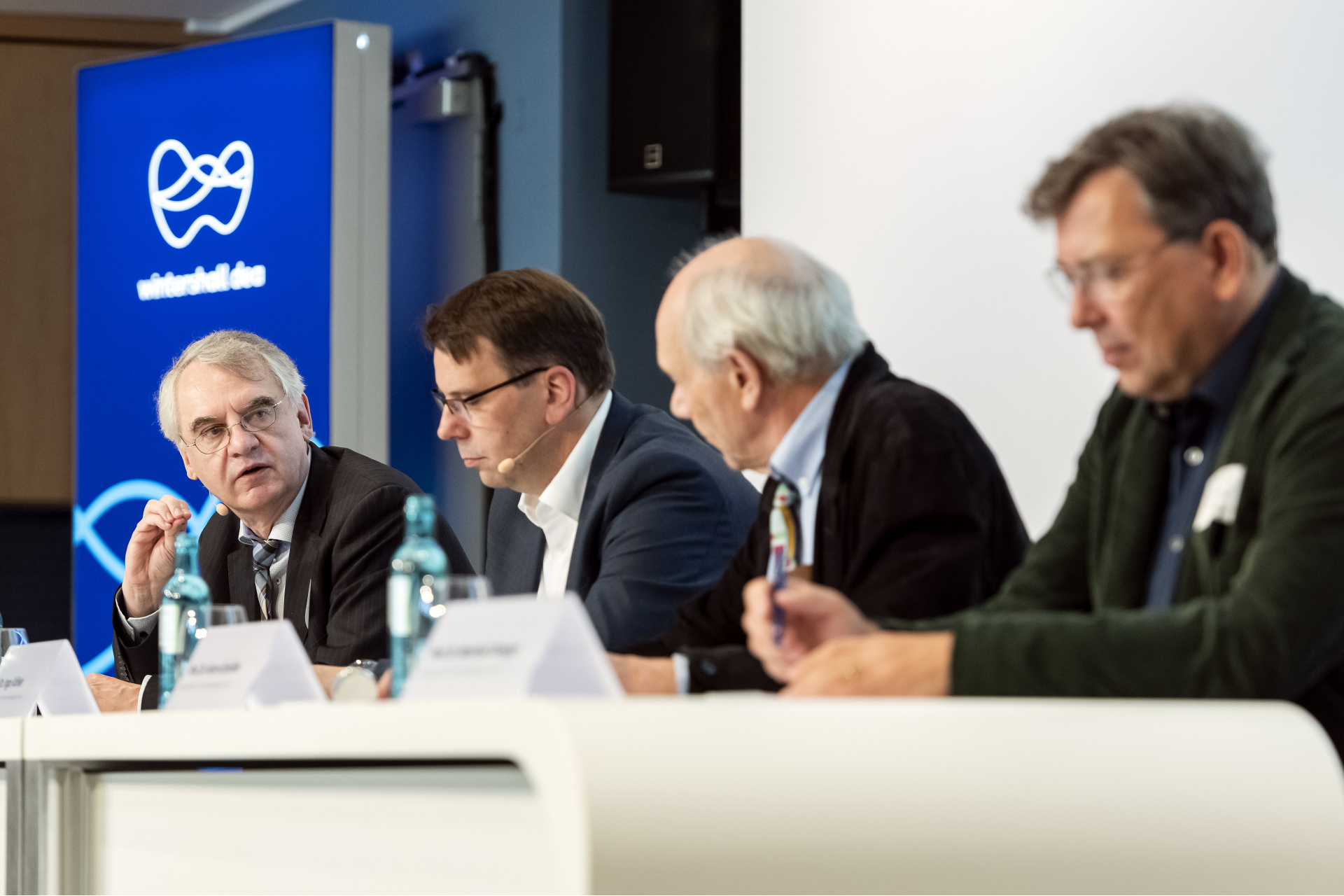
As part of its 125th anniversary celebrations, Wintershall organized a conference in September 2019 in collaboration with the Society for Business History (GUG) to address its own past during the Nazi era. Key topics such as the handling of forced labor were at the forefront of the discussion. Following the event, GUG Managing Director Andrea H. Schneider-Braunberger spoke with Lars Hofmann of hr to answer questions about the conference’s main themes and outcomes.
In addition, Hessenschau and Hessenschau kompakt reported on the company’s anniversary and its engagement with its past.
On January 7, 2020, the Frankfurter Rundschau also reported on the book project that GUG is carrying out on behalf of Wintershall to examine the company’s history.
Frankfurter Rundschau, January 7, 2020
{Conference Report_Wintershall}
Highlights from the 2019 Conference


Book Launch in October 2020
On October 22, 2020, the study “Expansion at Any Cost: Studies on Wintershall AG. Between Crisis and War, 1929–1945,” supervised by the GUG, was presented. The study examines the Wintershall company during the Nazi era. It was authored by Manfred Grieger, Rainer Karlsch, and Ingo Köhler. An article in the F.A.Z. as well as two articles in industry-specific portals discuss the book launch and the study’s findings:
Links:
Frankfurter Allgemeine Zeitung, Oct. 22, 2020
Energy Voice, Oct. 23, 2020
Rigzone, Oct. 25, 2020
A recording of the book presentation on October 22, 2020, in the Blue Hall of the Kongress-Palais in Kassel, Hesse, can be found here:
Job Market
Our job board features current job postings, fellowship announcements, and PhD positions for economic and business historians.

Internship at the GUG office
The Society for Business History (Gesellschaft für Unternehmensgeschichte e.V.) is offering an internship at its office in Frankfurt am Main, for which a small stipend will be paid. We are looking for committed students of history as a major or minor subject (preferably with a focus on economic and social history) who have a good knowledge of the common Microsoft Office programs, are confident in using and designing media such as the Internet, enjoy taking on responsibility, and are willing to work in a small team.
We offer a friendly atmosphere in a small, open-minded team, as well as interesting activities related to business history. Tasks include preparing events, minor research and cataloging assignments, and assisting with the editing of the Journal of Business History (ZUG). The internship also includes insights into the project activities of GUG mbH and support for the office.
We offer internships on an ongoing basis from 4 weeks to 3 months. Upon agreement, the internship can be done on a part-time basis. Working hours can be arranged flexibly.
If you are interested, please send your application documents (a short cover letter, your resume, and scans of your certificates) to Mr. Kai Balazs-Bartesch.
Praktikum Unternehmensarchiv (m/w/d) bei HARIBO
Standort: Grafschaft (bei Bonn)
Beginn: 01.08.2026
Dauer: 3–6 Monate
HARIBO bietet Studierenden die Möglichkeit, im Unternehmensarchiv eines international tätigen Familienunternehmens praktische Erfahrungen zu sammeln. Das Praktikum umfasst die Mitarbeit bei der Erschließung, Systematisierung und Archivierung historischer Bestände sowie deren Digitalisierung und Aufbereitung für die Archivsoftware. Darüber hinaus gehören Recherchen zur Unternehmens- und Produktgeschichte für interne und externe Anfragen sowie die Mitarbeit an Sonderprojekten, etwa zur Objekterfassung, zu den Aufgaben. Die eigenständige Umsetzung eines eigenen Projekts ist ebenfalls vorgesehen.
Gesucht werden Studierende der Archiv-, Geschichts-, Informations- oder Medienwissenschaften (ab dem 3. Fachsemester) oder vergleichbarer Studiengänge mit Interesse an Unternehmens- und Wirtschaftsgeschichte des 20. Jahrhunderts. Kenntnisse im Umgang mit Datenbanken und idealerweise mit Archivsoftware sind von Vorteil.
Das Praktikum bietet einen umfassenden Einblick in die Arbeit eines modernen Unternehmensarchivs sowie die Möglichkeit, aktiv an dessen Weiterentwicklung mitzuwirken.
Die vollständige Ausschreibung finden sie hier.
Please feel free to let us know about any other offers: ...
News Archive

125 years of Messer: History Communication in Perfection – A podcast that brings industrial history to life
Immerse yourself in a journey through industrial history – welcome to the podcast “Stories – The Messer Anniversary Podcast.” Marking the 125th anniversary of Messer, the world's leading family-owned producer of industrial gases, this podcast is a shining example of effective history communication.
Diana Buss, Head of Corporate Communications at Messer, and our esteemed colleague Jörg Lesczenski, author of the business history study “100 Percent Messer, The Return of the Family Business. 1898 to Today,” guide you through short but extremely informative episodes lasting about a quarter of an hour. This balanced combination of facts, anecdotes, and in-depth analysis appeals to both historians and anyone interested in delving into industrial history in an entertaining way.
The podcast highlights the evolution from a small workshop for acetylene experiments, founded by Adolf Messer in Höchst 125 years ago, to a global pioneer in the industrial gas industry. But it goes beyond mere chronology. It tells the story of the visionaries behind the innovations, the ups and downs that paved the way, and the intertwining of business events and global political trends over the last century.
“125 Years of Messer: Focus on History” is not only a source of information, but also a prime example of effective history communication that will hopefully set a precedent.
You can find the link to the podcast here: 125tories - Der Messer Jubiläumspodcast
Deutsche Bahn exhibition: Who was Fritz Kittel – A Reichsbahn employee makes a decision
In an exhibition on the role of the Reichsbahn in the Holocaust, author Esther Dischereit traces excerpts from the life of railway worker Fritz Kittel, as well as from the lives of those he saved from the Holocaust. The exhibition, developed in collaboration with the Deutsche Bahn Historical Collection, was first shown at the German Museum of Technology in Berlin in 2023 before touring various cities until the end of 2024
Find out more about the exhibition here.
Working Group “Women in Economic History” (WIEH)
The working group “Women in Economic History” (WIEH) brings together female researchers from early career stages to professorships. The WIEH website presents the members of the working group, their research activities and results, and provides an overview of experts on various topics in economic history.
You can find the link here:
https://www.women-in-economic-history.com/
Grande Empresas en Argentina/Big Companies in Argentina Database
On behalf of the Argentine Agency for the Promotion of Science and Technology, the “Big Companies in Argentina Database” was created to supplement the 2021 publication “Las Grades Empresas de Argentina” as part of the research project “PICT 2010/0501 Empresas Extrajeras en Argentina/Foreign Companies in Argentina Database BDEEA/FCAD.”
The database allows users to view the capitalization of the 200 largest companies based in Argentina at various points in time.
However, the results of the study are only available free of charge for study and teaching purposes. In addition, the authors should be contacted if the research results are to be used more extensively.
The database can be found here.
History and Pandemics
In response to the global spread of the coronavirus, scholars both nationally and internationally have come together in a variety of forums and launched projects that examine the topic from a historical perspective. The GUG presents some of these initiatives and projects here:
Webinars and Online Seminars
From July 27-31, 2020, an online workshop for economic historians was held on the topic of “Responding to Crisis.” The recording of the workshop can be found here.
Journal articles and videos
In their article in EconPapers, Robert Barro, José F. Ursúa, and Joanna Weng explore the extent to which the economy can learn from how the Spanish flu was handled in order to deal with the current pandemic. It can be read here.
An article by Sergio Correia, Stephan Luck, and Emil Verner also provides an economic history perspective on the Spanish flu era. You can find it here.
In an article in the journal Explorations in Economic History, Vellore Arthi and John Parman examine how COVID-19 and the accompanying recession will change society in the long term. They conclude that historical knowledge of past crises helps to assess the long-term effects of the current crisis and prepare for new crises. The link to the article can be found here.
Link collections and literature
The Fachverband für Medizingeschichte e.V. (Professional Association for Medical History) has compiled an extensive collection of links on the topic of “The history of epidemics in the age of Covid-19” on its website. Click here.
Digital teaching
H-Soz-Kult offers teachers a platform to exchange information and discuss difficulties and their own experiences relating to digital teaching. In addition to interviews in which teachers present their approaches, the Digital Teaching Forum also provides a space for discussing individual approaches and emerging difficulties. For more information, see here.
Wenn Sie selbst Teil eines ähnlich gearteten Projekts sind oder uns gerne auf eines aufmerksam machen möchten, freuen wir uns über die Zusendung von Informationen an ....